For years, selling on Amazon meant accepting a growing list of fees as the cost of reaching the platform’s massive customer base. But since early 2024, when Amazon introduced an inbound placement fee and a low-inventory-level penalty on top of already-rising fulfillment and advertising charges, many merchants say the economics have tipped from tight to unsustainable. Seller forums, industry surveys, and Amazon’s own financial disclosures all point in the same direction: the platform is claiming a bigger slice of every transaction, and small businesses are struggling to keep up.
The numbers behind the squeeze
Amazon’s fourth-quarter 2024 earnings release, filed with the SEC, reported that third-party seller services generated $47.5 billion for the full year, up 18% from $40.2 billion in 2023. That category covers referral fees, Fulfillment by Amazon (FBA) charges, and related services collected from the roughly two million merchants Amazon says use its marketplace. The revenue line now rivals Amazon Web Services in size, a sign of how central fee income from outside sellers has become to the company’s bottom line.
The most widely cited estimate of Amazon’s total cost to sellers comes from e-commerce research firm Marketplace Pulse. A 2023 analysis, reported by Bloomberg, calculated that Amazon’s effective “take rate” exceeded 50% of each sale in 2022 once referral commissions, FBA costs, and advertising spend were combined. No comparable institutional study has published an updated figure covering 2024 or 2025, but the continued double-digit growth in seller-services revenue, alongside new fee categories Amazon introduced in 2024, suggests the effective cost has not come down.
Fee changes sellers are absorbing
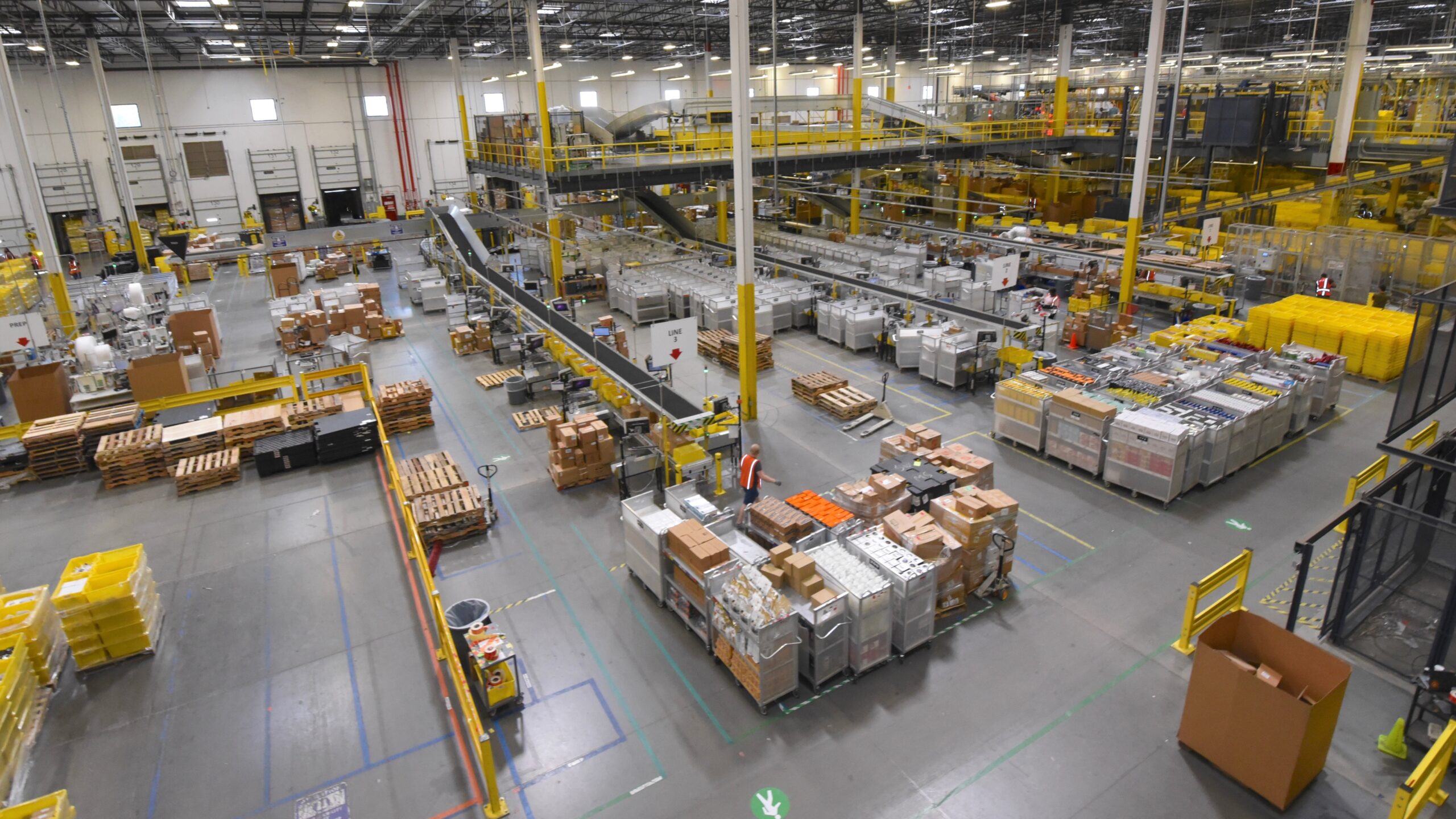
Amazon’s publicly posted 2024 FBA fee schedule added charges that did not exist the previous year. The inbound placement fee, effective January 2024, applies when sellers ship inventory to a single fulfillment center instead of distributing it across Amazon’s warehouse network. The low-inventory-level fee penalizes merchants who keep fewer than four weeks of stock on hand. Both charges push sellers to tie up more working capital in inventory or pay extra for the convenience of simpler shipping.
Storage fees have also continued to climb. Amazon raised monthly storage rates and maintained elevated surcharges during the fourth-quarter holiday season, precisely when many small sellers stock up hoping to capture peak demand. According to a 2024 State of the Amazon Seller survey by Jungle Scout, a majority of sellers reported that total Amazon-related costs, including fees and advertising, now consume more than half of their product’s retail price before the cost of goods is factored in.
In the seller community, the frustration is palpable. “I used to clear 25% margins on my best products. After the inbound placement fee and the low-inventory penalty, I am down to single digits on most of my catalog,” one mid-sized home-goods seller wrote in a widely shared post on the Amazon Seller Central forums in early 2025. That account echoes a pattern visible across Reddit threads, Facebook groups, and trade publications: sellers describing a slow erosion of profitability rather than a single dramatic price shock.
Amazon has defended its pricing by pointing to the logistics infrastructure it provides: two-day shipping, customer service, and returns handling that sellers would otherwise need to build or outsource themselves. In public statements, the company has said it continually works to lower costs for sellers and that millions of small businesses thrive on its platform. Amazon did not respond to a request for comment on how the 2024 fee changes have affected average seller margins.
Regulatory and competitive pressure
The financial dynamics of Amazon’s marketplace are drawing scrutiny well beyond seller forums. The Federal Trade Commission’s antitrust lawsuit, filed in September 2023, alleges in part that Amazon’s fee structure and search-ranking algorithms coerce sellers into using FBA and purchasing advertising, raising costs that are ultimately passed on to consumers. The case remains in litigation as of spring 2026. Amazon has called the suit “wrong on the facts and the law” and is contesting it in federal court; no trial date has been publicly scheduled.
In the European Union, the Digital Markets Act designated Amazon as a “gatekeeper” platform in September 2023, subjecting it to rules that could limit how it bundles services and ranks its own products against those of third-party sellers. The European Commission opened compliance investigations in 2024, though any structural impact on Amazon’s fee model has yet to materialize.
Some sellers have responded by spreading their risk. Shopify reported more than two million merchants on its platform as of its 2024 annual results, and Walmart’s U.S. marketplace has expanded to more than 150,000 sellers, roughly 50% more than two years earlier, according to Marketplace Pulse tracking data. But neither alternative offers the built-in customer traffic Amazon commands. The company still accounts for roughly 37% to 40% of U.S. e-commerce spending, according to eMarketer estimates published in 2024, a share that gives it pricing leverage no competitor can match.
How sellers are recalculating their Amazon math
Amazon typically announces its FBA fee updates for the coming year in the fourth quarter. Sellers are already watching for the 2026 schedule, expected later this year, with particular attention to whether the inbound placement and low-inventory-level fees will increase or expand to additional product categories.
In the meantime, merchants are adapting in concrete ways. The Jungle Scout survey found that roughly one in three sellers raised their retail prices in 2024 specifically to offset higher Amazon fees, while a similar share said they had cut at least one product line that was no longer profitable after platform costs. Others are shifting a larger portion of their sales to direct-to-consumer channels or to Walmart’s marketplace, even if those alternatives deliver lower volume.
The pattern in the available data is clear: Amazon is collecting a larger share of marketplace revenue year over year, and the cost of doing business on the platform is rising faster than most sellers can offset through higher prices or greater volume. For the small businesses that power nearly 60% of Amazon’s unit sales, the central calculation has changed. It is no longer whether fees are going up, but whether the margin left over still justifies the reach.