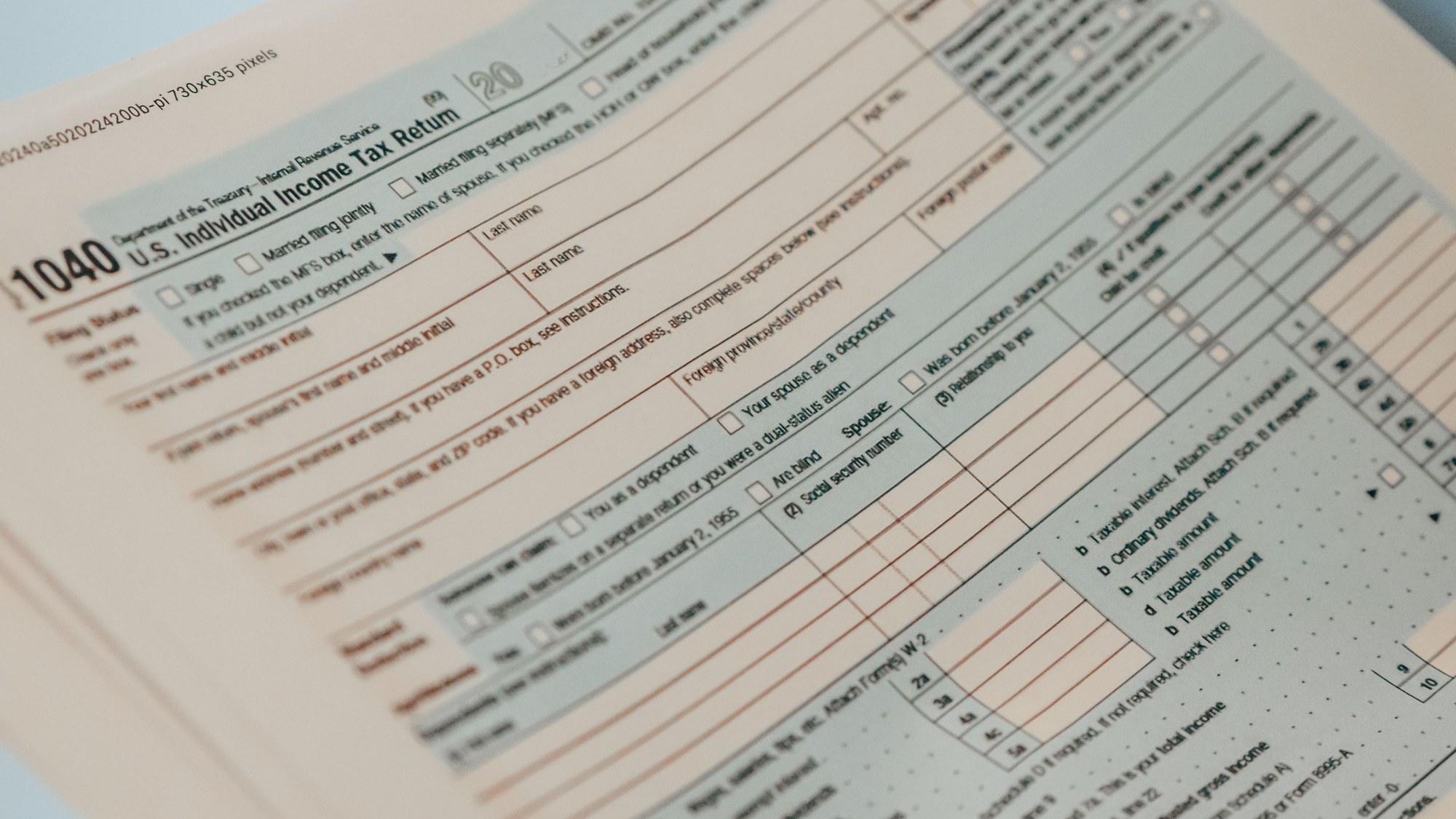
For the roughly 4 million workers in the United States who earn a significant share of their income from tips, a campaign trail promise just became tax law. In June 2026, the Treasury Department and IRS finalized regulations under the One Big Beautiful Bill that spell out which occupations qualify for a new federal tax deduction shielding up to $25,000 in tip income from federal income tax each year.
The rules, built on Section 70201 of the legislation, create a new provision in the tax code: Internal Revenue Code Section 224. But the benefit is not automatic. Workers must hold a job that appears on an official IRS list of tipped occupations, and the fine print in the final regulations determines who benefits and who gets left out.
Which workers qualify
The IRS published a formal roster of occupations that “customarily and regularly received tips” on or before December 31, 2024. Each entry carries a Treasury Tipped Occupation Code, a job description, illustrative examples, and a link to the corresponding Standard Occupational Classification code. Restaurant servers, bartenders, baristas, valets, bellhops, hairstylists, taxi drivers, and casino dealers all appear on the list, among others.
The list functions as a gatekeeper. If your job is on it, your tips can be treated as “qualified tips” eligible for the deduction. If it is not, you cannot claim the break, at least for now.
In a companion announcement, Treasury and IRS officials emphasized that the list reflects jobs where tipping was already an established practice, not an invitation for employers to restructure roles to capture the tax break. The agencies said they drew on existing wage data, public comments, and prior enforcement experience to decide which occupations made the cut.
How the deduction works
Eligible workers can subtract up to $25,000 in qualified tip income when calculating their federal income tax, according to a Congressional Research Service analysis of the statute. Because it is an above-the-line deduction, workers can claim it whether they itemize or take the standard deduction.
One detail the shorthand “no tax on tips” glosses over: the deduction applies to federal income tax only. As the CRS analysis notes, tips remain subject to Social Security and Medicare (FICA) payroll taxes. Consider a server who earns $30,000 in tips. She would still owe FICA on the full amount but could deduct $25,000 from her taxable income. At the 12% bracket, that translates to roughly $3,000 in federal income tax savings; at the 22% bracket, about $5,500.
The deduction also phases out at higher income levels. Under the statutory text, the phase-out begins at $160,000 in adjusted gross income for single filers and $320,000 for married couples filing jointly. Most service-industry workers fall well below those thresholds, but higher-earning hospitality professionals, such as sommeliers or concierges at luxury properties, should verify their eligibility before assuming they qualify for the full amount.
Workers in states with no personal income tax, including Florida, Texas, and Nevada, still benefit because the deduction reduces their federal liability. Those in states that conform to federal adjusted gross income for their own tax calculations could see a state-level benefit as well, though state rules vary.
What employers need to do
Businesses that employ tipped workers will eventually need to include the new Treasury Tipped Occupation Codes on W-2 forms so the IRS can match deductions to eligible jobs. But the agency is giving employers room to adjust. Under Notice 2025-62, the IRS announced penalty relief for tax year 2025, covering errors in information reporting on cash tips and the new occupation coding.
For now, 2025 is functioning as a transition year. Employers and payroll software vendors are expected to build the new codes into their systems, but they will not face penalties for good-faith mistakes while doing so. What the IRS has not yet provided is a step-by-step integration guide for payroll platforms or a firm deadline for when full compliance will be required after the grace period ends.
Businesses that already participate in voluntary tip-reporting agreements, common in restaurants and casinos, are also waiting to learn how those existing programs will interact with the new coding requirements.
Where the gray areas remain
The final regulations resolve the biggest question, which jobs qualify, but leave several practical gaps that workers and tax professionals will need to navigate.
Hybrid roles. A restaurant employee who splits shifts between tipped front-of-house work and non-tipped kitchen duties faces uncertainty about how to allocate income. The regulations do not include allocation formulas or safe-harbor rules for workers who straddle eligible and ineligible duties within the same job.
Gig workers. Ride-share and delivery-app drivers sometimes receive tips, but whether the occupation list covers every platform-based arrangement is not fully settled. The preamble to the final regulations acknowledges public comments on this issue, yet the published rules do not include worked examples or safe harbors for app-based drivers and couriers. That leaves gig workers uncertain whether their tipping patterns meet the “customarily and regularly” standard, particularly when platforms change pay structures midyear.
Tip pooling. Many restaurants and bars redistribute tips among staff through pooling arrangements. The final regulations do not address whether pooled tips retain their “qualified” status when redistributed to workers whose primary role might not appear on the IRS list, such as a food runner or busser whose exact job title is ambiguous.
Audit procedures. The IRS has not published examination guidelines explaining how agents will verify that a worker’s tips are truly “qualified” or how disputes over borderline occupations will be resolved. Until field directives appear, taxpayers and tax preparers will have to rely on the regulatory text itself.
How to prepare before the 2026 filing season
The deduction applies to qualified tips earned in tax year 2025, meaning eligible workers will first claim it on returns filed during the 2026 filing season. Workers who believe they qualify should start by checking the IRS occupation list to confirm their job appears on it.
Keeping detailed records of tip income will be essential. That includes cash tips that may not show up on pay stubs. The IRS has long required workers to report all tips, but the new deduction gives workers a financial incentive to document every dollar rather than risk underreporting and losing part of the tax break.
Workers in hybrid or gig roles should watch for additional IRS guidance before assuming they can claim the full deduction. Tax preparers and payroll departments are still absorbing the new rules, and the penalty relief for employers signals that the IRS itself expects some friction during this first filing cycle. Consulting a tax professional, rather than relying solely on software defaults, is worth the cost for anyone whose situation does not fit neatly into the published occupation list.