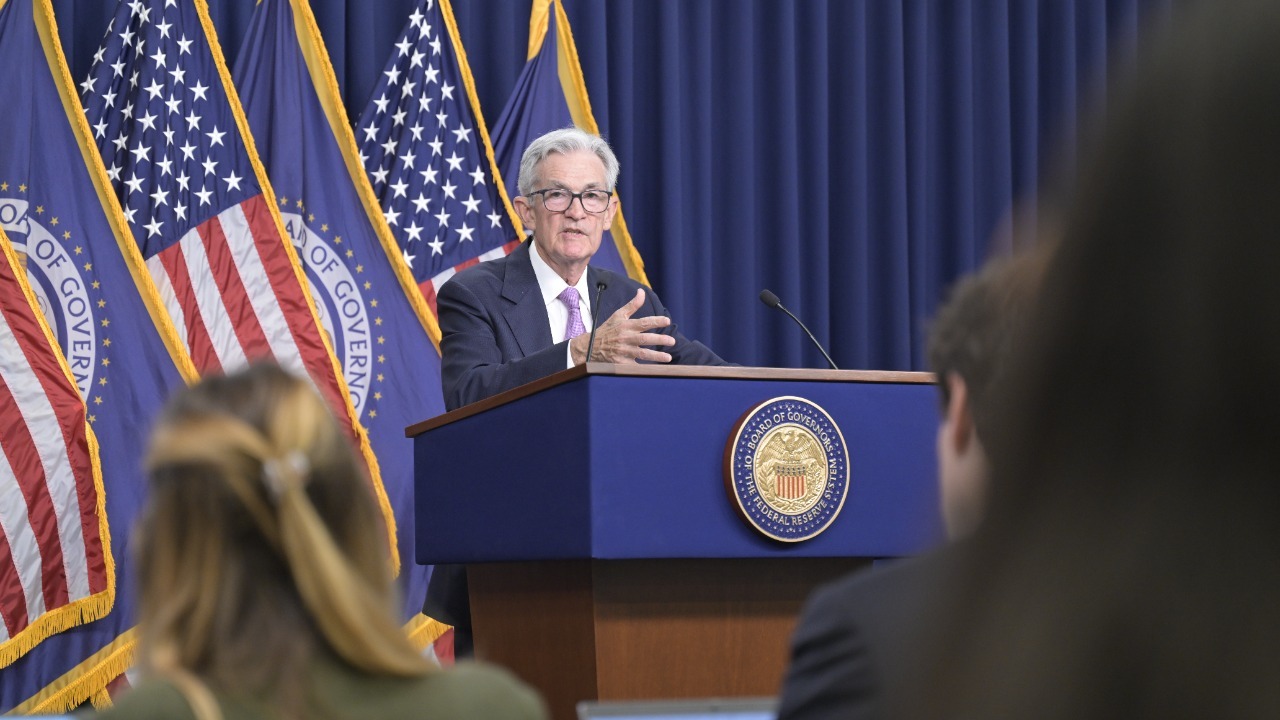
Kevin Warsh is one vote away from running the Federal Reserve. The Senate’s full vote is expected May 11, 2026, and it could be the most partisan Fed chair confirmation in history.
Warsh cleared the Senate Banking Committee on a strict 13-to-11 party-line split, with every Republican voting yes and every Democrat voting no, according to the committee majority’s summary of the proceedings. The full chamber is now scheduled to act at approximately 5:30 p.m. on May 11, 2026, beginning with a cloture vote on Executive Calendar number 728, according to the official Senate floor schedule published by the Democratic Caucus. Cloture limits debate and forces an up-or-down vote, typically within a day or two, meaning senators will have to go on record almost immediately.
If the final tally mirrors the committee’s party-line divide, Warsh would become the first Fed chair in the modern confirmation era to take office without a single vote from the opposing party. That distinction matters beyond symbolism. The Federal Reserve sets interest rates that ripple through mortgages, car loans, and credit cards. It regulates the largest banks in the country. And its credibility depends, in part, on the perception that its leadership stands above ordinary partisan warfare.
How Warsh got here
Warsh is not new to the Fed. He served on the Board of Governors from 2006 to 2011, a tenure that spanned the worst financial crisis since the Great Depression. His original confirmation to the Board during the 109th Congress is widely reported to have drawn bipartisan support, a sharp contrast to the polarized fight surrounding his return.
Banking Committee Chairman Tim Scott, a South Carolina Republican, used the nomination hearing to champion Warsh’s crisis-era experience and argue he is suited to serve as both a Governor and as Chair. The committee considered both roles in tandem through a dual-track process outlined in the majority’s summary, which allows the Senate to confirm Warsh to the Board and then designate him as chair.
The gap between his first confirmation and this one tells a broader story about partisan escalation. When Janet Yellen was confirmed as chair in January 2014, she received 56 votes in favor, including 11 from Republicans. Jerome Powell’s initial confirmation in January 2018 passed 84 to 13, with overwhelming bipartisan backing. Even Ben Bernanke’s contentious 2010 reconfirmation, which came after the bailout era, cleared the Senate 70 to 30 with support from both parties. Each of those chairs entered office with at least some cross-party legitimacy. Warsh may not.
What Warsh would inherit
The confirmation arrives at a sensitive moment for the economy. At its most recent meeting, the Federal Open Market Committee held rates steady and stressed the need for data dependence and policy flexibility, according to the post-meeting press conference. Inflation has cooled from its 2022 peak but remains above the Fed’s 2 percent target, and growth forecasts carry unusual uncertainty tied to trade policy and fiscal spending.
Warsh has historically leaned hawkish on inflation and skeptical of the Fed’s large-scale asset purchases, positions he articulated in public speeches and op-eds after leaving the Board in 2011. He has also signaled interest in scaling back some of the post-crisis financial regulations that banks argue have constrained lending. Those views place him to the right of Powell on the policy spectrum and help explain why Democrats on the Banking Committee voted unanimously against him.
For ordinary Americans, the practical question is direct: will a Warsh-led Fed keep rates higher for longer to stamp out remaining inflation, or will it pivot toward easing to support growth and hiring? His public record suggests he would prioritize price stability, but the political dynamics of his confirmation could complicate that message. If markets begin to view rate decisions through a partisan lens, the Fed’s ability to guide expectations and calm financial turbulence could weaken.
What remains uncertain heading into the vote
The biggest unknown is whether any senator crosses party lines. As of early May 2026, no Republican has publicly signaled opposition, and no Democrat has indicated support. Without on-the-record statements from senators explaining their positions on the May 11 vote specifically, it is difficult to parse whether Democratic opposition is rooted in Warsh’s policy views, concerns about Fed independence under the current administration, or a broader strategy of resistance.
On the Republican side, motivations are not uniform. Some members have praised Warsh as a steady hand who understands the Fed’s crisis-fighting toolkit. Others have framed his nomination as an opportunity to push the central bank toward lighter financial regulation and a more growth-oriented posture, even if that means tolerating somewhat higher inflation in the near term. Those competing expectations could surface quickly if Warsh takes the chair and faces his first major policy decision.
Inside the Fed itself, career staff and sitting governors have stayed silent on the nomination, as is customary. But a chair confirmed on a pure party-line vote would carry a political weight that predecessors did not. How Warsh manages that reality, through his public communications, his relationship with Congress, and his willingness to make decisions that displease the White House, will shape whether the institution’s credibility holds.
What a party-line confirmation would mean for the Fed’s future
Central bank independence is not an abstract principle. It is the reason the Fed can raise interest rates to fight inflation even when doing so is politically painful, and the reason global investors treat U.S. Treasury bonds as among the safest assets on the planet. Every previous Fed chair in the modern era carried at least some bipartisan legitimacy into the job, a buffer that insulated the institution from accusations of doing one party’s bidding.
If Warsh is confirmed without a single Democratic vote, that buffer vanishes for the first time in the modern confirmation era. (Before the mid-20th century, some Fed leaders were approved by voice vote, making precise partisan breakdowns impossible to verify.) The outcome would not change the Fed’s legal mandate or its operational tools. But it would change the political context in which every future rate decision, every regulatory action, and every emergency intervention is debated.
For Americans whose borrowing costs, job prospects, and savings depend on the Fed getting monetary policy right, the question heading into May 11 is no longer just who runs the central bank. It is whether the process that put him there has already begun to reshape the institution he is about to lead.