The 60-day clock expired on May 1. Congress never voted to authorize military operations against Iran. And the White House says none of that matters because the war is already over.
In a letter sent to congressional leaders on the deadline itself, President Trump declared that hostilities with Iran “have terminated,” according to reporting from the Associated Press. Under the 1973 War Powers Resolution, a president who sends forces into hostilities without a declaration of war has 60 days to get congressional approval or begin withdrawing troops within 30 more. The administration’s position is that the ceasefire following its air and naval campaign makes that countdown irrelevant.
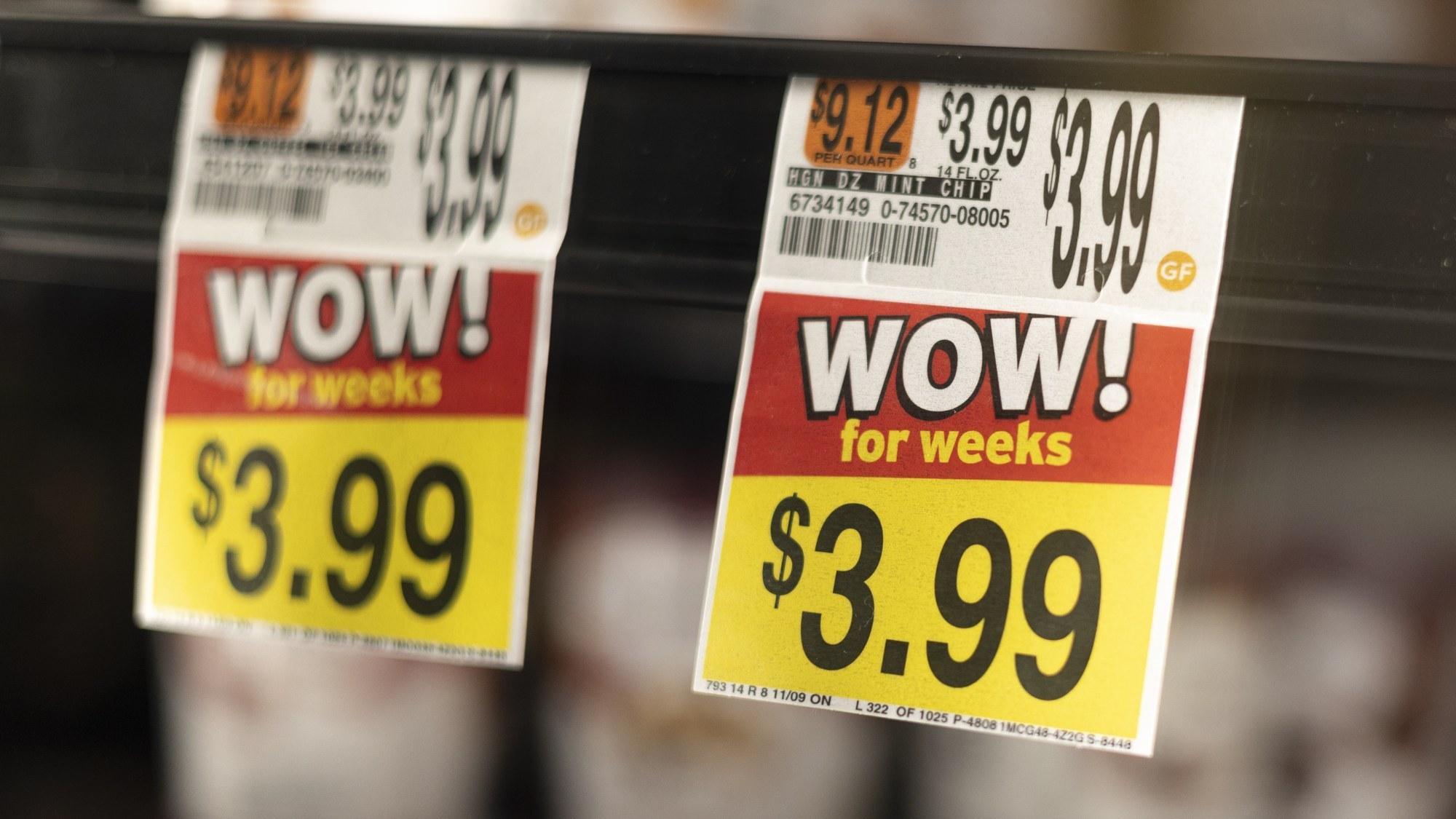
But as of late May 2026, U.S. Navy warships are still enforcing a blockade in the Strait of Hormuz. The national average price of gasoline, per AAA, sits at $4.43 a gallon. And the question hanging over Washington is one the White House has not convincingly answered: if the war is over, why does it still look like one?
The ceasefire is official. The blockade didn’t get the memo.
The administration’s legal argument is now on the record, at least in outline. The AP reported that the White House formally notified Congress that hostilities are “terminated.” Under the administration’s reading, that single word stops the War Powers clock and eliminates any obligation to seek a vote or pull forces back.
A White House release reinforced the narrative, describing Operation Epic Fury as a campaign that began on Feb. 28 with strikes on Iranian military infrastructure and culminated in a ceasefire. The release said the Strait of Hormuz is “reopening” and credited American military pressure with forcing Tehran to the table. The intended storyline is tidy: overwhelming force, then diplomacy, then peace.
What is actually happening in the strait tells a different story. The Washington Post, citing U.S. officials and statements from U.S. Central Command, reported that a naval blockade remains in effect. According to that account, U.S. Navy vessels have turned back at least six merchant ships attempting to transit the waterway since the ceasefire was announced. Crews have been hailed by radio, ordered to change course, and in some cases physically escorted away. That is not what “reopening” looks like by any ordinary definition.
Operation Epic Fury itself involved sustained airstrikes on Iranian air defense networks, port facilities, and missile sites, paired with the deployment of a carrier strike group and additional surface combatants to the Persian Gulf. The campaign lasted roughly five weeks before the ceasefire announcement. The administration has not publicly detailed the ceasefire’s terms, and no official Iranian government statement confirming the arrangement has appeared in available sources. Everything known about the deal comes through U.S. channels alone.
The Senate tried to force the issue. It came up short.
Congress did not simply let the deadline pass in silence. Before May 1, the Senate held Roll Call Vote No. 69, a procedural motion to discharge S.J.Res. 116 from committee. That resolution would have directed “the removal of United States Armed Forces from hostilities within or against the Islamic Republic of Iran that have not been authorized by Congress.” The motion failed.
The vote split revealed fractures that cut across party lines. Several Republican senators who had supported the original strikes grew uneasy with an open-ended naval presence that lacked any congressional authorization vote. Democrats who opposed the campaign from the start argued that the blockade alone qualifies as “hostilities” under the statute, regardless of whether bombs are still falling. Neither group could assemble the votes to force a resolution to the floor.
The outcome is a constitutional stalemate that would be familiar to any student of post-Vietnam war powers disputes. The president says the conflict is finished. Congress could not muster the votes to disagree. And the warships stay where they are.
The word “hostilities” is doing all the heavy lifting
The entire legal standoff turns on a single term the War Powers Resolution never precisely defined: “hostilities.” Presidents of both parties have driven through that gap for decades.
The most notorious precedent came in 2011, when the Obama administration argued that U.S. participation in NATO’s air campaign over Libya did not constitute hostilities because American forces were not engaged in “sustained fighting or active exchanges of fire.” That interpretation drew bipartisan criticism at the time, including from several legal scholars within the administration’s own ranks. The Trump White House is now making an arguably bolder claim: not that hostilities never existed, but that they ended on the president’s say-so, even as U.S. warships physically prevent commercial vessels from passing through an international waterway.
The full text of the May 1 letter has not been released publicly. Without it, legal analysts cannot determine how the administration defines “terminated,” what factual basis it offers for that conclusion, or whether the letter acknowledges the ongoing blockade at all. That document is the single most important piece of missing evidence in the entire dispute.
$4.43 at the pump, and the strait is still choked
Roughly one-fifth of the world’s daily oil supply passes through the Strait of Hormuz, according to the U.S. Energy Information Administration. When that chokepoint tightens, global energy markets respond fast, and American drivers feel it within weeks.
The $4.43 national average reflects a market that has not priced in peace. Shipping insurers have raised premiums for vessels transiting the Persian Gulf. Some tanker operators have rerouted cargoes around the Cape of Good Hope, adding thousands of miles and days of transit time. Spot prices for crude have remained elevated since late February, when the campaign began. Market analysts have pointed to transit delays and war-risk surcharges as significant cost drivers.
No federal agency has published an analysis isolating the blockade’s precise contribution to pump prices from other factors like seasonal demand shifts, refinery capacity, and OPEC production decisions. But the correlation is hard to miss: prices spiked when the operation started, and they have not come down since the ceasefire was announced.
For the roughly 70% of Americans who drive to work, the legal distinction between “war” and “not war” matters far less than the number on the gas station sign. That number has not responded to the White House’s declaration of peace.
The pressure points that will decide what happens next
Several developments in the coming weeks will determine whether this standoff escalates, quietly resolves, or hardens into a prolonged constitutional confrontation.
The letter. If the full text of the May 1 communication is released or leaked, it will reveal the administration’s legal reasoning in detail: how it defines the end of hostilities, whether it addresses the blockade, and what conditions, if any, it attaches to the ceasefire. Until that document is public, the debate is happening in the dark.
Potential court challenges. Members of Congress have sued the executive branch over war powers disputes before, though courts have historically been reluctant to wade into what they consider political questions. The failed Senate vote may increase pressure on individual lawmakers or outside groups to seek judicial intervention. No lawsuit has been filed as of late May 2026.
Tehran’s next move. Iran has been conspicuously quiet in available English-language reporting. Whether Tehran publicly confirms the ceasefire, rejects its terms, or tests the blockade with its own naval assets will shape the next phase. Allied and partner nations, including the United Kingdom and Gulf states with direct stakes in strait transit, have also been largely silent, a gap that itself raises questions about the durability of the arrangement.
Gas prices as a political barometer. If the blockade eases and tanker traffic normalizes, prices should begin falling within weeks. If they do not, the administration’s “war is over” narrative will face its most tangible public challenge at every filling station in the country, and midterm politics will ensure that challenge gets loud.
A war that ended on paper but not on the water
As of late May 2026, the United States occupies a position that is legally declared peaceful and operationally indistinguishable from a low-grade naval conflict. The president says the war is over. Congress failed to say otherwise. U.S. warships are still turning back merchant vessels in one of the world’s most critical shipping lanes. And Americans are paying $4.43 a gallon for the privilege of a ceasefire they cannot see reflected in their daily lives.
The documents that could clarify the administration’s legal reasoning remain out of public view. The ceasefire terms remain unconfirmed by the other party to the conflict. And the gap between the White House’s words and the Navy’s actions keeps growing wider with every tanker turned away from the strait.