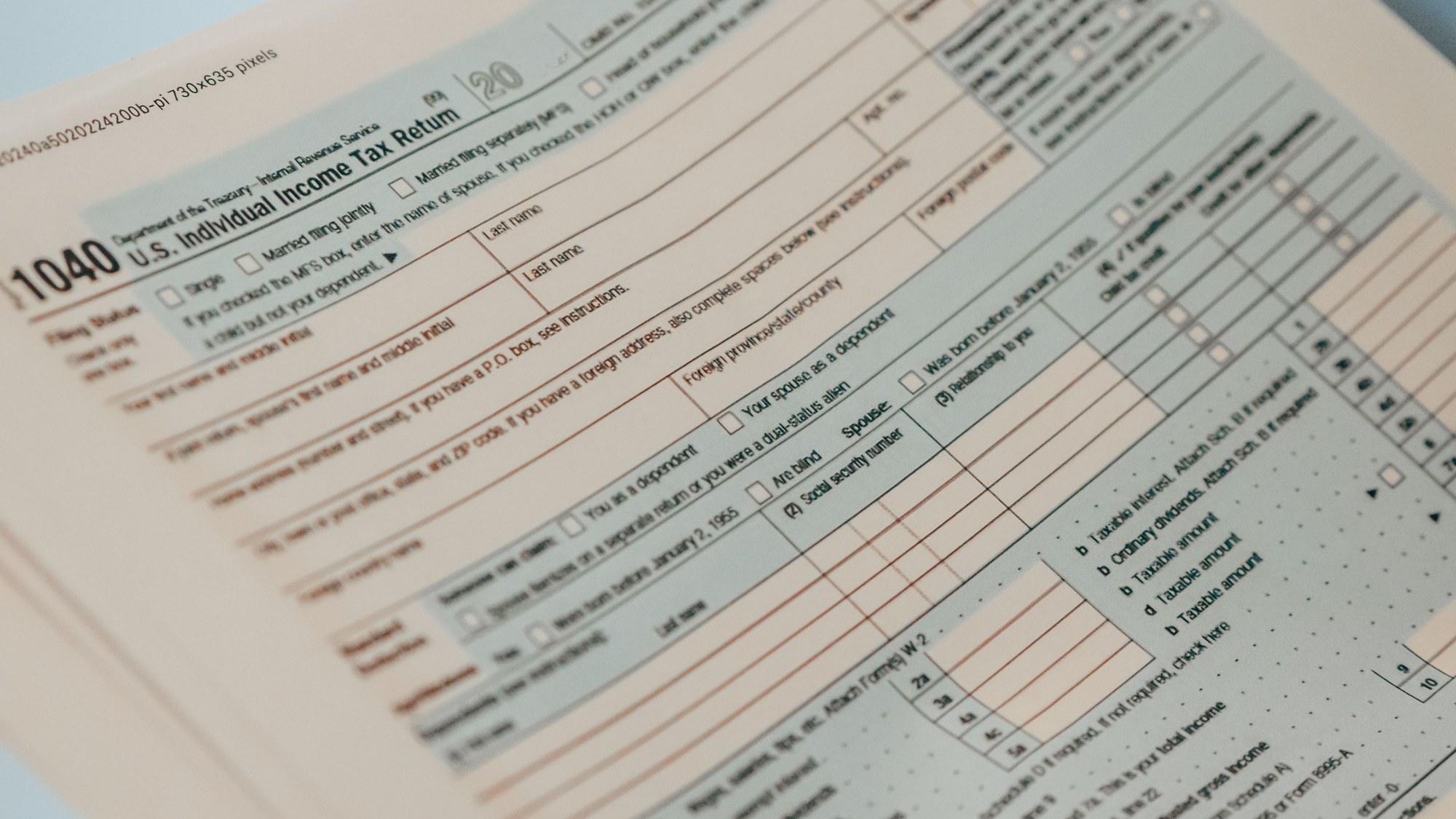
Married couples filing jointly in 2026 will keep $32,200 of their income completely free of federal tax, up $2,200 from the 2025 standard deduction of $30,000. That bump exists because the One Big Beautiful Bill Act, signed into law in the summer of 2025, made the higher deduction levels from the 2017 tax overhaul permanent. Without the new law, those deductions were scheduled to revert after 2025 to a much lower baseline.
The IRS published the official numbers in Revenue Procedure 2025-32 (Internal Revenue Bulletin 2025-45). Single filers and those married filing separately get a standard deduction of $16,100, up from $15,000 in 2025. Head-of-household filers get $24,150, up from $22,500. For workers whose employers update payroll systems on schedule, the change should show up as slightly larger paychecks starting in January 2026, with no need to file a new Form W-4.
The seven 2026 federal income tax brackets
Along with locking in the higher standard deduction, the One Big Beautiful Bill Act made the seven-rate bracket structure permanent, ending years of uncertainty about whether rates would snap back to pre-2017 levels. The IRS detailed every threshold in its official inflation adjustment release for tax year 2026. All bracket boundaries are indexed to the chained consumer price index (C-CPI-U), the same inflation measure in use since 2018, which means they will continue to shift upward each year to offset bracket creep.
Single filers
- 10%: Up to $11,925
- 12%: $11,926 to $48,475
- 22%: $48,476 to $103,350
- 24%: $103,351 to $197,300
- 32%: $197,301 to $250,525
- 35%: $250,526 to $626,350
- 37%: Over $626,350
Married filing jointly
- 10%: Up to $23,850
- 12%: $23,851 to $96,950
- 22%: $96,951 to $206,700
- 24%: $206,701 to $394,600
- 32%: $394,601 to $501,050
- 35%: $501,051 to $752,800
- 37%: Over $752,800
Married filing separately
- 10%: Up to $11,925
- 12%: $11,926 to $48,475
- 22%: $48,476 to $103,350
- 24%: $103,351 to $197,300
- 32%: $197,301 to $250,525
- 35%: $250,526 to $376,400
- 37%: Over $376,400
Head of household
- 10%: Up to $17,000
- 12%: $17,001 to $64,850
- 22%: $64,851 to $103,350
- 24%: $103,351 to $197,300
- 32%: $197,301 to $250,500
- 35%: $250,501 to $626,350
- 37%: Over $626,350
Why the standard deduction jumped and what almost happened
The 2017 Tax Cuts and Jobs Act nearly doubled the standard deduction, but every provision in that law carried an expiration date: December 31, 2025. Had Congress done nothing, the 2026 standard deduction for married couples would have reverted to the pre-reform formula. Instead, the One Big Beautiful Bill Act, enrolled as H.R. 1 (Public Law 119-21), amended Internal Revenue Code Section 63(c)(7) to raise the base amounts that feed into the annual inflation calculation. The new tax provisions apply to tax years beginning after December 31, 2025, which is the mechanical reason the married-joint deduction for 2026 landed at $32,200 rather than falling by nearly half.
The law also preserves additional standard deduction amounts for taxpayers who are 65 or older or who are blind. The IRS has not yet published a separate detailed breakdown of those additional amounts for 2026 in Revenue Procedure 2025-32, though they are expected to follow the same inflation-adjustment methodology.
The SALT cap, itemizing, and how the pieces fit together
A bigger standard deduction means fewer households will benefit from itemizing, but the One Big Beautiful Bill Act also changed the math for those who do. The law raised the cap on the state and local tax (SALT) deduction from $10,000 to $40,000 for most filers. There is a catch, though: the $40,000 cap phases down for higher earners, shrinking by $20 for every $1,000 of adjusted gross income above $400,000 on a joint return. That phasedown effectively eliminates the increased cap for households well into six-figure AGI territory.
For married couples in high-tax states whose mortgage interest, property taxes, and state income taxes add up to more than $32,200, the raised SALT cap could make itemizing worthwhile again. Everyone else will likely stick with the standard deduction. Workers weighing the two options for 2026 should also account for other provisions in the law that could shift the calculation.
What this means for your paycheck
A higher standard deduction reduces taxable income, which means less federal tax withheld from each paycheck. The IRS updated Publication 15-T for 2026 with new percentage-method and wage-bracket tables that payroll systems use to calculate withholding. If your employer’s payroll software adopted the new tables on time in January, the adjustment should already be reflected in your pay without any action on your part.
How much more you actually take home depends on your filing status, total income, pay frequency, and whether you claim the standard deduction or itemize. A married couple earning $90,000 from a single paycheck earner paid biweekly will see a different result than two spouses each earning $45,000 from separate employers.
A married couple that claimed the $30,000 standard deduction in 2025 and claims the $32,200 deduction in 2026 has $2,200 more in untaxed income. At the 12% marginal rate, that works out to roughly $264 less in federal tax over the full year, or about $22 per month. At the 22% rate, the annual savings rises to roughly $484. Your actual result will differ depending on total income, credits, and whether you itemize.
State taxes, payroll timing, and W-4 decisions
The federal standard deduction increase does not automatically carry over to state income tax returns. Some states closely conform to federal definitions of adjusted gross income and deductions, but others set their own standard deduction amounts or offer none at all. Workers in states that decouple from the federal code could see a smaller net benefit than the federal numbers suggest, particularly if their state brackets or credits did not adjust in the same direction.
Payroll timing is another factor. Large national payroll processors typically update their systems on a predictable schedule, but smaller employers running in-house software sometimes lag behind. A delay in adopting the 2026 withholding tables would postpone the appearance of larger net pay even though the new tax provisions took effect for tax years beginning after December 31, 2025. Workers who suspect their withholding has not been updated can compare the federal tax withheld on a recent pay stub against the new Publication 15-T tables available on the IRS website.
Then there is the question of whether to file a new W-4. The higher standard deduction and permanent brackets could justify a revision for some households, especially those that previously itemized but now expect to take the standard deduction. The IRS has not issued specific guidance urging broad W-4 changes in response to the One Big Beautiful Bill Act. Filing a W-4 with overly aggressive allowances could leave a taxpayer underwithheld and facing a balance due at filing time, so the safer move for most people is to let the updated payroll tables do the work and revisit withholding only if circumstances have changed significantly, such as a new job, a second income, or a major life event.
Where distributional analyses stand as of June 2026
Revenue Procedure 2025-32 and the related IRS materials are technical documents. They spell out bracket thresholds, deduction amounts, and inflation-adjustment formulas, but they do not analyze which income groups benefit most or project how the changes affect federal revenue over the long term. Independent organizations such as the Congressional Budget Office, the Tax Foundation, and the Joint Committee on Taxation are expected to release distributional analyses in the coming months. Until those reports arrive, the official record covers the mechanics: a larger standard deduction, seven permanent marginal rates, and updated withholding tables that employers should already have in place.