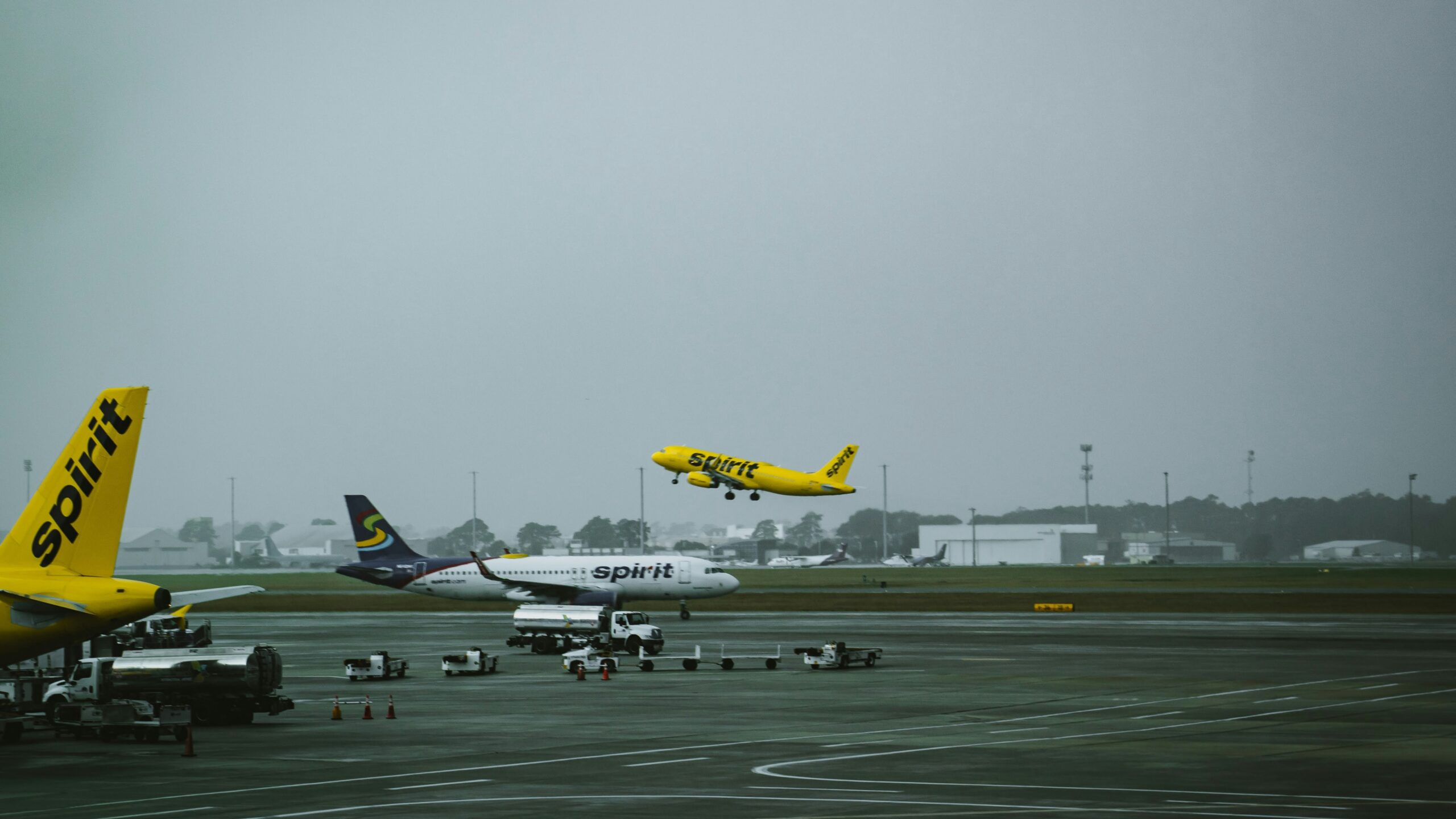
Time is nearly up for displaced Spirit Airlines passengers hoping to lock in discounted rebookings. The rescue fare programs arranged by the U.S. Department of Transportation and four major carriers are set to close as early as May 15, 2026, depending on the airline. After that, travelers on routes Spirit once dominated will face a market with fewer budget options and, by several early estimates, meaningfully higher ticket prices.
Spirit shut down flight operations on May 10, 2026, after a prolonged financial collapse that included a Chapter 11 bankruptcy filing, failed merger bids with both Frontier and JetBlue, and debt the airline ultimately could not restructure. Hundreds of thousands of passengers were left holding tickets for flights that will never depart.
Rescue fare deadlines, carrier by carrier
Transportation Secretary Sean P. Duffy responded to the shutdown by coordinating capped-fare relief across four airlines. According to the DOT’s briefing-room announcement, here is what each carrier committed to:
- JetBlue: Capped fares for displaced Spirit customers, valid for 72 hours from the program’s launch on May 11. That window closes the evening of May 14.
- Southwest: Capped fares for 72 hours on the same timeline, but available only at airport ticket counters, not online.
- Delta: Extended its window to five days from May 11, giving travelers until the end of May 15 to book.
- United: Confirmed as a participant, though the DOT did not publish a specific time limit for United’s caps in the same detail it provided for the other three. Travelers should verify directly with United by phone, online, or at the airport before assuming availability.
Every program requires proof of a valid Spirit booking on a canceled flight: an email confirmation, a booking reference code, or a credit card receipt. If you do not have that documentation ready, search your inbox now. Without it, you will not qualify.
Frontier’s commercial play
Outside the DOT’s coordination, Frontier Airlines launched its own rescue fares targeting former Spirit customers on overlapping routes. In a statement distributed through PR Newswire, Frontier outlined discounted pricing for travelers who can show proof of a Spirit reservation.
The move serves a dual purpose. Frontier and Spirit once tried to merge, and the two airlines shared much of the same customer base: price-sensitive leisure travelers flying routes like Fort Lauderdale to Detroit, Orlando to Philadelphia, and Las Vegas to dozens of mid-size cities. By stepping into Spirit’s footprint quickly, Frontier can capture market share while positioning itself as the last large-scale ultra-low-cost option on many of those corridors. But Frontier’s rescue fares are also time-limited and subject to seat availability, so they are not a permanent safety net.
How much fares could rise on former Spirit routes
Multiple travel-data platforms, including Hopper and Google Flights, have flagged early price increases averaging roughly 23% on domestic routes Spirit previously served. That figure has circulated widely in news coverage since the shutdown. However, neither platform has published a formal report detailing which routes were sampled, over what time period, or whether the comparison is against walk-up fares in the days immediately after the shutdown or against longer-term historical averages. Until a transparent methodology appears, the 23% number is best understood as a rough directional signal, not a precise measurement.
The underlying economics, though, are not in dispute. Removing a major carrier from a route raises prices. Spirit served more than 90 destinations before its collapse and was one of the largest ultra-low-cost carriers in the country. On routes where Spirit was the only budget option, remaining airlines have less incentive to compete on price. Fort Lauderdale, Orlando, and Las Vegas, three of Spirit’s busiest bases, are the markets most likely to feel the squeeze.
Where Frontier, Allegiant, or other budget carriers still fly, the impact may be more modest. But for travelers who relied on Spirit’s sub-$50 base fares to visit family or take affordable vacations, even a moderate increase can push trips out of reach.
Refunds, chargebacks, and the bankruptcy process
Beyond rebooking, thousands of Spirit ticket holders are still waiting to learn whether they will get their money back. Spirit’s Chapter 11 proceedings will determine how refund claims are prioritized among the airline’s creditors, and that process could stretch for months. Federal consumer-protection rules require airlines to issue refunds for canceled flights, but enforcing that obligation against a carrier in bankruptcy is a different matter; passengers are likely to be treated as unsecured creditors, which typically means partial recovery at best.
For passengers who paid by credit card, filing a chargeback dispute with the card issuer may be the faster path. Most major issuers allow disputes for services not rendered, and a canceled flight on a defunct airline clearly qualifies. Debit card holders have fewer protections and should contact their bank promptly to understand their options.
Spirit has not released an official count of affected passengers, nor has it published a timeline for resolving outstanding loyalty-program credits or travel-bank balances. Travelers holding Spirit frequent-flyer miles should not expect those to retain value unless a buyer for the loyalty program emerges during bankruptcy, which is far from guaranteed.
Brett Snyder, the airline-industry analyst behind the Cranky Flier blog, observed in a May 2026 post that the rescue fare programs, while helpful, were “designed to handle the immediate crisis, not the long-term pricing shift that losing an ultra-low-cost carrier creates.” That distinction matters. The caps address this week’s emergency. They do nothing about next month’s fares.
What happens to Spirit’s airport slots and gates
One question that will shape competition on former Spirit routes for years: who gets the airline’s airport infrastructure? At slot-controlled airports like LaGuardia, Newark, and Reagan National, takeoff and landing slots are scarce and valuable. The FAA and DOT will oversee how those slots are redistributed. If they go primarily to legacy carriers, budget competition on those routes may not return. If low-cost carriers pick them up, travelers could see some pricing relief. That process is just beginning, and no decisions have been announced as of mid-May 2026.
At non-slot-controlled airports, Spirit’s former gate space will be reallocated by airport authorities, often through lease agreements. Fort Lauderdale-Hollywood International, Spirit’s largest hub, has already received inquiries from multiple carriers, according to Broward County aviation officials, but no new service announcements have been confirmed.
What to do before the rescue fares disappear
The practical steps are straightforward, but the window is closing fast:
- Gather your documentation. Find your Spirit booking confirmation email, reference code, or credit card receipt showing the purchase.
- Check each carrier’s rescue fare terms. Start with the DOT’s briefing-room page, then go directly to JetBlue, Southwest, Delta, United, and Frontier’s websites for the most current availability.
- Book today if you can. The 72-hour windows for JetBlue and Southwest close the evening of May 14. Delta’s five-day window runs through May 15. Do not assume extensions will be offered.
- File a credit card chargeback if you cannot rebook. Contact your card issuer, explain that the service you paid for will not be provided, and keep copies of your Spirit booking and any cancellation notices.
- Save every communication. Screenshots of fare offers, emails from airlines, and records of phone calls may matter if disputes arise later in the bankruptcy process.
The rescue fares were never meant to be permanent. They were a short-term patch to keep stranded travelers from paying full walk-up prices during a chaotic week. Once those caps lift, the market will set prices based on whatever competition remains. On many former Spirit routes, that competition just got a lot thinner.