The last time the United States had this few cattle, Dwight Eisenhower was finishing his presidency and the country had 180 million people. Today it has nearly 340 million, and the herd they all depend on for hamburgers, brisket, and Sunday roasts has dropped to roughly 86.7 million head, according to the USDA’s January 2026 Cattle report. The squeeze is already showing up at the register: the Bureau of Labor Statistics reported in its March 2026 Consumer Price Index that beef and veal prices jumped 12.1% compared with the same month a year earlier, one of the sharpest increases across all grocery categories. And the USDA’s Economic Research Service says the climb is not over, projecting retail beef prices will rise approximately 6% for the full 2026 calendar year compared with 2025.
A herd six decades in the shrinking
The USDA’s National Agricultural Statistics Service confirmed the depth of the problem in its annual Cattle report at the end of January 2026. Total U.S. cattle inventory slipped again from the prior year, settling at roughly 86.7 million head. But that raw number actually understates the pressure. In 1960, when the herd was last this small, the U.S. population was roughly half its current size. Per capita, the domestic cattle supply is far thinner than anything Americans have experienced in the modern era.
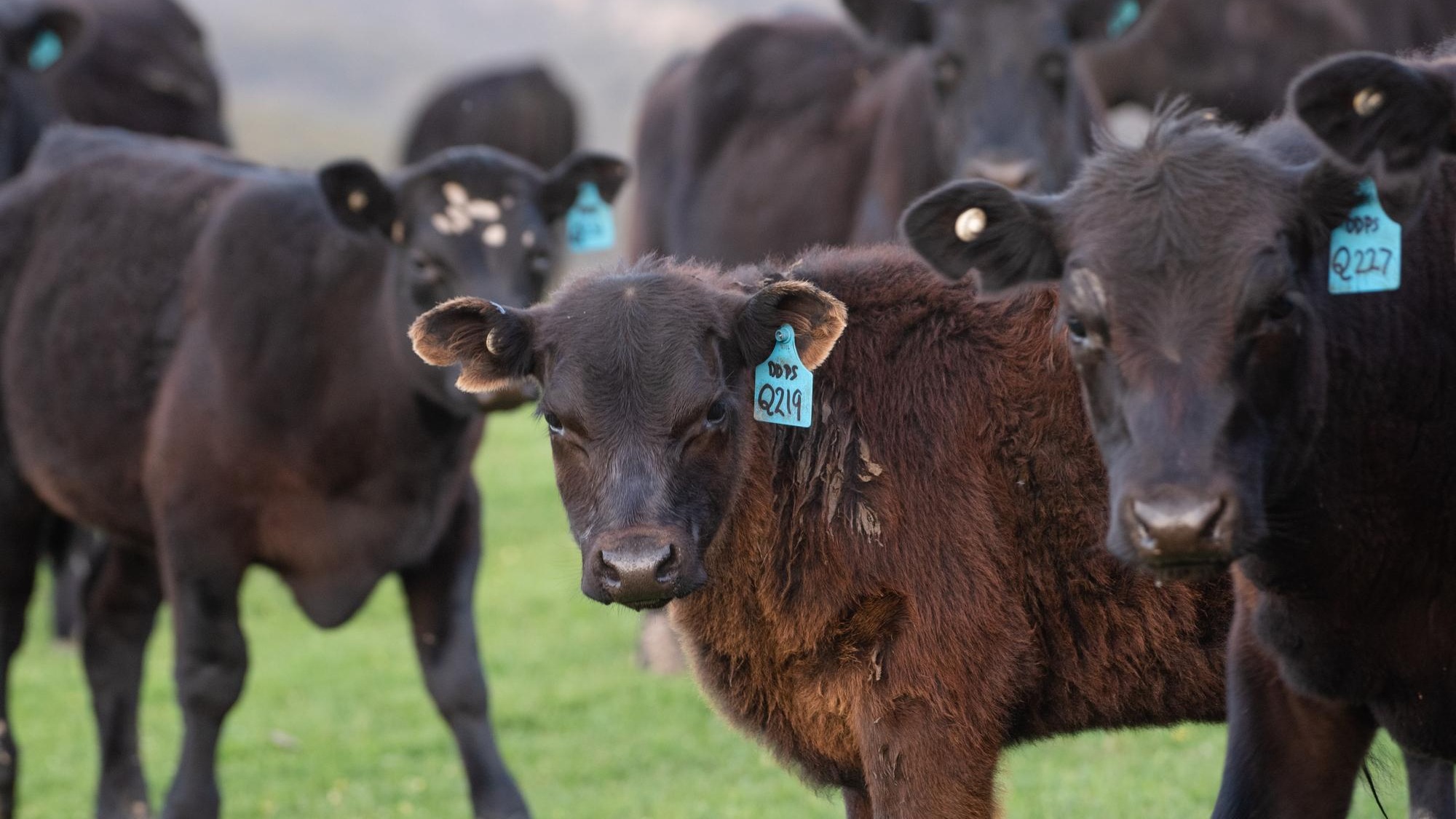
Years of persistent drought across major ranching states, elevated feed costs, and a wave of accelerated culling during 2022 and 2023 gutted the nation’s breeding stock. Ranchers in Texas, Kansas, and Oklahoma sent cows to slaughter rather than pay to feed them through parched summers, and those decisions are still rippling through the supply chain.
“We sold cows we never wanted to sell, and now we’re paying for it,” is how one Oklahoma cattleman described the situation to a local agricultural extension office. That sentiment echoes across the Southern Plains, where the hardest culling took place.
Rebuilding is painfully slow. A rancher who holds back a heifer today instead of sending her to market will not see her first calf reach slaughter weight for roughly three years. That biological clock means the supply squeeze is essentially locked in for the near term, no matter what happens to grain prices or rainfall.
Where the 6% forecast comes from
The USDA’s Economic Research Service connects these tight inventories directly to what shoppers pay. In its Livestock, Dairy, and Poultry Outlook from early 2026, the agency traced constrained beef production back to the shrunken herd and projected that retail prices would keep climbing. The ERS Food Price Outlook forecasts that the beef and veal category will finish the full 2026 calendar year approximately 6% higher than 2025, with a prediction interval that allows for outcomes somewhat above or below that midpoint. That figure represents the expected annual average change, not an additional jump stacked on top of what has already occurred month by month.
To see how ranch-level scarcity turns into sticker shock at the meat case, the ERS also publishes meat price spreads, which break down the gap between what a cattle producer receives and what a consumer pays. When cattle supplies are tight, both the farm-gate price and the processing-to-retail margin tend to widen. The cost inflates at every link in the chain, and all of it lands on the shopper’s receipt.
“The packer is paying more for the animal, and the retailer is paying more for the box, and nobody in the middle is absorbing the difference,” said Derrell Peel, an agricultural economist at Oklahoma State University who tracks cattle markets. “It all flows downhill to the consumer.”
What could push prices higher, or offer some relief
Several forces could shove the actual 2026 outcome away from the ERS baseline in either direction.
Export demand is the most unpredictable variable. If major beef-importing nations, particularly Japan, South Korea, and China, ramp up purchases of American product, domestic supply tightens further and retail prices could overshoot the 6% projection. The ERS forecast does not isolate a specific export scenario in its publicly available summary, making that risk hard to quantify from official data alone.
Imports could work in the other direction. The U.S. does bring in significant volumes of beef from Australia, Brazil, Canada, and New Zealand, primarily leaner cuts used in ground beef and processed products. If the dollar stays strong and foreign suppliers increase shipments, that imported supply could take some edge off domestic shortages, though it would not offset the loss of higher-grade American-raised beef.
Drought remains a wild card. Conditions in key grazing states like Texas, Kansas, and Nebraska will determine whether ranchers feel confident enough to start retaining heifers at scale. A wet spring could accelerate rebuilding; another brutal summer could delay it further.
On the demand side, consumers do have alternatives. Pork and poultry prices have also risen, but neither category has matched beef’s 12.1% surge. The overall food-at-home CPI for March 2026 climbed at a considerably slower pace, meaning beef is pulling away from the pack. Shoppers who shift toward chicken, pork, or plant-based proteins can partially insulate their grocery bills, though heavy substitution can eventually push prices higher in those categories too.
Ground beef versus premium cuts: a data gap that matters
One frustrating hole in the current data: the BLS reports beef and veal as a single CPI line item. Whether ground beef, the everyday staple for most households, is rising faster or slower than ribeyes or chuck roasts is not broken out in the March 2026 release. Some industry trade groups have offered estimates suggesting ground beef has seen slightly smaller percentage increases than premium cuts, but those figures lack the statistical rigor of the official index and are not directly comparable to CPI methodology.
That distinction matters more than it might seem. A family stretching its budget by buying ground beef instead of steak may be absorbing a different rate of inflation than the headline 12.1% suggests. Imported lean trimmings, which make up a meaningful share of the ground beef supply, could be moderating that specific price point. But until the BLS publishes more granular data later in the year, the precise gap remains unclear.
Why the squeeze could outlast 2026
Two independent federal agencies, the BLS measuring consumer prices and the USDA tracking supply from pasture to packing plant, are telling the same story: beef is expensive, and it is not getting cheaper soon. The 12.1% year-over-year CPI reading is a backward-looking measurement built on a large, standardized sample of retail prices. The forward-looking ERS forecast is a conditional projection, not a guarantee, but it rests on hard supply constraints that will not ease until ranchers have had several years to grow their herds back.
Even under optimistic scenarios, meaningful herd expansion is unlikely to show up in beef production before 2028 at the earliest. The math is unforgiving: every heifer held back for breeding is one fewer animal headed to slaughter in the short run, which means the early stages of rebuilding can actually tighten supply further before they eventually loosen it.
For families planning grocery budgets through the rest of 2026, the federal data points in one direction. Sudden relief at the meat counter is unlikely while the national herd sits at a 65-year low and the population it feeds is nearly twice what it was the last time cattle numbers were this small. Watching for store promotions, buying in bulk when prices dip, and leaning more heavily on pork, poultry, or other proteins are strategies that line up with what the numbers show.
What to watch as summer 2026 grilling season arrives
The next major data points will land in quick succession: the BLS will release its May 2026 CPI in mid-June, and the USDA will update its Food Price Outlook around the same time. If beef and veal inflation is still running above 10% year over year, the 6% full-year forecast may prove conservative. If drought conditions ease and ranchers begin holding back heifers in larger numbers, the market could start pricing in eventual relief, even if that relief remains years away. How unevenly the pain falls across regions, income levels, and specific cuts is a question that will only sharpen as more granular data arrives later this year.