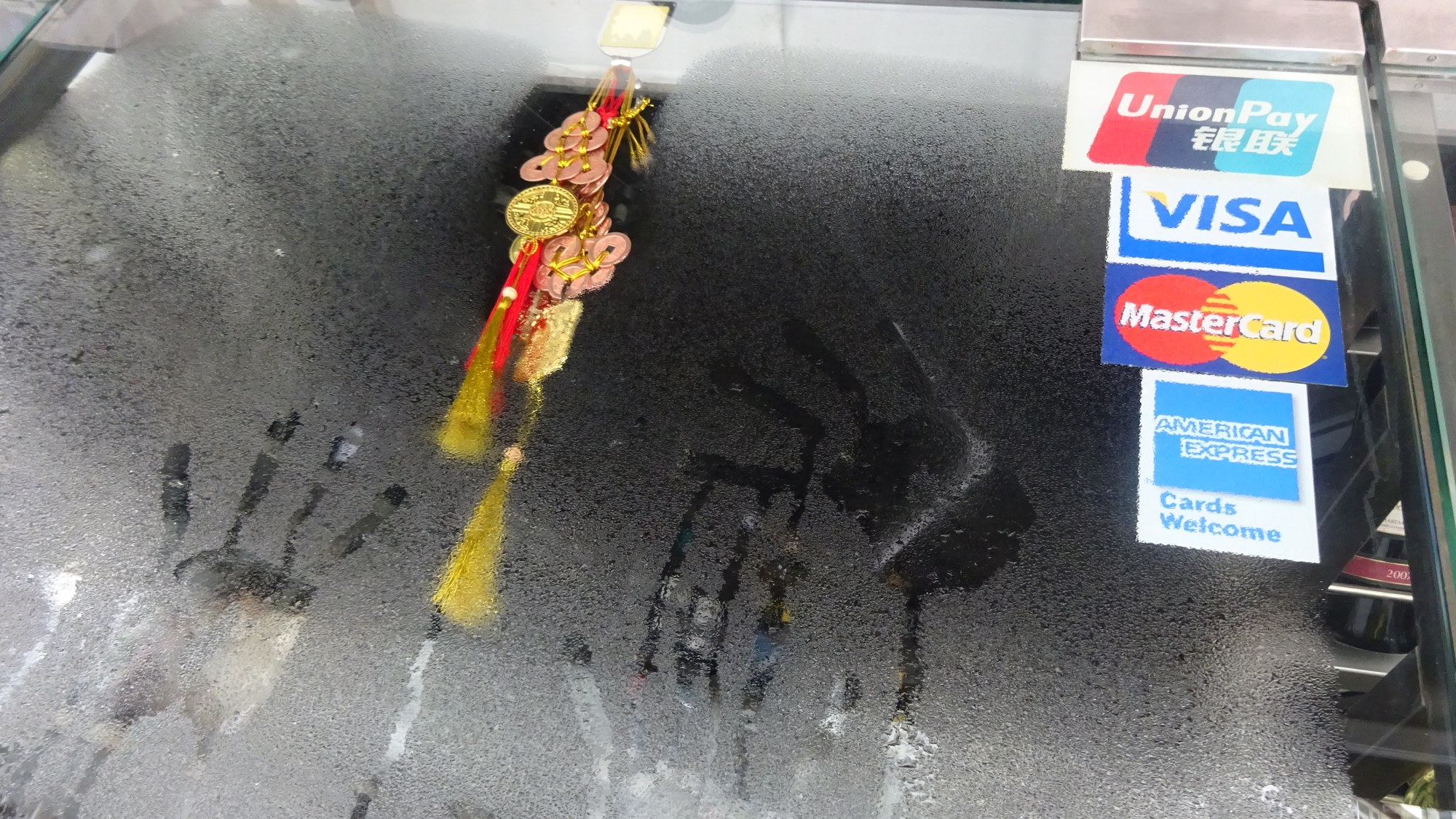
Every time you tap or swipe a card at a restaurant in Illinois, the bank that issued your card collects an interchange fee, typically between 1.5% and 3.5% of the total charge depending on the card type and network. That total includes the meal, the sales tax, and the tip. Illinois passed a law, the Interchange Fee Prohibition Act, to change that math by barring banks from collecting interchange on the tax and tip portions. But on May 22, 2026, the Office of the Comptroller of the Currency stepped in with a preemption order telling every nationally chartered bank in the state: you do not have to follow that law.
What the OCC actually did
The OCC issued two interim final actions, a rule and an accompanying order, both targeting the Illinois IFPA. In its public announcement, the agency called the IFPA “complex, potentially unworkable, and destabilizing” to the federal banking system. That language stands out. Federal banking regulators rarely describe a single state law in terms that stark, and it signals the OCC views the Illinois statute as a structural threat to how national banks run uniform card-processing operations across all 50 states.
The agency grounded its authority in the National Bank Act’s preemption framework, codified under Dodd-Frank at 12 U.S.C. § 25b, which allows the OCC to override state laws that “prevent or significantly interfere” with a national bank’s powers. The practical result: national banks and federal savings associations “are neither subject to nor required to comply” with the IFPA.
The law has two main provisions the OCC is blocking. The first restricts interchange fees on the tax and tip portions of card transactions, which would force banks and payment networks to split those components from the base purchase price before calculating fees. The second limits how banks can use transaction data for marketing and analytics. Both provisions are now off the table for federally chartered institutions.
To put a number on it, consider a $100 dinner tab where $8 is sales tax and $20 is tip. Under current rules, the card-issuing bank collects interchange on the full $128. At a 2% rate, that is $2.56. Under the IFPA, the fee would apply only to the $100 base, dropping the charge to $2.00. Multiply that 56-cent difference across millions of restaurant and retail transactions statewide, and the revenue at stake for large issuers becomes substantial. The OCC’s preemption keeps that revenue flowing.
Why the timing matters
The OCC’s actions take effect June 30, 2026. The IFPA takes effect July 1, 2026, after amendments pushed the original start date back by one year from July 1, 2025. That one-day gap is deliberate in every way that counts: the federal order lands just hours before the state law kicks in, ensuring national banks never operate under the IFPA’s restrictions even briefly.
Because the OCC used an interim final rule rather than a standard notice-and-comment rulemaking, the preemption takes effect immediately. The agency is expected to accept public comments after the fact, which means the rule could theoretically be modified or withdrawn later, but for now it stands as binding on the banks it covers.
Interchange rates themselves are set by the card networks, primarily Visa and Mastercard, not by individual banks. But banks receive the interchange revenue, and the OCC regulates national banks. That chain of authority is what gives the agency its legal hook to preempt a state law aimed at fee calculations that flow through network rules. Neither Visa nor Mastercard has publicly commented on the OCC’s preemption order as of late May 2026, and it is not clear from available records whether either network filed formal comments or amicus briefs in the related litigation.
Who is and is not covered
The preemption applies only to nationally chartered banks and federal savings associations. State-chartered banks and credit unions, which operate under different regulators, are not shielded. That creates a split: a merchant in Chicago could face one set of interchange rules when a customer pays with a card from JPMorgan Chase (a national bank) and a different set when the card comes from a state-chartered community bank or credit union.
For merchants, that patchwork complicates pricing and compliance. For consumers, it means any savings the IFPA was designed to deliver will be uneven at best. The largest card issuers, which handle the bulk of U.S. transactions by volume, are the ones the OCC just exempted.
The legal collision already underway
The OCC’s move does not exist in isolation. U.S. Senator Dick Durbin of Illinois, the architect of the federal Durbin Amendment that capped debit-card interchange fees under the 2010 Dodd-Frank Act, praised a ruling from the U.S. District Court for the Northern District of Illinois that upheld the IFPA against industry challenges. The linked press release does not specify the case name or exact ruling date, but the decision validated the state law as a legitimate exercise of Illinois’ regulatory authority over consumer transactions.
Now the OCC’s preemption order points in the opposite direction, declaring the same law inapplicable to the banks that process the most transactions. The two outcomes have not been reconciled, and further litigation is almost certain. Industry groups that challenged the IFPA in court could use the OCC’s reasoning to bolster their arguments, while Illinois’ attorney general and consumer advocates may challenge the preemption itself as exceeding the OCC’s statutory authority.
If courts uphold the OCC’s position, other states considering similar interchange restrictions will face a clear signal that federal preemption can neutralize their efforts before they take hold. If courts narrow or overturn the order, states could gain real leverage to reshape how swipe fees are calculated on taxes and tips.
What happens next for Illinois merchants and cardholders
Starting July 1, 2026, the IFPA is technically live, but its reach is sharply limited. National banks will continue charging interchange on the full transaction amount, including tax and tip. State-chartered institutions may need to comply, though enforcement details from Illinois regulators have not been finalized as of late May 2026. Merchants should not expect a uniform drop in processing costs, and consumers are unlikely to see immediate price changes at checkout.
The fight over this Illinois restaurant bill sits at the center of a much larger argument about who controls the economics of card payments. Durbin has pushed for years to extend swipe-fee caps to credit cards, not just debit. The Federal Reserve finalized a lower debit-interchange cap in early 2025, reducing the Regulation II ceiling and signaling ongoing federal interest in how these fees are set. Several other states have explored interchange legislation of their own, and the OCC’s preemption will shape how aggressively they move forward.
For now, the OCC has drawn a hard line: national banks answer to federal rules, not state ones, when it comes to interchange. Whether that line holds through the courts and the comment period will determine whether Illinois’ attempt to carve taxes and tips out of swipe fees becomes a model for other states or a cautionary tale about the limits of state-level financial regulation.