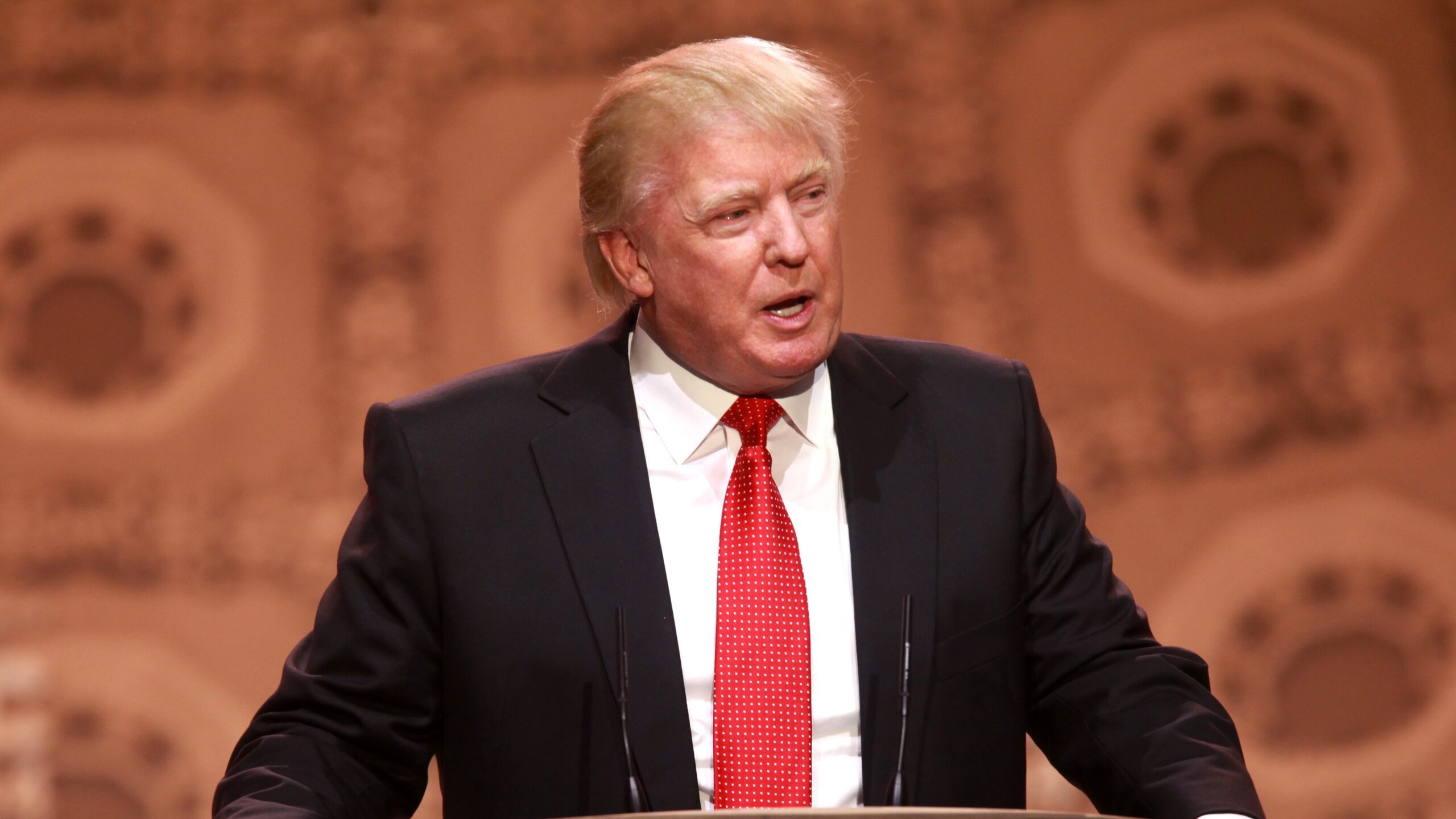
Trump wants to suspend the 18.4-cent federal gas tax – but the math shows families would save just $35 over five months
Fill up a midsize sedan once a week from June through October, and President Donald Trump’s proposed federal gas tax holiday would save your household about $35. Not per month. Total.
That figure comes from the Penn Wharton Budget Model, which ran the numbers on a five-month suspension of the 18.4-cent-per-gallon federal excise tax on gasoline. Assuming a 15-gallon fill-up every week, the theoretical maximum saving would be about $55. But after accounting for the well-documented tendency of gas stations and fuel distributors to absorb part of any tax cut rather than pass it along to drivers, Wharton’s estimate drops to roughly $35, or about $7 a month.
Trump has pitched the suspension as relief for families heading into the summer driving season. The proposal, however, requires an act of Congress, and the gap between the political promise and the pocket-level payoff raises a question lawmakers will have to answer: is a few dollars a month per household worth pulling billions from the fund that keeps American roads and bridges functional?
Where the 18.4 cents goes now
The federal gas tax has been frozen at 18.4 cents per gallon since 1993. Diesel carries a higher rate of 24.4 cents. Both are set under 26 U.S. Code Section 4081, and every cent flows into the Highway Trust Fund, the federal government’s main account for road construction, bridge repair, and public transit grants.
Three decades without an increase have quietly gutted the tax’s purchasing power. Congress has transferred general revenue to keep the Highway Trust Fund solvent multiple times in recent years. A summer suspension would widen that gap at a time when transportation construction costs continue to rise.
Why the savings shrink before they reach your tank
On paper, 18.4 cents off every gallon sounds meaningful. Over a 15-gallon fill-up, that works out to $2.76. Do that weekly for roughly 20 weeks, and you hit the $55 ceiling.
In practice, the full cut rarely makes it to the pump. Economists call this “incomplete pass-through.” When governments suspend fuel taxes, retailers and distributors often keep a portion of the difference, especially in markets with limited competition. The pattern played out during state-level gas tax holidays. Wharton’s modeling draws on that historical evidence. The result: the $55 theoretical maximum becomes roughly $35 in a driver’s actual budget.
The political and fiscal obstacles
Trump cannot suspend the tax by executive order. The power to pause or repeal the levy belongs to Congress, and bipartisan support is far from assured.
The idea is not new. In 2022, President Joe Biden called for a three-month federal gas tax holiday. That proposal never received a floor vote in either chamber, stalling amid concerns from both parties about the revenue loss and the modest consumer benefit. Trump’s version faces similar headwinds. Republican Sen. Mike Lee of Utah has publicly questioned whether the revenue loss to the Highway Trust Fund is justified by such small per-household savings. On the other side of the aisle, Democratic Sen. Tom Carper of Delaware, a longtime advocate for infrastructure funding, has warned that even a temporary suspension could delay critical road and bridge projects already in the pipeline.
No official Congressional Budget Office score of Trump’s current proposal has been published as of June 2026. Outside estimates, including Wharton’s, suggest the Highway Trust Fund could lose several billion dollars during the suspension window, though the precise figure depends on summer fuel consumption. Without a plan to replace that revenue, states waiting on federal dollars for road and bridge projects could face delays.
What could change the math
Retail gasoline prices remain the biggest variable. The U.S. Energy Information Administration tracks national averages, and those numbers swing with crude oil markets, refinery capacity, and seasonal demand. If global oil prices spike over the summer, drivers could still face higher pump costs even with the federal tax removed. If oil prices fall, the holiday’s effect might be barely noticeable against already-declining prices.
State gas taxes add another layer. The federal 18.4 cents is only a fraction of what drivers pay in total fuel taxes. In high-tax states, state levies alone can exceed 50 cents per gallon. Suspending the federal portion would not touch those charges, which means the relief at the pump would feel even thinner in the states where drivers already pay the most.
A few dollars a month vs. billions for roads
Supporters of the holiday argue that any savings matter for families stretched by grocery bills, rent, and insurance costs. Even $7 a month is not trivial when budgets are tight, and they contend a temporary pause would not permanently damage infrastructure funding, particularly if Congress backfills the lost revenue afterward. Trump himself has not detailed a specific mechanism for replacing the lost Highway Trust Fund dollars, leaving that question to congressional negotiators.
Critics counter that per-gallon tax cuts are blunt instruments. They do not scale with need, they leak value to middlemen in the supply chain, and they create a political expectation of extension that makes them hard to end on schedule. The Highway Trust Fund, meanwhile, faces real and immediate consequences. Delayed maintenance on aging bridges and deteriorating interstates carries its own cost, one that shows up not in monthly savings but in longer commutes, higher vehicle repair bills, and, in the worst cases, structural failures.
For drivers watching this debate from the gas station, the math is simple. If Congress passes a suspension and it takes effect this summer, the typical household would pocket roughly $35 over the life of the holiday. That is real money, but it is not life-changing. And the trade-off (billions in lost funding for the roads those same drivers depend on) is a cost that never appears on the receipt.