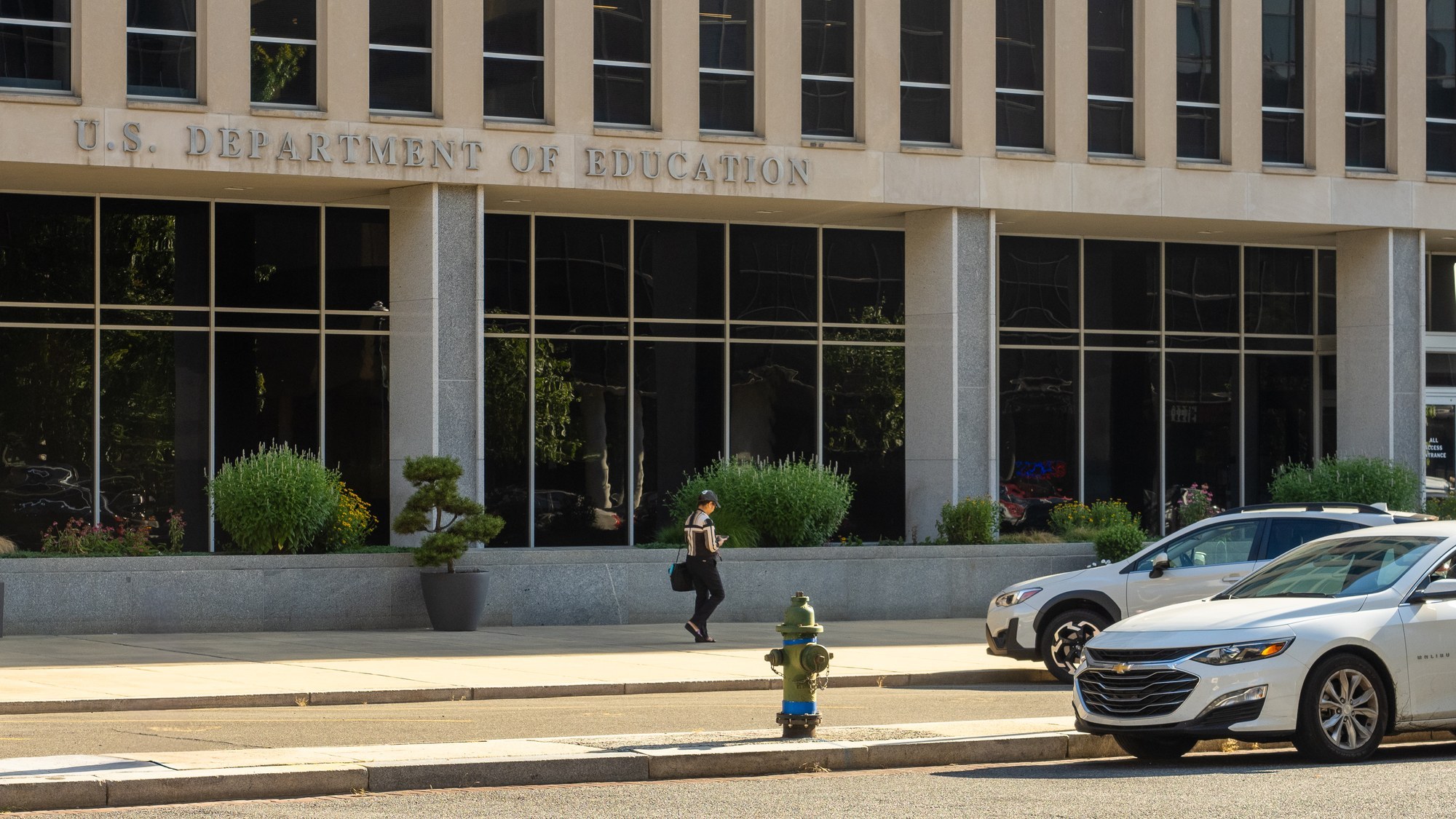
If you are one of the roughly 8 million people still enrolled in the now-blocked SAVE repayment plan, your loan servicer is about to send you a notice that starts a 90-day countdown. Miss it, and the U.S. Department of Education will place you into a fixed-payment plan that could cost you thousands of dollars more per year than an income-driven alternative.
The notices begin going out July 1, 2026. As of late May, that leaves borrowers fewer than 50 days to prepare, and the stakes are not small. Consider a borrower carrying $35,000 in federal student loans on a $45,000 salary. Under the Standard Repayment Plan, the fixed monthly payment on that balance runs in the range of $350 to $400 over 10 years, according to estimates from the Department of Education’s Loan Simulator. Under a typical income-driven plan, that same borrower might pay $150 to $200 a month, with any remaining balance forgiven after 20 or 25 years. That gap adds up to more than $2,000 a year.
The transition is the direct result of the 8th U.S. Circuit Court of Appeals blocking the SAVE plan in 2024, which left millions of borrowers in administrative forbearance with no active repayment plan. Now the Department is winding SAVE down for good, and borrowers who do not actively choose a replacement will be assigned one.
How the 90-day window works
The Department of Education outlined the transition process earlier this year. Starting July 1, loan servicers will send formal notices to every borrower still on SAVE. From the date printed on that notice, the borrower has 90 days to log in and select a new repayment plan. If no selection is made, the servicer will automatically assign the borrower to either the Standard Repayment Plan (fixed payments over 10 years) or the Tiered Standard plan (payments that start lower and increase over time), depending on the loan type.
Both are fixed-payment structures. Neither adjusts based on what a borrower earns. For anyone whose income is modest relative to their debt, that is the core problem: the monthly bill is calculated purely on the loan balance and repayment term, with no consideration of ability to pay.
A January 2025 Federal Register notice laid the regulatory groundwork, tying the availability of restructured repayment options to effective dates that align with the July 1, 2026 transition. That rule also introduced two additions to the federal repayment menu: the Tiered Standard plan and a new Repayment Assistance Plan, which is designed as an income-contingent option with its own payment formula and forgiveness timeline. Full details on the Repayment Assistance Plan’s terms have not yet been widely published, which is itself a source of frustration for borrowers trying to compare options before the deadline.
Senators are demanding more time and better communication
A group of Democratic senators, including Sheldon Whitehouse, Jeff Merkley, Tim Kaine, and Elizabeth Warren, sent a letter to Education Secretary Linda McMahon in spring 2026 demanding more flexibility for borrowers being forced off SAVE. The senators argued that the Department’s approach amounts to a 90-day countdown to “automatic enrollment in the more expensive” fixed-payment plans for anyone who fails to act, and they urged the Department to extend the timeline, improve outreach, and simplify enrollment in income-driven alternatives.
“Borrowers should not be punished with unaffordable payments because of bureaucratic confusion or a missed piece of mail,” the senators wrote, pressing McMahon to ensure that no one ends up in a costlier plan simply because a notice went to an outdated address.
As of late May 2026, Secretary McMahon’s office has not publicly responded to the letter.
On the legislative side, H.R. 4862, known as the LOAN Act, was introduced in the 119th Congress in mid-2025. It includes a provision allowing the Secretary of Education to assign a fixed repayment plan to any borrower who does not choose one for loans originated on or after July 1, 2026. The bill has not advanced out of committee, and it remains unclear whether its provisions would change the transition or simply codify what the Department has already announced.
The questions borrowers are still waiting on
Several important details remain unresolved, and each one has real financial consequences.
How will notices be delivered? Loan servicers have not disclosed whether borrowers will receive emails, physical letters, or both. This matters enormously because the 90-day clock starts on the date the notice is sent, not when the borrower opens it. A letter mailed to a stale address could eat up weeks of the window before the borrower even knows the countdown has begun.
How many borrowers are likely to miss the deadline? The Department has not released projections on how many of the roughly 8 million SAVE enrollees will fail to respond in time. Without that number, the total financial impact on affected households is impossible to estimate, but given the scale, even a small percentage of missed deadlines would mean hundreds of thousands of people landing in higher-cost plans by default.
Do months in SAVE forbearance count toward forgiveness? Borrowers who have been in administrative forbearance since SAVE was blocked may be wondering whether that time counts toward income-driven repayment forgiveness or Public Service Loan Forgiveness. The Department has not issued clear, consolidated guidance on this point, and the answer could affect whether borrowers choose to prioritize certain IDR plans over others.
Can you switch plans after being auto-enrolled? Under existing rules, borrowers can generally change repayment plans at any time. But processing a switch can take weeks, and payments under the assigned plan may come due in the interim. A borrower placed into Standard who then applies for an income-driven plan could face one or more months of the higher payment before the change takes effect.
Will the deadline be extended? The Department has not published any guidance suggesting the 90-day window will be lengthened or that borrowers will receive an automatic forbearance or grace period. For now, borrowers should plan around the assumption that the deadline is firm.
What to do before July 1
Update your contact information now. Log into the Federal Student Aid portal and confirm that your email address, mailing address, and phone number are current. Do the same on your loan servicer’s website. If the notice goes to the wrong place, you may not find out until the deadline has passed.
Learn what plans will be available. Once SAVE is retired, the remaining income-driven options will include Income-Based Repayment (IBR), Income-Contingent Repayment (ICR), Pay As You Earn (PAYE) where still available, and the new Repayment Assistance Plan. Each has different eligibility rules, payment formulas, and forgiveness timelines. The Department’s Loan Simulator lets you plug in your balance, income, and family size to compare monthly costs and total interest across plans.
Run the numbers before the notice arrives. Knowing your approximate payment under each plan ahead of time means you can respond quickly once the 90-day window opens. Borrowers who wait until the notice shows up to start researching will have less margin for error.
Watch for new guidance through the summer. Regulatory tweaks, legislative changes, or court rulings could still reshape this transition before or shortly after July 1. The Department could announce extended timelines, new forbearance options, or simplified enrollment procedures. Checking the Federal Student Aid website and your servicer’s communications regularly through the summer of 2026 is the simplest way to stay ahead of any shifts.
Why waiting for perfect information is the worst strategy
The only fully confirmed elements right now are the July 1, 2026 start date for notices, the 90-day decision window, and the automatic assignment into Standard or Tiered Standard for anyone who does not actively choose another plan. Much of the rest, from legislative action to potential deadline extensions, is still in flux. That uncertainty is precisely the reason to act now rather than later. Updating your contact information takes five minutes. Running the Loan Simulator takes 15. Neither commits you to anything, but both put you in a position to respond the day your notice arrives instead of scrambling after half the window has already closed.