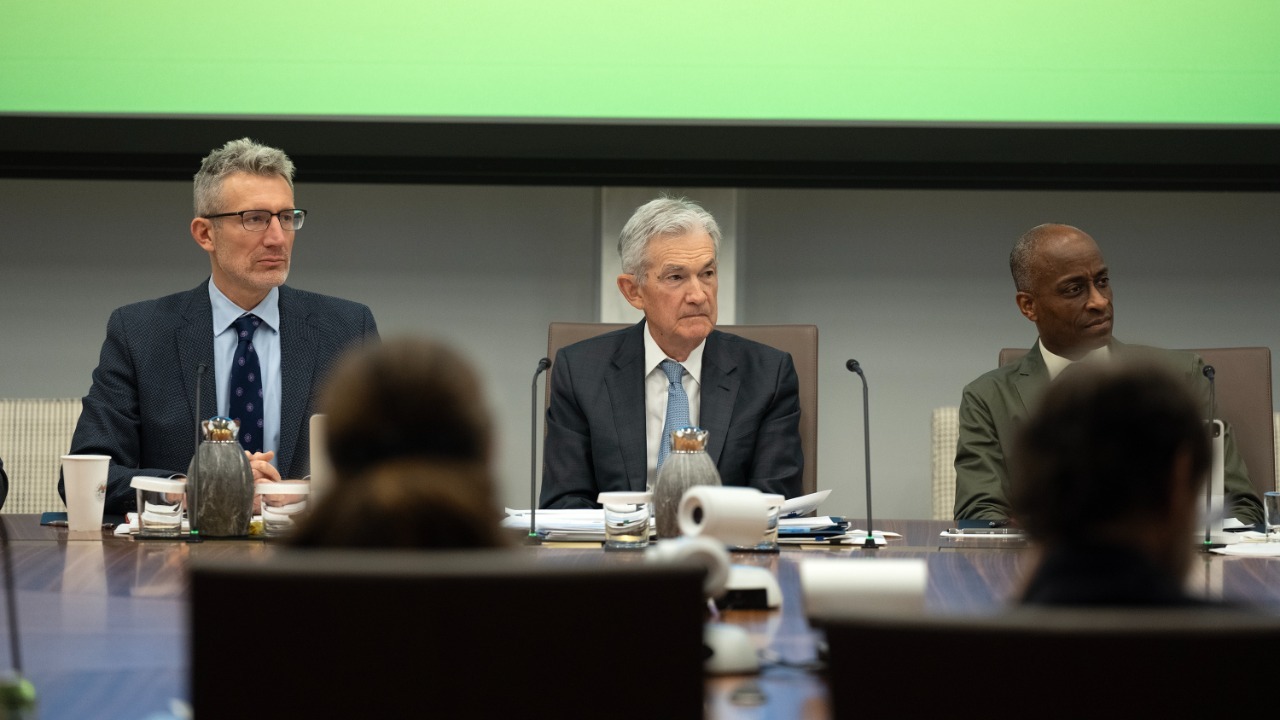
When Kevin Warsh calls the June 16-17 Federal Open Market Committee meeting to order, he will become the first new face at the head of that table in more than a decade. And the most probable outcome of his debut is also the quietest one: no rate cut, no rate hike, and no change to the federal funds rate target of 3.50% to 3.75%.
That is the range the committee held steady on April 29, 2026, and futures traders have been pricing in a repeat. The CME FedWatch tool, which translates fed-funds futures into implied probabilities, has shown a greater-than-90-percent chance of a hold at the June meeting throughout late May 2026.
For the roughly 130 million American households juggling variable-rate debt or watching yields on savings accounts, the practical meaning is simple: credit-card APRs, adjustable-rate mortgage resets, and high-yield savings returns are unlikely to move after the meeting. The policy rate that anchors all of those products has sat at 3.50%-3.75% since April, the latest pause in an easing cycle that brought rates down from the 5.25%-5.50% peak the Fed reached during its 2023-2024 inflation-fighting campaign.
How Warsh got here
Warsh’s path to the chair moved quickly by Washington standards. President Trump formally nominated the former Fed governor on January 30, 2026, a date recorded by the American Presidency Project at UC Santa Barbara. (The Project’s homepage links to its searchable archive of presidential documents; a direct URL for the nomination text was not available at the time of publication.) The Senate confirmed him on a narrow, party-line vote; the exact tally has not been independently verified in the publicly available record, and no roll-call link has been located to confirm the margin.
Warsh is not a newcomer to the building on Constitution Avenue. He served on the Fed Board from 2006 to 2011, a stretch that put him at the center of the 2008 financial crisis and its aftermath. During those years he developed a reputation as a skeptic of prolonged easy money, a stance that distinguished him from several colleagues who favored aggressive quantitative easing.
He inherits a committee that has already shifted to a cautious posture. The April 29 statement offered no strong lean toward further easing or renewed tightening, and the accompanying implementation directive to the New York Fed’s trading desk simply instructed open-market operations to keep rates within the existing band.
Why markets see a hold
Three forces are converging to keep the committee in place.
Inflation is cooling but not cold. The Bureau of Labor Statistics’ Consumer Price Index report for April 2026, published in mid-May, showed year-over-year headline inflation still running above the Fed’s 2% target. The exact reading has not been independently confirmed for this article, but the broad direction was consistent with a gradual decline that has not yet reached the committee’s goal. Core CPI, which strips out food and energy, remained elevated as well. That backdrop gives policymakers little reason to cut further and risk reigniting price pressures they spent two years wrestling down.
The labor market is holding up. The Bureau of Labor Statistics’ monthly Employment Situation reports through spring 2026 showed nonfarm payrolls continuing to expand and the unemployment rate staying in a range most economists consider consistent with full employment. A resilient job market removes the urgency that would typically push the Fed toward emergency easing.
Trade-policy uncertainty is muddying the forecast. Tariff actions and retaliatory measures between the United States and major trading partners have clouded the growth outlook without yet producing the kind of sharp downturn that would force the committee’s hand. Several FOMC participants noted in their public remarks this spring that trade disruptions make it harder to distinguish a temporary supply shock from a lasting drag on demand, reinforcing a wait-and-see stance as the path of least regret.
What to watch beyond the rate decision
Even if the target range stays put, the June meeting will be dissected for clues about Warsh’s leadership style and the committee’s evolving thinking.
The post-meeting statement. Under Powell, FOMC statements followed a well-worn template honed over eight years. Any changes in word choice, particularly around the balance of risks between inflation and employment, will be treated as a policy signal. Watch for whether Warsh retains the “data-dependent” framing Powell favored or introduces language that tips the committee’s hand toward a specific future action.
The Summary of Economic Projections and dot plot. June FOMC meetings have historically included updated economic forecasts and the “dot plot” showing each participant’s expected rate path. If the June 2026 meeting follows that precedent, the dots will offer the first window into how individual policymakers, under new leadership, see rates evolving through year-end and into 2027. That projection grid often moves markets more than the rate decision itself, because it reveals the range of opinion inside the room.
Balance-sheet policy. The Fed has been gradually shrinking its holdings of Treasuries and agency mortgage-backed securities through a process known as quantitative tightening, or QT. The April 29 statement and implementation directive set the current pace of runoff. Any adjustment to that pace, or language hinting that the committee is debating when to end the drawdown, would be a significant signal about how Warsh views the appropriate size of the Fed’s balance sheet going forward.
The press conference. Warsh’s first turn at the post-meeting podium will set the tone for his tenure. Traders and journalists will listen for any departure from Powell’s careful, hedge-every-sentence style. Even small rhetorical shifts, such as emphasizing financial-stability risks over labor-market resilience, could reprice expectations for the September and December meetings.
Voting composition and potential dissents. FOMC voting membership rotates among regional bank presidents each January. The 2026 roster includes a mix of voices, and any dissent in the June decision, whether from a hawk wanting to signal tightening or a dove pushing for a cut, would immediately become headline news and a marker of internal tension Warsh must manage.
What a prolonged hold means for household finances
If the Fed keeps rates at 3.50%-3.75% through the summer, the effects ripple across balance sheets in familiar patterns.
Savers parking cash in high-yield accounts and short-term Treasuries can expect annual percentage yields north of 4% to persist, a welcome contrast to the near-zero returns of the early 2020s. Borrowers face the flip side: elevated costs on credit cards (many of which carry APRs directly tied to the prime rate), auto loans, and home-equity lines of credit.
The 30-year fixed mortgage rate, which tracks the 10-year Treasury yield more closely than it tracks the fed-funds rate, has hovered in the mid-6% range through the spring of 2026 according to weekly data from Freddie Mac’s Primary Mortgage Market Survey. A June hold alone is unlikely to change that picture, though any shift in the dot plot could nudge long-term yields, and mortgage rates with them, in either direction.
Warsh’s harder calls are still ahead on the FOMC calendar
A first meeting that delivers no surprises is, in many ways, the ideal opening act for a new Fed chair. It buys time to build consensus, take the measure of a reshuffled committee, and establish credibility with bond traders and Capitol Hill alike before making any consequential moves.
The harder decisions, whether to resume cutting if the economy weakens or to hold firm if inflation proves stickier than projected, almost certainly lie further down the FOMC calendar. The next two meetings fall on July 29-30 and September 16-17, either of which could become the stage for Warsh’s first decisive policy action.
Until then, June 16-17 is best understood as a baseline: the moment the new chair takes the gavel, confirms the status quo, and begins shaping the expectations that will govern everything that follows.