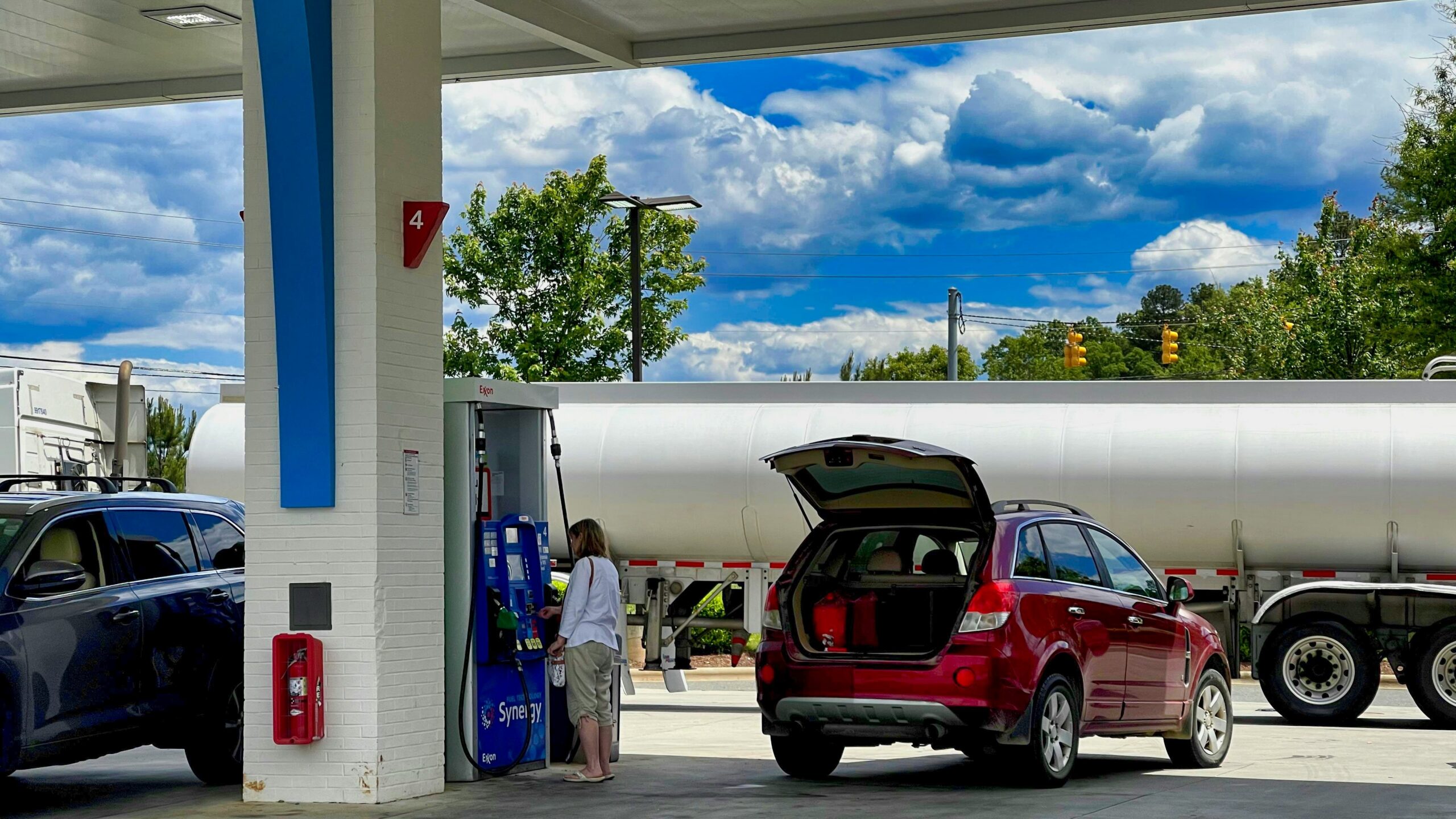
Gas is $4.52 a gallon, the most expensive Memorial Day fill-up in four years. And Americans are hitting the road anyway, in record numbers.
AAA projects that 45 million people will travel between Thursday, May 22, and Monday, May 26, 2026, the highest Memorial Day total the organization has ever recorded. The forecast, released as part of AAA’s annual holiday travel outlook, covers trips by car, plane, train, bus, and cruise ship and would surpass last year’s mark, extending a post-pandemic streak of record-breaking holiday weekends.
“The demand we’re seeing is remarkable given where pump prices are,” said Aixa Diaz, a AAA spokesperson, in the organization’s forecast release. The national average for regular gasoline stood at $4.52 as of May 19, 2026, according to AAA’s daily fuel gauge report, which tracks prices at more than 150,000 stations nationwide.
That figure is the highest Memorial Day pump price since 2022, when drivers paid $4.59 per gallon during the same holiday window, according to the U.S. Energy Information Administration’s weekly retail gasoline series. No Memorial Day in between recorded a higher nominal price.
Near-record prices, record demand
The last time gas was this expensive heading into Memorial Day, travel demand softened. The EIA’s Today in Energy analysis from 2022 noted that fuel costs were among the highest on record in both nominal and inflation-adjusted terms, and some households pulled back on driving in response.
This year, the opposite is playing out. A record travel forecast paired with near-2022 prices suggests that expensive gas is no longer the automatic brake on holiday trips it once was.
The EIA’s latest gasoline and diesel fuel update, released May 12, 2026, confirms the price climb has been sustained through the spring, not a brief spike. Prices have risen steadily since March, tracking a pattern consistent with tightening refinery output and strong seasonal demand as the summer driving season ramps up.
Why travelers are absorbing the cost
The labor market is a big part of the answer. Unemployment remains near historic lows, and wage growth over the past two years has given many households a financial cushion that did not exist during the 2022 price shock. For middle- and upper-income families especially, the extra $15 or $20 per tank is an annoyance, not a dealbreaker.
There is also a shift in priorities that took root during the pandemic and has not faded. AAA’s 2026 Memorial Day travel survey, released alongside its forecast, found that Americans continue to place a higher value on vacation experiences than they did before 2020. That preference has survived multiple rounds of inflation across hotels, airfare, and fuel.
But the burden is not evenly distributed. Lower-income households feel $4.52 gas far more acutely, and some are likely shortening trips, choosing closer destinations, or skipping road travel altogether. AAA’s forecast does not break down travelers by income bracket, so the extent of that trade-off is hard to quantify.
What is driving prices higher
Several forces have pushed gas prices up this spring. Refinery maintenance season tightened domestic fuel supply through March and April. Global crude oil prices have remained elevated amid ongoing OPEC+ production restraint. And new tariffs on Canadian crude oil imports, which took effect earlier this year, have added cost pressure to refiners in the Midwest and Gulf Coast that depend on Canadian supply, according to EIA data on U.S. petroleum imports.
President Trump has publicly called for suspending the federal gasoline excise tax, currently 18.4 cents per gallon, to provide relief at the pump. But a gas tax holiday requires an act of Congress, and as of late May 2026, no legislation has advanced through committee, according to the Associated Press. Even if lawmakers moved quickly, cutting 18.4 cents from a $4.52 gallon would bring the price to roughly $4.34, still well above the levels most drivers consider comfortable, and would do nothing to address the supply dynamics keeping prices elevated.
For Memorial Day travelers filling up this week, the gas tax debate is a political backdrop, not a practical savings opportunity.
How far $4.52 gas actually stretches
To put the cost in concrete terms: a driver with a 15-gallon tank making a 600-mile round trip at 30 miles per gallon will burn roughly 20 gallons and spend about $90 on gas alone. That same trip at last Memorial Day’s average price of roughly $3.60 per gallon would have cost about $72, a difference of $18. For a family making two or three fuel stops over a long weekend, the added cost can top $50.
Those numbers help explain why the record travel forecast is so striking. Millions of households are looking at meaningfully higher fuel bills and deciding the trip is still worth it.
Record crowds and an open question for summer
The clearest signal heading into Memorial Day 2026 is that the old relationship between gas prices and travel demand has weakened. Four years ago, $4.59 gas prompted caution. This year, $4.52 gas is meeting record crowds.
Whether that pattern holds through the rest of the summer depends on where prices go from here. The EIA’s Short-Term Energy Outlook projects that national averages could remain above $4 through at least August, with the possibility of further increases if refinery disruptions or geopolitical tensions tighten supply. If the national average pushes past $5, the calculus could shift.
But for now, 45 million Americans have made their choice. The trip is worth the cost.