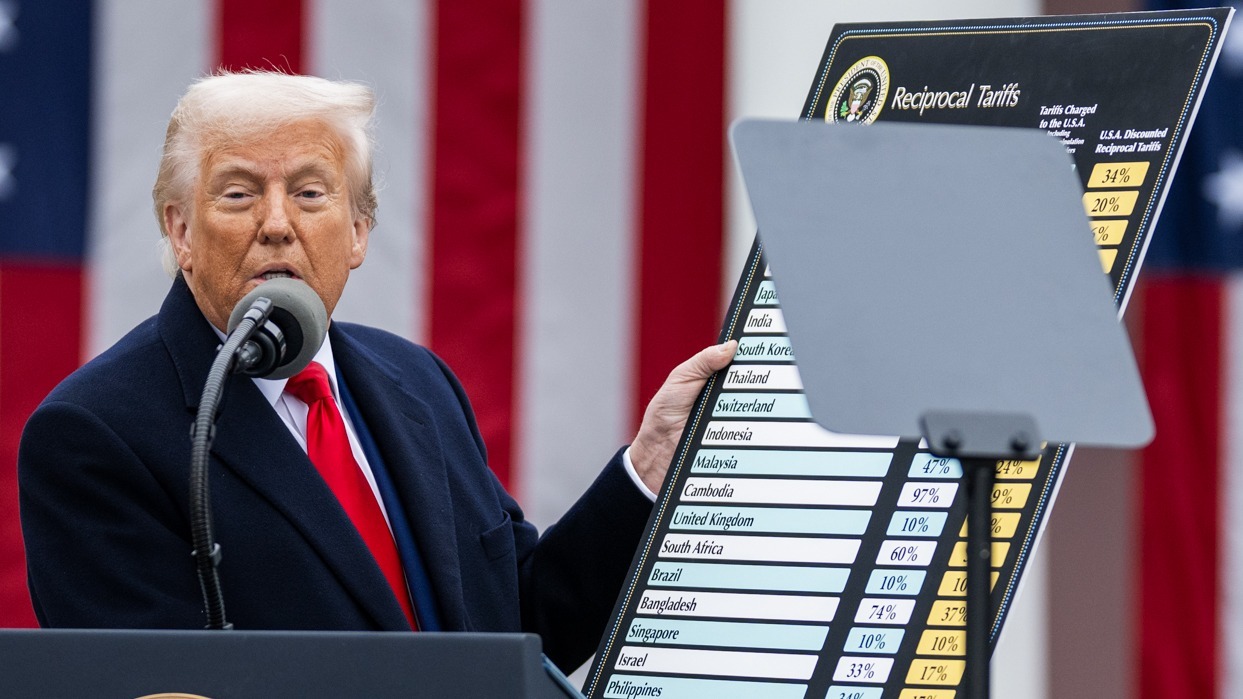
The average American household is now paying roughly $1,500 more per year because of import tariffs imposed since early 2025, according to the Wharton Budget Model at the University of Pennsylvania. That figure, drawn from the research group’s updated analysis published in February 2026, accounts for two federal court rulings that struck down portions of the tariff regime. Even with those losses, the remaining duties represent the largest effective tax increase on American consumers since President Clinton signed the Omnibus Budget Reconciliation Act of 1993.
The comparison carries weight because the 1993 law was an explicit, Congress-approved tax bill. It raised the top income-tax rate to 39.6 percent, lifted the cap on Medicare payroll taxes, and added 4.3 cents per gallon to the federal gas tax. The Congressional Budget Office estimated at the time that those changes would generate roughly $240 billion in additional revenue over five years. Spread across roughly 100 million households and adjusted for inflation, that package worked out to approximately $1,100 to $1,300 per household per year in today’s dollars, a range that Wharton’s researchers say today’s tariffs now match or exceed. The critical difference: not a single member of Congress voted on the current tariff regime.
How the tariff wall was built, layer by layer
U.S. Customs and Border Protection publishes rolling data on trade-related collections, and those figures tell a clear story. Customs revenue has climbed sharply since early 2025 and stayed elevated quarter after quarter, consistent with effective tariff rates at their highest point in decades.
The buildup started with metals. In February 2025, a presidential proclamation reinstated Section 232 steel tariffs that had been partially relaxed under earlier trade agreements, reimposing 25-percent duties on a broad range of foreign steel products. A separate executive order the same month extended similar treatment to copper imports, citing national security concerns about dependence on overseas suppliers. For automakers, appliance manufacturers, and homebuilders, the cost increase was immediate and difficult to absorb without raising prices. A new washing machine now costs about $75 more than it did 18 months ago. A contractor buying steel studs for a housing project is paying a surcharge that did not exist in 2024.
The administration then moved up the technology ladder. In January 2026, a new proclamation targeted semiconductors, chipmaking equipment, and derivative products, adding tariff lines that had never before carried national-security duties. The White House order cited vulnerabilities in high-tech supply chains and the need to protect domestic fabrication capacity. Because chips sit inside virtually every modern product, from phones and cars to medical devices and HVAC systems, the ripple effects spread far beyond the electronics aisle. A midrange laptop has crept up by roughly $90.
A third front opened in March 2026, when the Office of the U.S. Trade Representative launched new Section 301 investigations into what it described as structural excess capacity and unfair production practices abroad. Section 301 is the same legal authority that underpinned earlier waves of China-specific tariffs. If the new probes result in additional duties, the effective tariff rate could climb higher still.
Two court losses, and why prices stayed high anyway
Federal courts have pushed back twice on the administration’s tariff powers. In separate rulings issued in the spring and fall of 2025, the U.S. Court of International Trade blocked certain expansions of duties imposed under the International Emergency Economic Powers Act (IEEPA). In United States v. Greenpeace Inc. and a related consolidated challenge brought by a coalition of importers, the court found that IEEPA’s emergency authorities did not stretch as far as the White House claimed. Those decisions removed some tariff lines from the books.
Yet the household cost burden barely budged. The administration had already layered so many separate tariff actions, each under a different legal authority (Section 232 for metals, Section 301 for trade practices, a standalone proclamation for semiconductors), that losing two battles did not meaningfully shrink the overall wall of duties. Wharton’s February 2026 update incorporated those court outcomes and the resulting narrower tariff schedule, yet still arrived at the $1,500 per-household figure because the surviving duties across all other authorities remained so extensive.
Appeals in both cases remain possible, and trade lawyers say the legal landscape is far from settled. If higher courts reinstate the blocked measures, the per-household cost could rise. If additional challenges succeed, it could fall. For now, the tariffs that survived judicial review account for the vast majority of the added burden.
Inside the $1,500 estimate
Wharton’s model works by matching official tariff schedules maintained by the U.S. International Trade Commission, which set precise line-item rates for thousands of products, against actual import volumes and consumer expenditure surveys from the Bureau of Labor Statistics. The researchers calculate how much of each duty is passed through to retail prices and then map those increases onto the spending patterns of a typical household. The February 2026 version of the analysis explicitly reflects the post-court-ruling tariff landscape: it uses the narrower set of duties that remained in force after the Court of International Trade struck down the IEEPA-based expansions, meaning the $1,500 figure already nets out the tariff lines that were judicially removed.
The result is an average, and averages obscure wide variation. A family that recently bought a car, replaced a roof, or upgraded home electronics likely absorbed well above $1,500 in tariff-driven costs. A household whose spending tilts toward services, rent, and domestically produced food may have felt less. Wharton has acknowledged that it has not released the full microdata or replication code behind the estimate, which means outside economists cannot yet run their own sensitivity tests on assumptions about currency movements, supplier absorption, or consumer substitution.
Other research groups have landed in a similar range. The Tax Foundation’s tracker of the tariff burden, updated regularly through 2025 and into 2026, and the Peterson Institute’s tariff tracking analysis have each shown consumer cost increases of roughly $1,200 to $1,800 per household annually, depending on modeling choices. The spread is wide enough to invite debate but narrow enough to confirm the general scale.
Who absorbs the heaviest costs
Tariffs are regressive by nature. Because they raise the price of goods rather than taxing income, they consume a larger share of a lower-income family’s budget. For a household earning $40,000 a year and spending a high proportion of that on physical goods (clothing, appliances, electronics, building materials), a $1,500 annual tariff burden amounts to roughly 3.8 percent of pre-tax income. By contrast, the same $1,500 represents just 0.75 percent of income for a household earning $200,000 that directs more of its spending toward services, travel, and savings. That five-to-one ratio in effective rates illustrates why economists classify tariffs alongside sales taxes as among the most regressive forms of federal revenue.
Granular distributional data remain limited. CBP revenue tables confirm that collections are elevated but do not track which consumers ultimately pay. Analysts can infer that steel-intensive purchases like cars and construction materials, copper-reliant products like wiring and plumbing, and semiconductor-heavy electronics carry the heaviest markups. But precise breakdowns by income quintile, region, or household type will require more detailed modeling than any group has yet published.
The administration has framed its tariff strategy as a defense of domestic manufacturing and national security, arguing that short-term price increases are justified by long-term gains in reshoring and supply-chain resilience. White House officials have pointed to new factory announcements in steel, aluminum, and chipmaking as evidence that the policy is working. Critics counter that the measures function as a broad consumption tax falling hardest on the households least able to afford it. Sen. Chuck Grassley of Iowa, a Republican, has publicly questioned whether the tariffs are hurting farm-state exporters who face retaliatory duties from trading partners. Several other GOP senators from agricultural states have echoed similar concerns.
Three variables that will shape household costs through the rest of 2026
Whether the $1,500 figure holds, shrinks, or grows depends on what happens next on three fronts.
New duties from the Section 301 probes. The investigations launched in March could produce a fresh round of tariffs by late summer or fall. If they do, the effective tariff rate will move higher, and so will the household cost estimate.
Court rulings on appeal. The pending appeals could either restore the blocked IEEPA tariffs or further narrow the administration’s authority. Legal observers expect decisions before the end of the year, but the timeline is uncertain.
Retaliation from trading partners. The European Union, Canada, and several Asian economies have announced or implemented retaliatory measures on U.S. goods, raising costs for American exporters and, in some cases, prompting domestic price adjustments as companies lose overseas revenue. The feedback loop between tariffs and counter-tariffs adds a layer of unpredictability that no single model fully captures.
Import duties collected at the border do not appear on a pay stub or a 1040 form. They show up at the register, in contractor bids, and in monthly subscription prices for services that depend on imported hardware. By Wharton’s reckoning, the total is large enough to rank alongside the most significant tax increases in modern American history. And unlike the 1993 law it now rivals, this one arrived without a single floor vote in Congress.