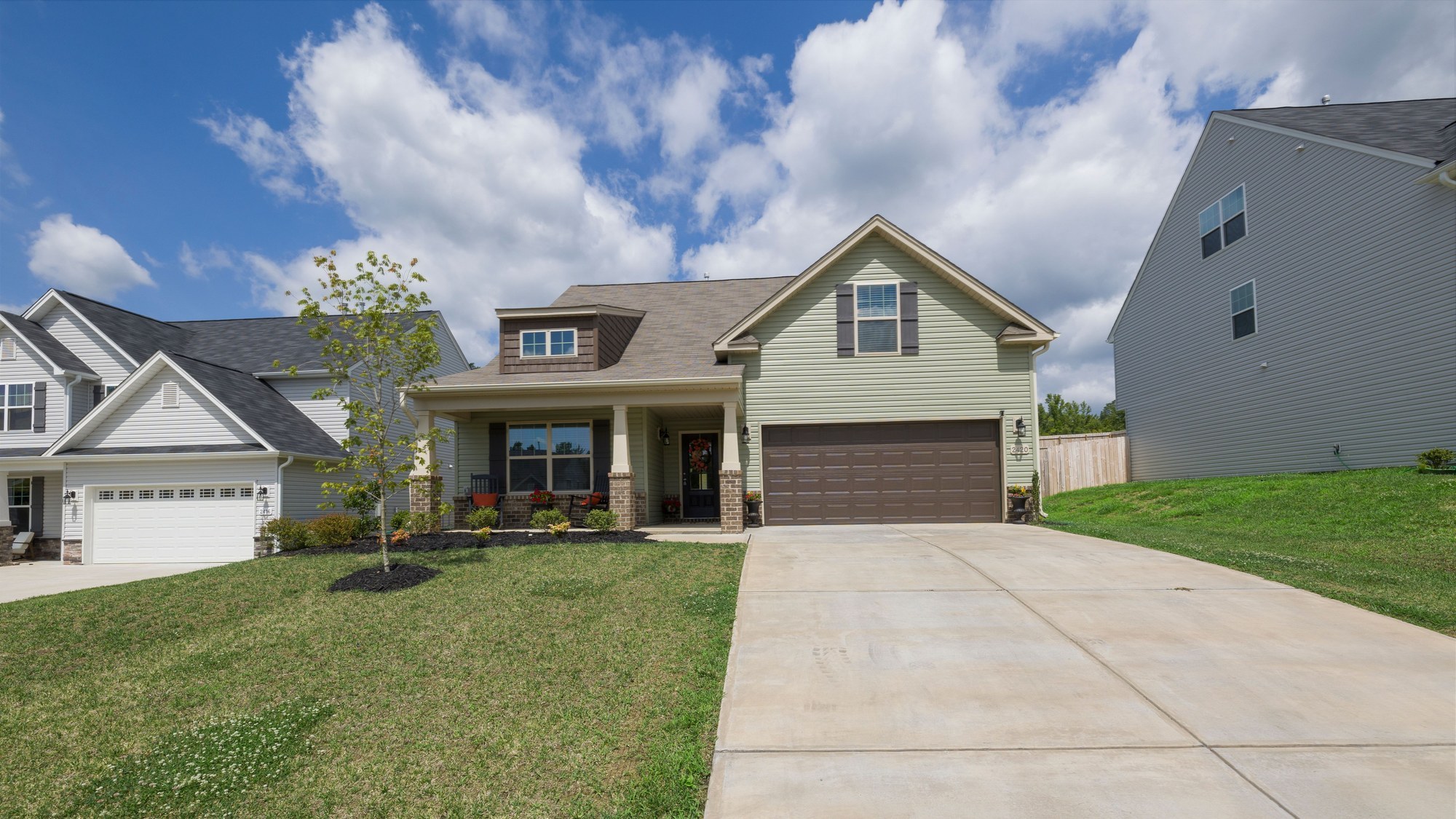
Picture a homeowner in suburban Denver who bought a three-bedroom house in 2020 with a 2.875% fixed-rate mortgage. Her home has appreciated roughly 40% since then. On paper, she has more than $200,000 in equity. In practice, she is stuck. Selling and buying a comparable house at today’s rates would add nearly $900 a month to her housing costs, wiping out any lifestyle upgrade the move was supposed to deliver.
She is far from alone. According to ATTOM’s Q1 2025 U.S. Home Equity and Underwater Report, 46.2% of mortgaged residential properties qualified as “equity rich,” meaning the combined loan balances were no more than half the home’s estimated market value. That share has slipped from a peak of 49.2% in mid-2024, but it still towers over anything recorded in the decade following the 2008 crash. By the Federal Reserve’s measure in its Z.1 Financial Accounts of the United States, aggregate homeowner equity exceeded $35 trillion heading into 2025.
Yet existing-home inventory remains painfully thin. The reason is not a mystery. It is a number printed on millions of monthly mortgage statements: the interest rate.
The monthly math that keeps owners in place
A homeowner carrying a 30-year fixed mortgage at 3% on a $400,000 balance pays about $1,686 per month in principal and interest. Originating the same loan in late May 2026 at roughly 6.55%, the prevailing rate in Freddie Mac’s Primary Mortgage Market Survey, would cost approximately $2,540. That is an $854 increase before factoring in the higher property taxes and insurance premiums that typically accompany a purchase at current prices. In many real-world scenarios the gap crosses $900, and in expensive coastal markets like San Jose or the New York metro it can exceed $1,200.
The penalty goes beyond the monthly hit. Trading a seasoned mortgage for a new one resets the amortization clock, meaning a much larger share of each payment goes toward interest rather than principal in the early years. An owner who has spent a decade steadily building equity would essentially start that process over. Even a lateral move, swapping one three-bedroom for a comparable one across town, can feel like a clear financial step backward.
The headline figure of 43% reflects a conservative, rounded estimate that accounts for the slight equity-share decline through early 2025. ATTOM’s precise Q1 reading was 46.2%, but not every equity-rich owner holds a sub-4% rate, so the locked-in population is somewhat smaller than the equity-rich population. Either way, the numbers describe tens of millions of households facing the same calculus.
Research confirms the lock-in is suppressing supply
A working paper from the Harvard Joint Center for Housing Studies quantified what real estate agents and frustrated buyers have observed for years. Researchers found that a one-standard-deviation increase in the mortgage-rate lock-in incentive was associated with measurably higher nominal home-price growth between 2021 and 2023. The logic is straightforward: the more owners stood to lose by surrendering cheap debt, the fewer homes hit the market, and tighter supply pushed prices upward.
That creates a self-reinforcing loop. Fewer listings reduce competition among sellers, which supports prices. Higher prices then inflate the cost of a replacement home, making the rate gap even more punishing for anyone considering a move. The Harvard researchers attributed this pattern specifically to the rate environment rather than to broader demographic or income trends, highlighting how much financing terms now shape the housing market’s trajectory.
“The lock-in effect is essentially a tax on mobility,” said Rob Barber, CEO of ATTOM, in the company’s Q1 2025 equity report. “Homeowners have the wealth, but the cost of accessing it through a sale has never been higher relative to the rate they already hold.”
The geography of golden handcuffs
The lock-in effect is not uniform across the country. ATTOM’s data shows that equity-rich shares are highest in the Northeast and parts of the West, where home values surged during the pandemic and have held up relatively well. States like Vermont, New Hampshire, and Montana posted some of the largest equity-rich percentages in Q1 2025. Meanwhile, metros where appreciation has stalled or ticked downward, including parts of Texas and Louisiana, have seen equity ratios drift lower.
That regional split matters because it determines how many owners in a given market feel financially unable to list. In a city where values are still climbing, the equity cushion is large but so is the replacement cost. In a market where prices have softened, the equity cushion is thinner and the incentive to sell is weaker for a different reason: the owner may not walk away with enough to justify the rate hit on the next purchase.
What the data does not tell us
The broad picture is well supported, but some details remain difficult to pin down. No publicly available servicer dataset breaks out the equity-rich share by origination year or coupon rate. ATTOM measures equity against current property values but does not specify how many of those owners hold sub-4% mortgages versus those who refinanced at higher levels. That distinction matters because the lock-in effect is strongest for borrowers whose existing rate is furthest below today’s market rate.
The Harvard paper infers seller behavior from market-level outcomes rather than from surveys of individual homeowners. The causal reasoning is strong, supported by variation in rate incentives across markets and time periods, but the exact magnitude of the effect on any single household is an estimate. Life events like job relocations, divorces, and growing families override financial logic in ways that aggregate models cannot fully capture.
Options short of selling
Homeowners who want to tap their equity without surrendering a low-rate first mortgage do have alternatives, though none are cost-free. A home equity line of credit (HELOC) lets an owner borrow against accumulated equity while keeping the original loan intact. HELOC rates, typically variable and tied to the prime rate, hovered near 8% to 9% in early 2026, which is expensive but applies only to the amount drawn, not the full mortgage balance.
Cash-out refinancing is another route, but it requires replacing the existing mortgage entirely, which defeats the purpose for anyone trying to preserve a 3% rate. Some owners have turned to home equity loans (fixed-rate second mortgages) as a middle ground: a lump sum at a fixed rate layered on top of the original loan. The trade-off is carrying two monthly payments and, in many cases, paying closing costs that eat into the proceeds.
None of these tools solve the fundamental mobility problem. They let owners access wealth in place, but they do not make it cheaper to move.
What could actually thaw the market
Housing economists generally point to two forces that could loosen frozen inventory. The first is a meaningful decline in mortgage rates. If the 30-year fixed fell back toward 5%, the monthly penalty for trading up would shrink enough to coax some reluctant sellers off the sidelines. The second is simply time: as owners age, downsize, divorce, or relocate for career reasons that outweigh the rate math, listings will gradually increase regardless of where rates sit.
Neither force appears likely to deliver rapid relief. As of mid-2026, the Federal Reserve has maintained a cautious posture on rate cuts, and bond-market pricing suggests the 30-year mortgage is unlikely to revisit 4% in the near term. Builders have absorbed some demand, with new-construction activity filling part of the gap left by missing resale inventory. But new homes tend to carry higher price tags and cannot fully substitute for the starter and mid-tier stock that existing-home sellers would normally supply.
Why the rate gap, not the equity gap, defines this housing cycle
The U.S. housing market in mid-2026 sits in a place that has no clean historical parallel. Homeowners are wealthier on paper than at almost any point in modern history, yet millions feel unable to act on that wealth without accepting a steep, ongoing cost. The equity is real. The obstacle is not debt or negative equity (the villains of the last housing crisis) but the gap between a rate that no longer exists and the one the market offers today. Until that gap narrows, the tension between record equity and record immobility will continue to define how, and whether, Americans move.