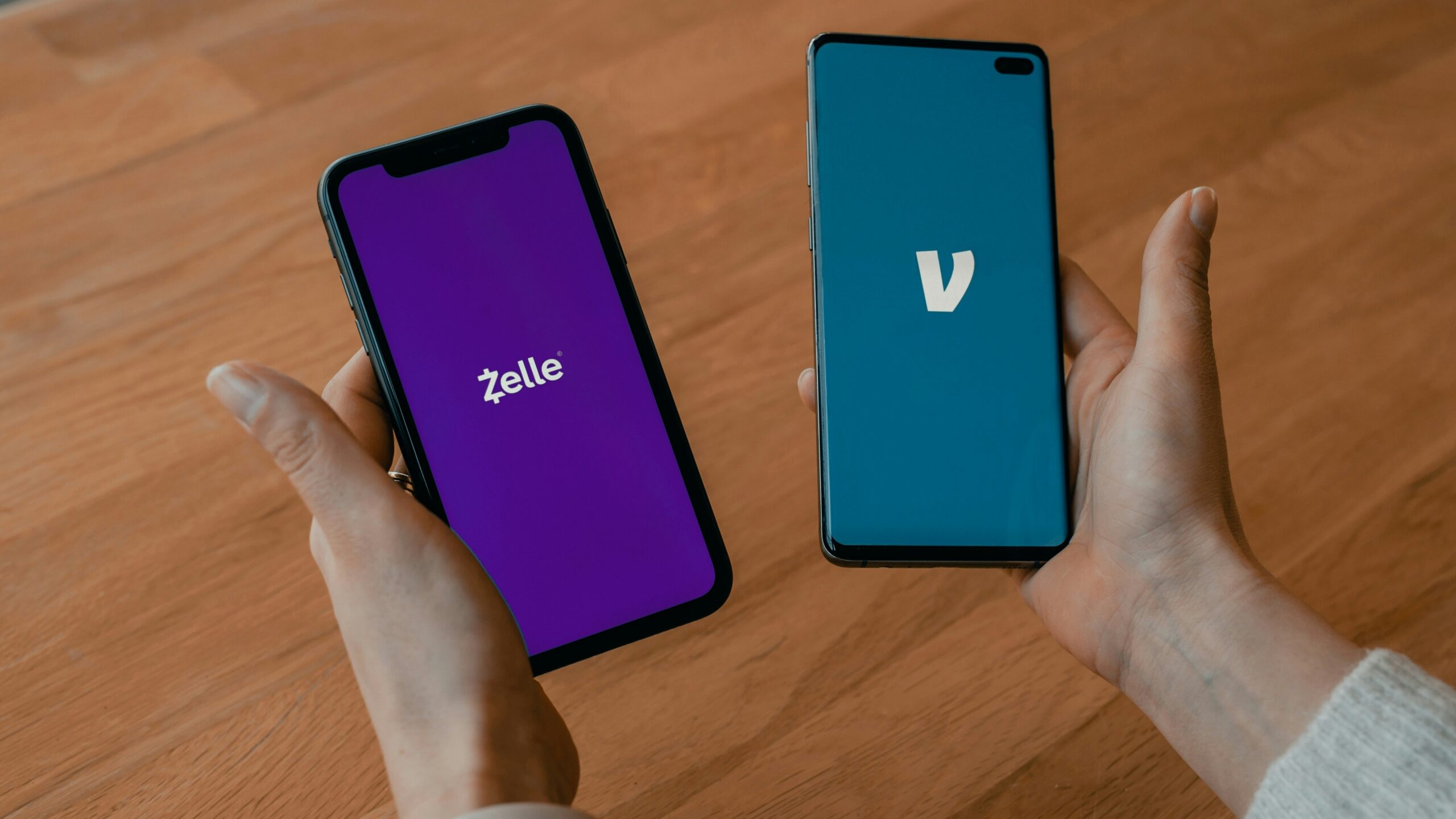
Banks reimbursed only a fraction of Zelle and wire-transfer scam losses last year – leaving most victims to swallow thousands in stolen funds themselves
When the Consumer Financial Protection Bureau sued the company behind Zelle and three of America’s largest banks in December 2024, the agency laid out a pattern that millions of account holders already knew firsthand: money sent through instant-payment networks and wire transfers under fraudulent pretenses almost never comes back. A Senate Permanent Subcommittee on Investigations report, published in July 2024 after months of document review and sworn testimony, put a number on the problem: Bank of America, JPMorgan Chase, and Wells Fargo reimbursed Zelle fraud and scam claimants only about 38 percent of the time on cases filed during the 2021-to-2023 period. The other 62 percent of claimants got nothing back.
The three banks collectively processed more than $870 million in Zelle scam and fraud claims over that same three-year window, according to the subcommittee’s findings, yet returned only a minority of those dollars. Wire-transfer fraud followed a similar trajectory: the Senate inquiry and CFPB complaint records showed banks routinely denying reimbursement for wires sent under false pretenses, applying the same logic they use for Zelle disputes. As of May 2026, no public data indicates that aggregate reimbursement rates have meaningfully improved.
“I did everything I was supposed to do. I called the number on my bank’s website, or so I thought. They already had my account details. I had no reason to doubt them,” a retired teacher from Ohio told the Senate subcommittee during its 2024 hearings, describing how she lost $2,000 to a caller impersonating her bank’s fraud department. Her experience echoed testimony from dozens of other victims who said their banks refused to return a cent because the transfer was classified as “authorized.”
Why “authorized” is the word that costs victims everything
The gap between what banks are legally required to refund and what they actually return comes down to a single classification: “authorized” versus “unauthorized.”
Under Regulation E (12 CFR Part 1005), banks must investigate and make consumers whole when an electronic fund transfer is unauthorized. The regulation is clear on that point. But the overwhelming majority of Zelle and wire-transfer scams are built on social engineering, not account takeovers. A fraudster impersonates a bank fraud investigator, an IRS agent, or a utility company representative and talks the victim into initiating the payment. Because the victim technically pressed “send” or approved the wire instruction, banks classify the transfer as authorized and treat any refund as a voluntary gesture rather than a legal obligation.
“The banks have essentially built a legal shield out of the word ‘authorized’ while ignoring the coercion and deception that produced the authorization in the first place,” said Ed Mierzwinski, senior director of the federal consumer program at U.S. PIRG, in testimony submitted to the Senate subcommittee in 2024.
That single classification decision is the mechanism that keeps reimbursement rates low across the industry. It is also the exact point that federal and state regulators are now challenging in court.
The CFPB and New York AG take aim
The CFPB’s December 2024 enforcement action targeted Early Warning Services, LLC, the bank-owned company that operates the Zelle network, along with Bank of America, JPMorgan Chase, and Wells Fargo. The agency’s complaint alleges the network and its owner banks failed to protect consumers adequately, mishandled fraud reports, and violated the Electronic Fund Transfer Act and Regulation E. Central to the CFPB’s argument: Zelle’s near-instant, typically irreversible design makes it unusually attractive to scammers, and the banks knew fraud reports were surging yet failed to deploy sufficient transaction monitoring, real-time warnings, or consumer education to match the risk.
New York Attorney General Letitia James filed a separate lawsuit against Early Warning Services in early 2025, alleging consumer losses totaling hundreds of millions of dollars over several years. Her office’s complaint argues that the platform’s rapid growth far outpaced its fraud controls, leaving consumers exposed to scams the network had the data to detect and prevent.
Wire-transfer fraud, while older and less headline-grabbing than Zelle disputes, sits on the same legal fault line. Banks apply identical “customer-authorized” reasoning to deny reimbursement for wires sent under fraudulent pretenses. The CFPB has signaled through guidance documents and supervisory actions that it views this blanket classification as inconsistent with institutions’ consumer-protection obligations, though no single enforcement case has yet produced a binding national standard for wire-fraud reimbursement.
Critical gaps in the public record
For all the attention these cases have drawn, key data points remain missing. The Senate’s 38 percent reimbursement figure is an aggregate across three banks over a three-year period; per-institution breakdowns and precise dollar amounts for individual years have not appeared in publicly available summaries. Whether JPMorgan Chase reimburses at a higher or lower rate than Wells Fargo, for instance, is unclear from the evidence released so far. No equivalent public dataset exists for 2024 or 2025.
The internal decision trees banks use to sort claims into “authorized” or “unauthorized” categories have never been disclosed in any public filing. That means the picture of victim outcomes comes almost entirely from congressional materials and regulatory complaints rather than auditable transaction records. The New York AG’s “hundreds of millions” figure is drawn from the state’s own complaint; the underlying transaction-level evidence has not been made available for independent verification.
The trajectory of the CFPB enforcement action itself is uncertain. The case was filed in December 2024, and as of May 2026 no final order, consent decree, or public settlement has been announced. Agency leadership and enforcement priorities can shift between administrations, and the action could end in a negotiated settlement, a formal consent order with detailed remediation requirements, or years of contested litigation. A strong resolution could force the Zelle operator and its owner banks to reinterpret Regulation E so that socially engineered payments qualify for mandatory reimbursement. But until a final order or court ruling lands, no binding national rule governs how scam-induced transfers must be treated.
What consumers can do while the legal fights play out
For the tens of millions of Americans who use Zelle or send domestic wires, the practical reality as of June 2026 is a patchwork. Some banks have quietly expanded voluntary reimbursement for certain scam categories, particularly impersonation fraud involving fake bank employees. Others have added pop-up warnings, brief payment delays, or lower default transaction limits. But none of these measures are standardized across the Zelle network, and none carry the force of a regulatory mandate.
Several concrete steps can reduce exposure while the legal landscape remains unsettled:
- Verify before you send. If someone contacts you claiming to be from your bank, a government agency, or a utility, hang up and call the institution directly using a number from its official website. Never use a phone number provided in a text, email, or voicemail.
- Treat urgency as a warning sign. Scammers rely on pressure. Legitimate institutions do not demand immediate payment by Zelle or wire transfer to prevent account closure, arrest, or service shutoff.
- File disputes immediately and in writing. Contact your bank and submit a complaint to the CFPB’s complaint portal as soon as you suspect fraud. Documented disputes create a paper trail that strengthens a claim, especially if reimbursement policies change or a court order requires banks to revisit past denials.
- Check your bank’s specific Zelle policies. Some institutions have begun offering broader scam protections than the network’s baseline. Ask your bank in writing what categories of fraud it will reimburse and keep the response.
A system that moves money faster than accountability
The core tension has not changed since Zelle launched in 2017 or since wire transfers became a consumer staple decades before that: these systems were engineered for speed, not for recovery. Money leaves an account in seconds or minutes. Getting it back, when it happens at all, takes weeks of disputes, escalations, and regulatory complaints with no guaranteed outcome.
Until courts or regulators draw a firmer line around what counts as “unauthorized” in an era of sophisticated social engineering and real-time transfers, the cost of instant-payment fraud will continue to fall hardest on individual account holders. They trusted a system that moves money far faster than accountability follows, and right now, the numbers show that trust is not being repaid.