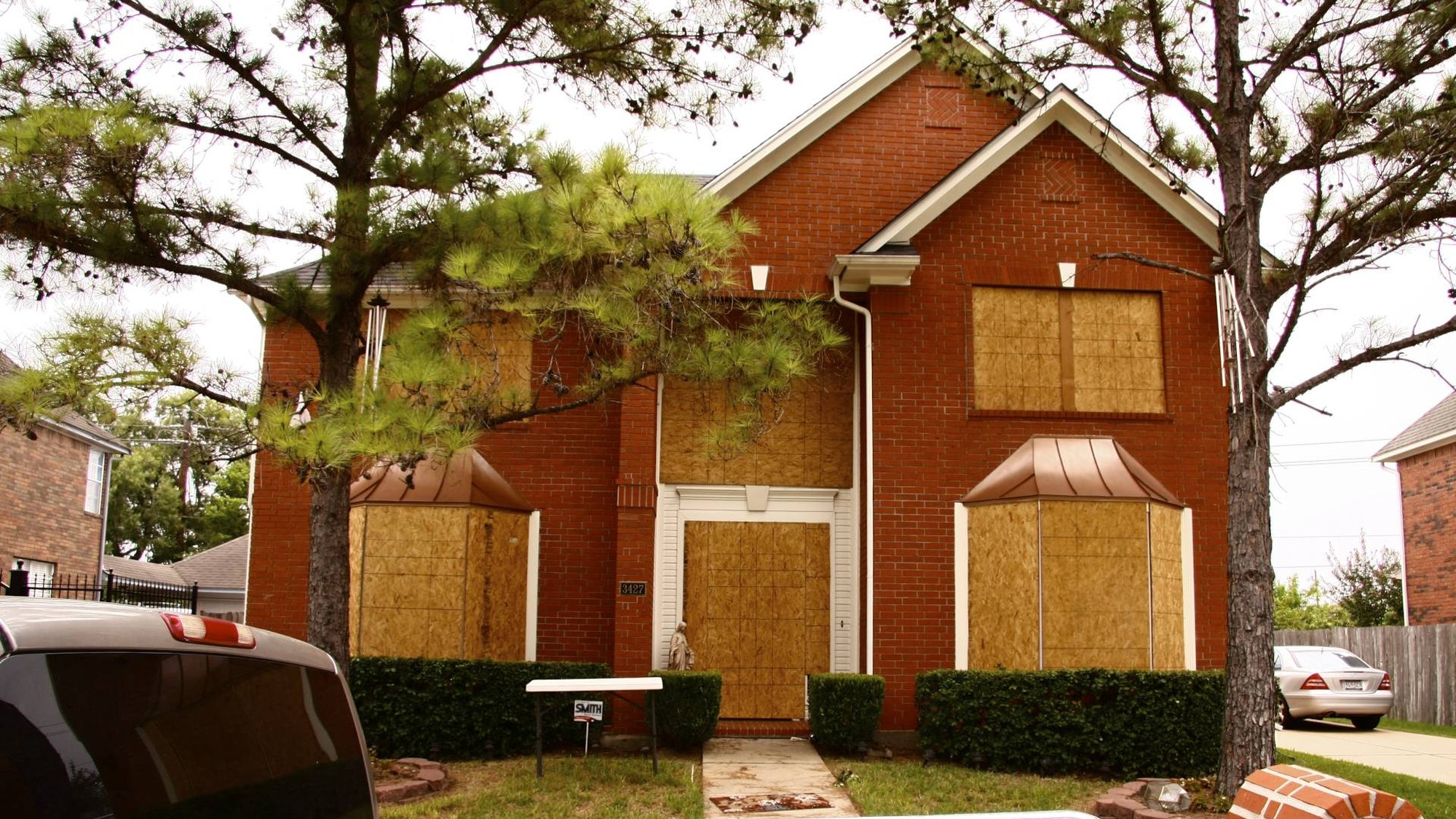
Consider the math facing a homeowner who locked in a 2.75% mortgage rate in early 2021 and now wants to buy a comparable house. At today’s roughly 6.6% rate, the new loan would cost $600 to $800 more per month in interest alone on a typical balance. For most families, that gap ends the conversation before it starts.
Multiply that household-level paralysis across tens of millions of borrowers, and you get the most frozen resale market in a generation. The typical American homeowner now stays put for a record 12 years before selling, double the roughly six-year norm recorded in 2005, according to Bloomberg reporting on Redfin data. Housing economists call it the “golden handcuffs” effect, and as of spring 2026, three independent lines of federal research confirm it is reshaping the market at scale.
The rate gap that froze millions of homeowners in place
The Federal Housing Finance Agency documented the mechanics in a working paper analyzing loan-level data across 2022 and 2023. Its conclusion was unambiguous: higher prevailing rates produced a large, measurable reduction in home sales among fixed-rate mortgage holders, preventing a substantial number of transactions over that two-year stretch. A separate Federal Reserve staff study reached a parallel finding, attributing a significant share of the drop in mortgage-borrower mobility from 2021 to 2022 directly to rate lock-in and linking the reduced movement to tighter inventory and rising prices.
An NBER study went further, modeling the consumption losses and housing-match misallocation that result when households cannot move freely. Families stuck in homes that no longer fit their needs, whether too large after children leave or too far from a new job, absorb real economic costs that do not show up in headline housing data.
The numbers behind the freeze are straightforward. Freddie Mac’s Primary Mortgage Market Survey, tracked by the Federal Reserve Bank of St. Louis, shows the 30-year fixed average hovering near 6.6% in May 2026. Borrowers who closed during 2020 or early 2021 often hold rates below 3%; the national average bottomed at about 2.65% in January 2021. On a $400,000 loan, the difference between 2.75% and 6.6% works out to approximately $700 more per month. That is not a rounding error. It is a second car payment that buys nothing new.
Starved inventory keeps pushing prices higher
With so many owners refusing to sell, the supply of existing homes remains well below pre-pandemic levels. The National Association of Realtors reported that existing-home sales in 2024 fell to their lowest annual pace since 1995, and while 2025 brought a modest rebound, transaction volumes stayed far short of historical norms even as population and household formation continued to grow.
That supply drought has kept prices elevated. The S&P CoreLogic Case-Shiller U.S. National Home Price Index set new highs through the end of 2025, and readings from the first quarter of 2026 show no meaningful retreat. New construction has picked up some slack, with builders offering rate buydowns and other incentives, but single-family housing starts remain below the pace needed to close the inventory deficit that predates the pandemic.
For buyers, the result is a double squeeze: financing is expensive, and the homes that do reach the market carry price tags inflated by years of constrained supply. First-time buyers feel it most sharply. Without an existing property to sell and an old, cheap mortgage to leverage, they must absorb today’s rates and today’s prices with no offset. The NAR’s 2024 Profile of Home Buyers and Sellers put the median age of a first-time buyer at 38, a record high, reflecting years of delayed entry.
The rental market is absorbing the spillover
The lock-in dynamic is quietly reshaping rental markets, too. Would-be buyers who cannot stomach today’s purchase costs stay in rentals longer, while some owners who refuse to surrender cheap mortgages convert their old homes into rental properties rather than selling. Both forces add demand-side pressure, particularly in Sun Belt metros that saw heavy pandemic-era migration.
Zillow’s observed rent index showed national rents plateauing toward the end of 2025 after years of sharp increases, but affordability remains stretched for tenants in most major cities. In markets like Tampa, Phoenix, and Austin, the collision of locked-in owners, sidelined buyers, and new apartment supply has created unusual cross-currents that vary block by block.
What researchers still cannot answer
The national picture is well established, but critical details remain fuzzy. Neither the FHFA paper nor the Fed study breaks down locked-in households by state, metro area, or demographic group. That gap matters. Lock-in bites harder in high-cost coastal metros, where even a small rate increase translates into large dollar amounts on outsized loan balances, than in markets where homes sell for $250,000. Without granular data, local policymakers lack the precision needed to target relief where distortion is greatest.
The 12-year tenure figure itself carries a sourcing caveat. It originates from Redfin’s proprietary analysis and was reported by Bloomberg; no raw American Housing Survey or CoreLogic tenure series has been published to cross-check the number independently. The estimate is directionally consistent with other indicators, but it rests on one private data provider’s methodology rather than a federal statistical program with publicly documented sampling.
The biggest unknown is timing. No current model identifies a specific rate threshold at which sales volumes would normalize. If the 30-year fixed drifts toward 5%, some owners will start to list. The Federal Reserve’s own rate-path guidance as of its May 2026 meeting signaled no imminent cuts, and futures markets in late May 2026 priced in only modest easing over the following 12 months, suggesting that mortgage rates are unlikely to fall sharply in the near term. But life does not wait for favorable spreads: job relocations, divorces, growing families, and retirements will eventually force moves regardless of the rate gap. Some borrowers holding FHA or VA loans can offer assumable mortgages to buyers, transferring the old rate, but awareness and lender cooperation remain limited. How quickly life events and workarounds erode the freeze remains an open question that existing models have not answered.
Record tenure reshapes who can buy and when they can move
The verified evidence points in one direction: ultra-low pandemic-era mortgages have become the most valuable financial asset millions of American families own, and the leap to 6.6% on new loans has discouraged those families from selling. That reluctance has starved the resale market of inventory, propped up prices, and stretched homeowner tenure to a record 12 years.
For buyers, relief is unlikely to arrive quickly. Even a decline to the mid-5% range may not unlock the millions of sub-3% mortgages keeping inventory off the market. For current owners weighing a move, the decision increasingly comes down to whether life circumstances outweigh the financial penalty of surrendering a rate they may never see again.
The research that would sharpen the picture, including geographic breakdowns, demographic analysis, and real-time tracking of seller behavior as rates evolve, has not yet been published. Until it is, the housing market will keep operating under a simple, powerful constraint: the best mortgage deal most owners ever got is the one keeping them right where they are.