When a licensed firearms dealer in Mississippi lost his business checking account in 2014, the bank told him only that the relationship had been “terminated.” No fraud allegation. No compliance violation. Just a letter and a locked-out login. He was one of dozens of gun retailers, payday lenders, and tobacco sellers who told the Department of Justice’s inspector general they had been cut off from the banking system during what became known as Operation Choke Point.
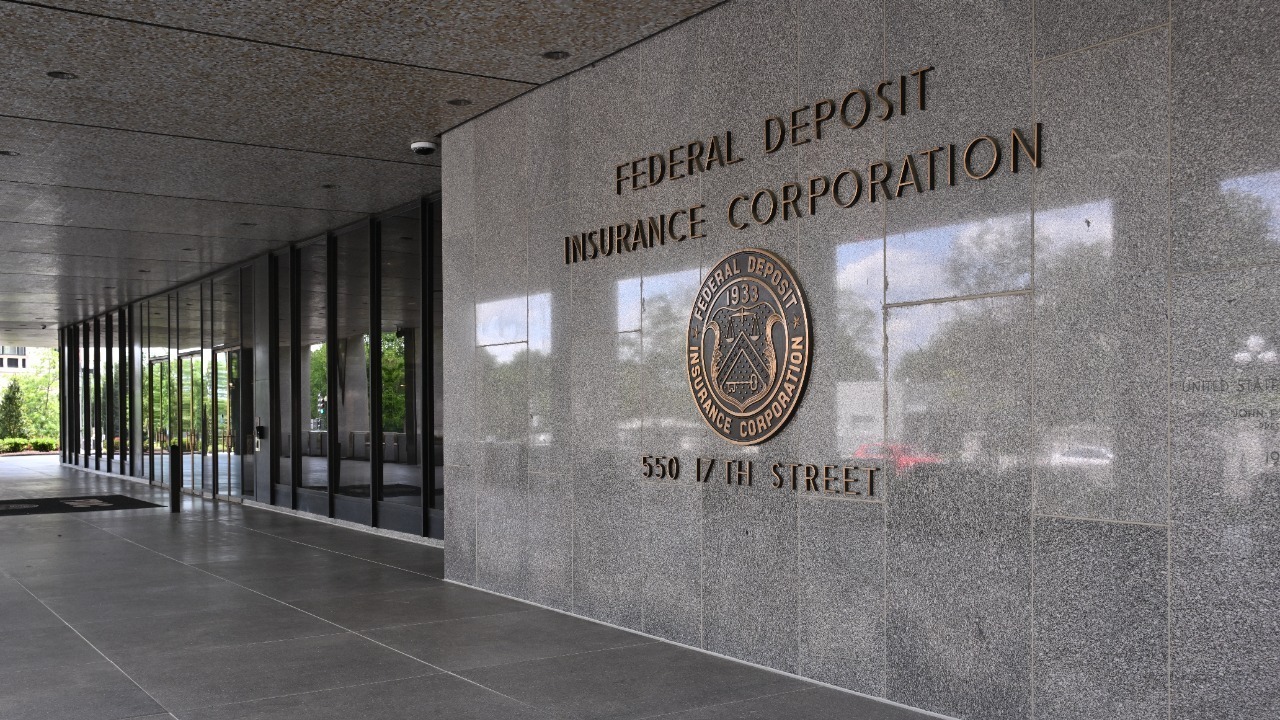
More than a decade later, the federal government is formally outlawing the regulatory mechanism behind those closures. A joint final rule from the FDIC and the Office of the Comptroller of the Currency (OCC), published in the Federal Register on April 10, 2026, prohibits federal banking regulators from using “reputation risk” to pressure banks into dropping customers. The rule takes effect on June 9, 2026.
What the rule actually does
The regulation draws two bright lines. First, federal examiners can no longer cite reputation risk as a basis for supervisory criticism, adverse findings, or downgraded examination ratings. Second, regulators cannot require, instruct, or even suggest that a bank close or refuse an account, or modify or terminate a product, based on reputational concerns about a customer’s lawful activities.
Both prohibitions apply to the FDIC and the OCC, the two agencies that directly examine and supervise the vast majority of the nation’s roughly 4,500 FDIC-insured depository institutions. A joint press release from the agencies says the rule ensures that supervisory decisions are “grounded in safety and soundness, consumer protection, and compliance with law” rather than political or ideological disagreement with a customer’s business.
The agencies did not wait for the final rule to begin dismantling the old framework. The FDIC had already stripped reputation risk references from its Risk Management Manual of Examination Policies, its Application Procedures Manual, the deposit insurance handbook, and the Consumer Compliance Examination Manual. The OCC took parallel steps, issuing guidance in 2025 directing banks to make risk decisions based on “objective, customer-specific factors” rather than broad reputational labels.
How “reputation risk” became a weapon
For years, federal bank examiners treated reputation risk as a catchall category during supervisory reviews. If a bank served a customer or industry that attracted public controversy, examiners could flag the relationship as a reputational threat to the institution, even when the customer was operating entirely within the law. That flag could trigger a formal supervisory finding, a lower examination rating, or pointed informal pressure during meetings between examiners and bank management.
The practical result was a shadow system of financial exclusion. Lawful businesses in politically sensitive sectors, including firearms dealers, cryptocurrency firms, adult entertainment companies, and certain religious and advocacy organizations, reported losing access to basic banking services. The pattern drew bipartisan criticism on Capitol Hill and became widely associated with Operation Choke Point, a DOJ initiative launched during the Obama administration that targeted fraud-prone merchant categories but, according to a 2015 inspector general review, created collateral damage for legitimate businesses that happened to share an industry code with bad actors.
The formal rulemaking that produced the June 9 rule began with a notice of proposed rulemaking under RIN 3064-AG12. Public comments collected during that process pushed the agencies to clarify that examiners may not even “suggest” that a bank sever a relationship solely because of public controversy around a client’s speech, associations, or lawful business activities. That language appears in the final regulatory text.
In their public statements announcing the final rule, both agencies described the rulemaking as connected to what they characterized as a broader executive-branch directive from 2025. According to the agencies’ press releases, that directive framed access to basic financial services as a non-discriminatory right for lawful businesses and instructed regulators to prevent informal pressure campaigns aimed at cutting off legal sectors from the banking system. The directive’s full text has not been independently located in a publicly available primary source, so the description here relies entirely on the agencies’ own characterizations.
What the rule does not do
The regulation has clear limits, and anyone who has experienced an account closure should understand them before assuming the new rule offers a remedy.
It constrains regulators, not banks directly. If a bank independently decides to close an account for its own business reasons, such as suspected fraud, poor credit quality, sanctions exposure, or high operational cost, the rule does not block that decision. The line between regulator-driven debanking and a bank’s own risk management judgment will almost certainly be tested after June 9, and the distinction may not always be obvious to the customer on the receiving end.
It does not create a private right of action. A customer who believes a bank closed their account because of political views cannot sue under this regulation. Existing legal channels, including state consumer protection statutes and claims under other federal laws, remain the primary options for individuals seeking recourse.
It does not cover every federal regulator. The rule binds the FDIC and the OCC. It does not directly bind the Federal Reserve, which supervises state-chartered banks that are Fed members, or the National Credit Union Administration, which oversees credit unions. Whether those agencies adopt parallel policies is an open question as of late May 2026.
State laws add another layer. At least a dozen states, including Florida, Oklahoma, and Kansas, have passed or introduced their own anti-debanking statutes in recent years. How those state-level protections interact with the new federal rule, particularly for banks with dual state and federal charters, will take time to sort out.
Measuring the impact will take time
No public dataset currently tracks how many account closures or service terminations were driven by examiner findings rooted in reputation risk. Individual accounts from customers who say they were debanked appear in the FDIC’s public comment files for RIN 3064-AG12 and in scattered litigation records, but they do not add up to a statistically reliable picture of how widespread the practice was.
Enforcement mechanics are similarly undeveloped. The final rule bars regulators from pressuring banks, but neither the FDIC nor the OCC has published compliance metrics or outlined how violations of the new prohibition will be detected and addressed. It remains unclear whether examiners will be required to document reputation-related discussions differently, or whether internal audit processes will flag potential violations.
Over time, aggregated data from quarterly Call Reports or Community Reinvestment Act filings could reveal shifts in account approval patterns for previously flagged industries. But without a reliable baseline measurement of closures under the old regime, any before-and-after comparison will be rough at best.
What June 9 actually changes for bank customers
Starting June 9, 2026, federal examiners at the FDIC and OCC will be formally barred from invoking reputation risk as a reason to push banks away from lawful customers. The rule will not stop every politically motivated account closure, and it does not reach every corner of the regulatory landscape. But it removes one of the most criticized tools regulators used to influence which Americans could and could not access the banking system.
For the firearms dealer who lost his account with no explanation, or the crypto startup that burned through four banks in two years, the question is no longer whether Washington will act. The question is whether the new guardrails hold once examiners walk back into the banks they supervise.