A gun shop owner in Texas gets a polite letter: his business account is being closed, no further explanation. A cryptocurrency startup in Wyoming hears the same thing from a different bank. A faith-based charity in the Midwest loses its payment processor overnight. None of them were accused of fraud. None had bounced a check. Their shared offense, according to years of complaints from across the political spectrum, was operating in an industry that federal regulators quietly deemed too controversial to touch.
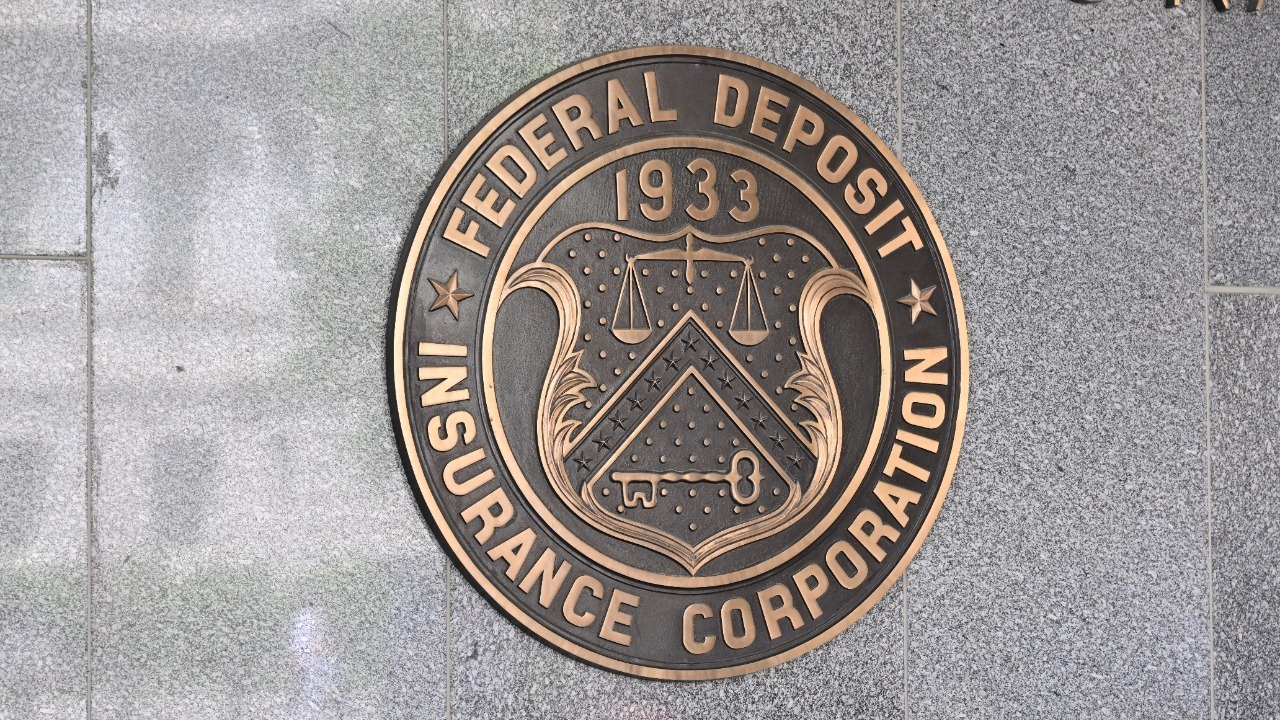
That dynamic is about to change. On June 9, 2026, a final rule jointly issued by the Federal Deposit Insurance Corporation and the Office of the Comptroller of the Currency will take effect, formally prohibiting bank examiners from using a subjective concept called “reputation risk” to pressure banks into dropping lawful customers. With just 15 days until the rule is enforceable, banks and regulators are racing to update supervisory manuals, training protocols, and examination procedures.
What the rule actually does
The FDIC’s announcement states that the final rule bars regulators from “requiring, instructing, or encouraging” banks to terminate accounts based on a customer’s political, social, cultural, or religious views, or on the basis of protected speech. The OCC confirmed separately that the prohibition applies across both agencies’ supervisory programs and that examiners may no longer downgrade a bank’s safety-and-soundness rating simply because it serves clients who attract public controversy.
To understand why this matters, you have to understand the tool it eliminates. For decades, bank examiners wielded a supervisory category called “reputation risk.” If an examiner decided that a bank’s relationship with a particular customer or industry could embarrass the institution or draw negative attention, the examiner could flag that relationship during an examination. A flagged bank might receive a lower supervisory rating, triggering higher deposit insurance premiums, more frequent audits, or restrictions on growth. The rational response for most banks was simple: drop the client before the examiner asks twice.
The new rule strips that mechanism out. Examiners at the FDIC and OCC can no longer cite a customer’s public profile, political stance, or legal industry as grounds for pressuring a bank to sever the relationship. According to the agencies’ announcements, supervisory frameworks that previously treated reputation risk as a standalone category are to be refocused on concrete, measurable factors: credit quality, liquidity, capital adequacy, and compliance with anti-money-laundering statutes.
Banks can still close accounts for traditional reasons, including suspected fraud, money laundering, credit risk, or violations of law. What changes is the boundary on what federal supervisors can demand or suggest behind closed doors during the examination process.
How this rule came about
The rulemaking traces directly to Executive Order 14331, titled “Guaranteeing Fair Banking for All Americans,” which directed federal banking agencies to stop conditioning supervision on constitutionally or statutorily protected beliefs and affiliations. The order instructed regulators to ensure that access to basic financial services would not be curtailed based on political ideology, religious practice, or participation in legal industries that some policymakers disfavor.
The executive order did not emerge from a vacuum. During the Obama administration, a Department of Justice initiative known as Operation Choke Point drew sharp bipartisan criticism for pressuring banks to sever payment-processing relationships with legal businesses, particularly payday lenders and licensed firearms dealers. The DOJ acknowledged in a 2017 letter to Congress that the program had ended, and a subsequent 2018 DOJ Inspector General report found that the initiative had created “chilling effects” on banks’ willingness to serve lawful industries. But banking trade groups and civil liberties advocates argued for years afterward that the underlying supervisory tool, reputation risk, remained embedded in examination manuals and continued to produce the same outcomes under less visible names.
Federal Reserve Vice Chair Michelle Bowman has also spoken publicly about what she described as “troubling cases of debanking” connected to political or religious views and involvement in disfavored but lawful businesses. (Note: This characterization is drawn from reporting on her public remarks on supervisory reform; a direct transcript or press release has not been independently linked here, and readers should verify the attribution through the Federal Reserve Board’s public communications.) Her comments signaled that the problem extended beyond any single agency.
Following the executive order, the FDIC and OCC published a joint notice of proposed rulemaking and opened a public comment period. Trade associations including the American Bankers Association, civil liberties organizations, and advocacy groups representing affected industries submitted comments on how to define prohibited conduct and how to draw the line between politically motivated pressure and legitimate risk management. The agencies moved from proposal to final rule over several months, with the June 9 effective date set to give institutions a short but defined compliance window.
Where the gaps remain
The most conspicuous gap sits between the agencies that have finalized the rule and the one that has not. As of late May 2026, the Federal Reserve Board had advanced only a proposal to remove reputation risk from its own supervisory framework. Whether the Fed finalizes its version, and on what timeline, will determine how uniformly the new standard applies across the banking system. Large bank holding companies and state-chartered banks that fall under Federal Reserve supervision could remain subject to the old approach even as their subsidiaries operate under the FDIC/OCC prohibition.
That mismatch creates a practical headache. A national bank supervised by the OCC would operate under the clear new standard, but its parent holding company, overseen by the Fed, might still face ambiguous treatment in a separate examination. Industry attorneys say they are watching closely for any divergence that could produce conflicting supervisory expectations within a single banking organization.
Enforcement presents its own challenge. The rule defines what supervisors may not do, but it does not create a private right of action for customers who believe they were indirectly debanked at a regulator’s urging. Supervisory communications between examiners and banks are typically confidential, which means proving that an examiner “encouraged” a bank to drop a particular client could be extraordinarily difficult. Neither the FDIC nor the OCC has announced a formal complaint or review mechanism tailored to these situations.
There is also no retroactive relief. Customers whose accounts were closed in prior years under reputation-risk pressure have no path under this rule to reopen those accounts or seek damages. The rule is forward-looking: it changes what regulators can do starting June 9, not what they did before.
Consumer and civil liberties advocates have raised a related concern about scope. The rule constrains federal supervisory behavior at FDIC- and OCC-regulated institutions, but it does not directly cover credit unions (supervised by the National Credit Union Administration) or state-chartered banks that fall outside these agencies’ jurisdiction. For customers at those institutions, the regulatory landscape remains unchanged unless their regulators adopt parallel rules.
What happens when the rule meets reality
Starting June 9, the FDIC and OCC will no longer be able to wield reputation risk as a lever to steer banks away from lawful clients with unpopular views. For the gun store owner who has cycled through three banks in five years, the crypto founder who cannot get a checking account, or the religious nonprofit that lost its payment processor without warning, that is a tangible shift in the rules governing the people who govern their banks.
But rules on paper and rules in practice are different things. Banks still retain broad discretion over whom they serve, and the confidential nature of the examination process means that subtle pressure can be difficult to detect and even harder to prove. The first real-world disputes will test whether the prohibition has teeth or whether the same dynamics simply migrate to less visible channels.
Two developments will be worth tracking in the months ahead: whether the Federal Reserve finalizes its own parallel rule, closing the remaining regulatory gap, and whether Congress moves to create a statutory right of action for customers who can demonstrate they were debanked for political reasons. Until both of those pieces fall into place, the June 9 rule is a significant first step, but not the last one.