Open your payment dashboard from a gig platform or check your brokerage statement, and you might notice roughly a quarter of your earnings never showed up. No audit letter. No penalty notice. The money is already with the IRS, automatically siphoned because the Social Security number your payer has on file does not match what the agency’s records expect. You will not get it back until you file your next federal tax return, potentially a year from now. As of June 2026, this is happening to bank depositors, freelancers, and platform workers across the country, and most of them had no warning it was coming.
How the 24% withholding trigger works
Under Internal Revenue Code Section 3406, the IRS requires payers to withhold a flat 24 percent of certain reportable payments when a taxpayer identification number (TIN) does not match federal records. The IRS lists the covered income categories: interest, dividends, rents, royalties, commissions, nonemployee compensation reported on 1099-NEC forms, and payment-card or platform transactions reported on 1099-K forms.
The trigger is mechanical. When a bank, brokerage, or gig platform submits 1099 data and the TIN fails the IRS’s automated matching program, the agency sends a CP2100 or CP2100A notice to the payer listing every account with a missing or incorrect number. The payer then contacts affected account holders and requests corrected information. If the account holder does not respond within 30 business days, the payer must begin withholding 24 percent from every qualifying payment going forward. Each dollar withheld gets reported to the IRS on Form 945.
The rate does not scale with income. Whether the payment is a $12 interest deposit from a savings account or a $5,000 monthly gig payout, the same flat 24 percent applies.
The two-tier B-Notice system
The IRS uses a structured escalation path called the B-Notice program to resolve mismatches. A first B-Notice can be cleared relatively quickly: the payee submits a signed W-9 with the correct TIN, and the payer updates its records. A second B-Notice raises the bar. Individuals must provide a copy of their Social Security card. Business entities typically need an IRS verification letter, such as a CP 575 notice or confirmation from the IRS’s online EIN system. Until that documentation clears, the 24 percent withholding continues on every qualifying payment.
The practical problem is that many workers never see the first notice. Gig platforms and financial institutions mail B-Notices to the address on file. If that address is outdated, or the letter gets tossed with junk mail, the 30-business-day response window closes without the worker knowing it opened. By the time a smaller-than-expected deposit raises a red flag, withholding is already locked in.
IRS Publication 1281, which provides detailed backup withholding procedures for payers, makes clear that the obligation to withhold is on the payer, not the payee. That means even a cooperative worker who calls the platform the same day cannot force an immediate stop if the payer’s compliance team has not yet processed the corrected W-9.
Getting the money back takes longer than you think
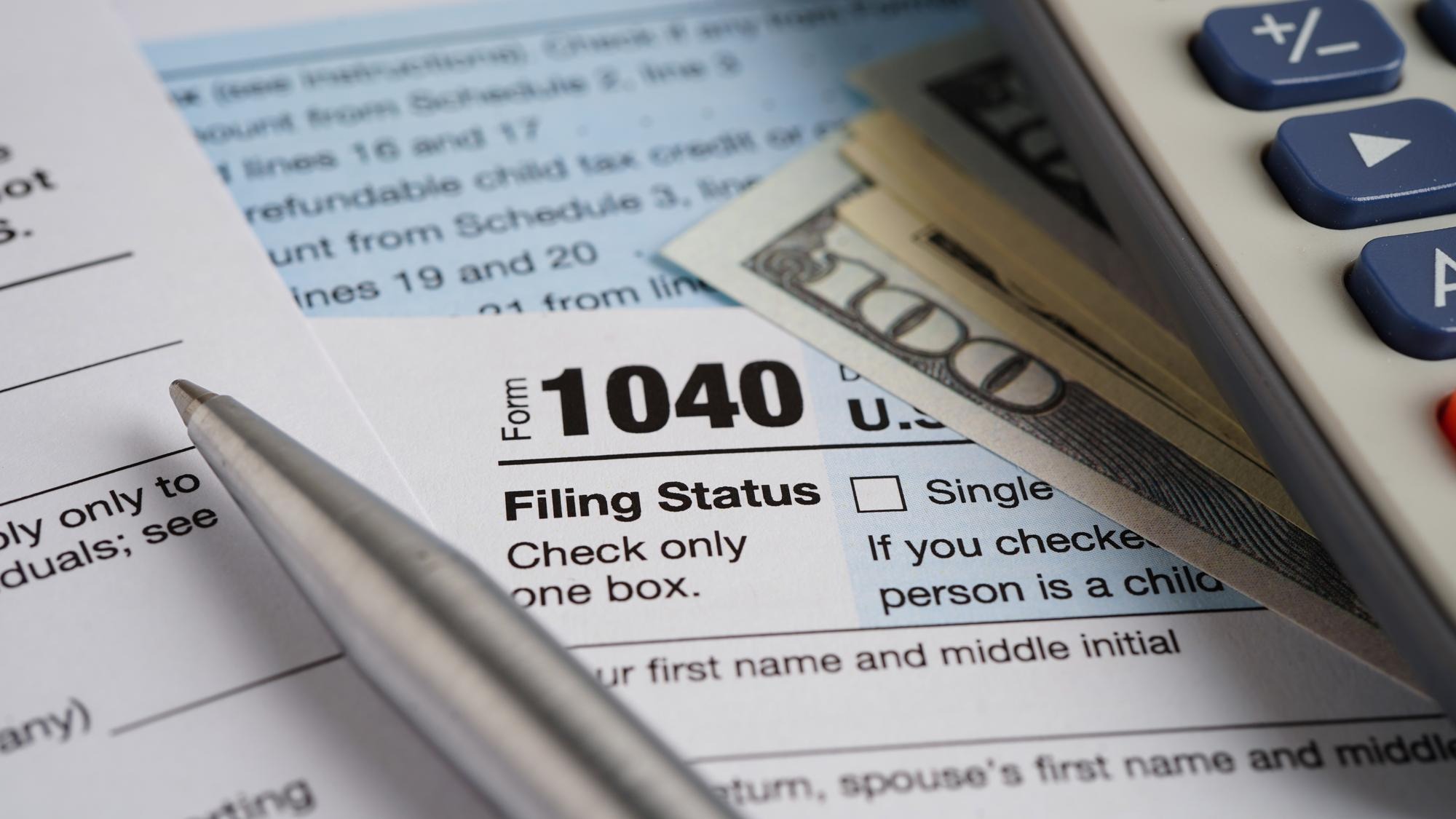
Taxpayers subject to backup withholding can claim the withheld amount as a credit on their annual return. According to the Form 1040 instructions, federal income tax withheld and reported on 1099 forms goes on line 25b. The IRS credits the withholding to the tax year in which the income was received, not the year the error is discovered or corrected.
That timing gap is where the financial damage concentrates. A mismatch flagged in March means withholding runs through the rest of the calendar year. The worker cannot recover those funds until filing season the following spring, potentially 12 months or more after the first dollar was diverted. For someone earning $4,000 a month through a delivery app, that is $960 a month disappearing from deposits with no mechanism to speed up the refund.
The IRS does not offer a mid-year recovery path for backup withholding. Even if the underlying TIN error is corrected with the payer within days, money already sent to the Treasury stays there until the annual return is processed. For workers facing genuine financial hardship, the IRS Taxpayer Advocate Service (TAS) can sometimes intervene to expedite a refund, but TAS assistance is not guaranteed and typically requires demonstrating that the withholding is causing significant financial difficulty.
Why gig workers and side earners face the highest risk
The expanding universe of 1099 reporting has widened the pool of people exposed. The IRS lowered the 1099-K reporting threshold from $20,000 and 200 transactions to $5,000 for tax year 2024, as confirmed in IRS announcement IR-2024-299. The agency also signaled a further reduction to $2,500 for tax year 2025. Every new filer entering the 1099-K system creates another record that must match IRS databases. A freelancer who signed up for a payment platform years ago using a slightly different legal name, or a worker whose name changed after marriage and was never updated with the Social Security Administration, may have a mismatch lying dormant until a platform begins filing on their behalf.
The problem compounds for people juggling multiple income sources. A worker driving for one rideshare company, delivering food for another, and earning interest from an online savings account has three separate payers, each independently matching TINs against IRS records. A single inconsistency in the SSA’s database or a misspelled name across platforms can trigger backup withholding from multiple payers at the same time.
State taxes can pile on, too. California, for example, imposes its own backup withholding at 7 percent through the Franchise Tax Board when a TIN mismatch appears on state filings. A California gig worker hit by both federal and state backup withholding could see 31 percent of gross payments diverted before a single dollar reaches their bank account.
What you can do right now to protect yourself
The most effective defense is making sure every payer has your correct information before a mismatch surfaces. Here is what that looks like in practice:
- Verify your name with the Social Security Administration. Log into your account at ssa.gov and confirm that your legal name matches what the SSA has on file. If you changed your name after marriage, divorce, or a court order, update it with the SSA first. The IRS matches TINs against SSA records, so a mismatch there is the root cause of most problems.
- Review every W-9 you have submitted. Contact each platform, bank, or client you work with and confirm the name and Social Security number they have on file. Request a copy of your current W-9 if the platform allows it.
- Respond to B-Notices immediately. If you receive a letter from a payer asking you to verify your TIN, treat it as urgent. You typically have 30 business days before withholding kicks in. For a second B-Notice, you will need your physical Social Security card, so confirm you know where it is or request a replacement from the SSA well in advance.
- Check your 1099 forms each January. When 1099-NEC, 1099-K, and 1099-INT forms arrive, verify that the name and TIN printed on them match your records exactly. Flag discrepancies with the payer before they file with the IRS.
- File your return as early as possible. If backup withholding has already started, the only recovery path is your annual tax return. Filing early in the season shortens the wait for your refund.
- Contact the Taxpayer Advocate Service if you are in hardship. If backup withholding is causing serious financial difficulty, such as an inability to pay rent or essential bills, you can request TAS assistance by calling 877-777-4778 or visiting a local TAS office.
A system built for a different workforce
No publicly available IRS dataset shows how many individual taxpayers are currently subject to active backup withholding across all 1099 income categories. The agency has not published average dollar amounts withheld per mismatched account or median wait times between withholding and refund. That data gap makes it difficult to measure the full scale of the problem, even as the number of 1099 filings continues to climb year over year.
What the confirmed mechanics reveal is a system with almost no flexibility. A flat 24 percent rate. Automatic triggers tied to mismatched identification numbers. No mid-year recovery option. A refund timeline that depends entirely on when the taxpayer files. For a salaried employee with a single W-2, fixing an overwithholding problem is a phone call to HR. For a gig worker with three platforms and a savings account, a single TIN mismatch can quietly redirect thousands of dollars to the IRS for the better part of a year.
Backup withholding has been part of the tax code since 1983. The workforce it now reaches looks nothing like the one Congress had in mind. As more Americans earn income through platforms, side gigs, and freelance arrangements, the odds of a name or number mismatch keep rising. The 24 percent rate does not distinguish between a data-entry typo and deliberate evasion. It just starts taking.