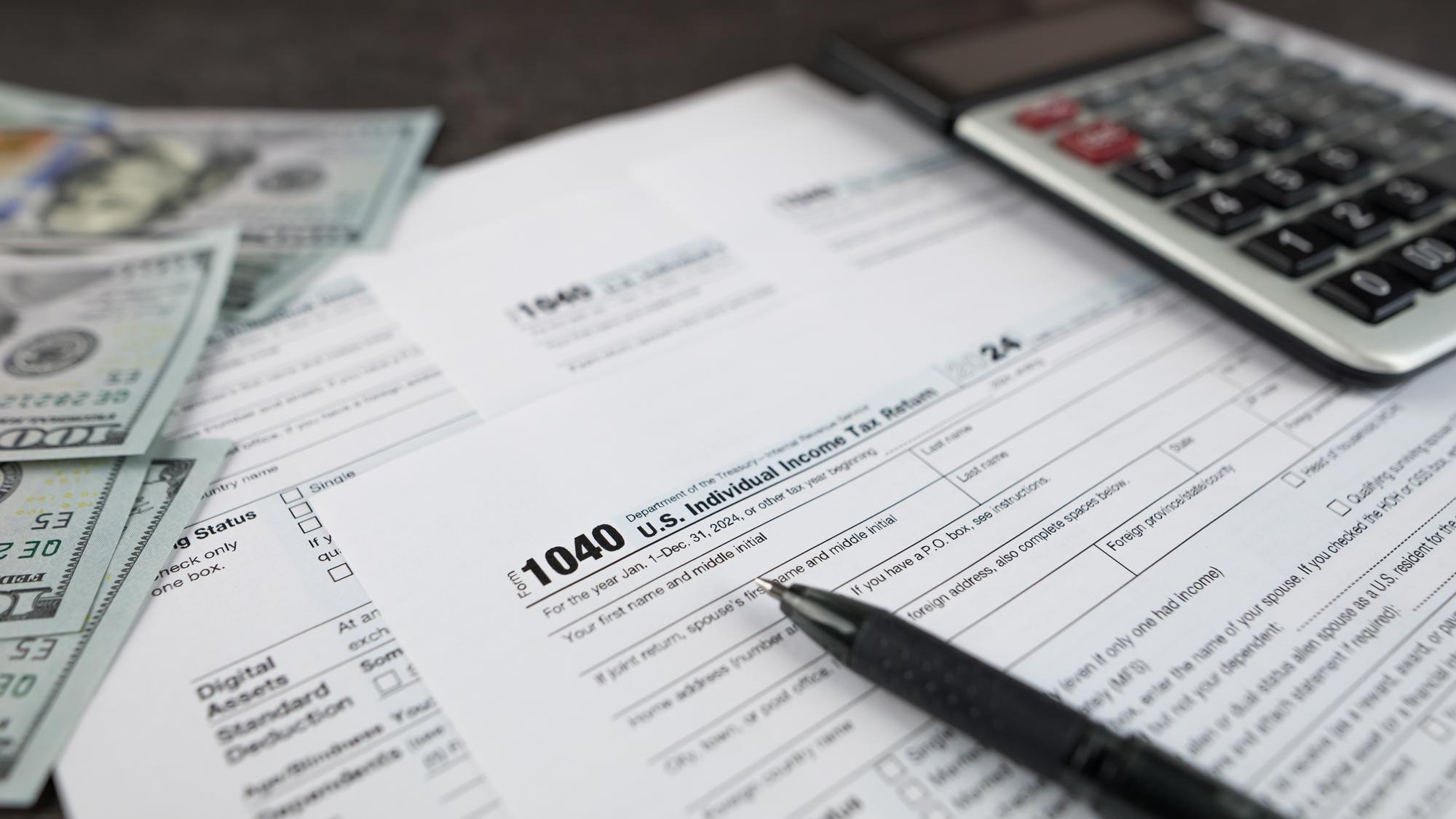
Roughly 27 million Americans file federal tax returns reporting self-employment income each year, and a significant share of them owe the IRS a payment on June 15, 2026. That is the deadline for second-quarter estimated taxes, and for freelancers, rideshare drivers, and independent contractors who come up short, the penalty is steep: an annualized rate of approximately 8% on the underpaid amount, plus interest that compounds every single day until the balance is paid in full.
The charge is not hypothetical. A freelancer who owes $3,000 for the quarter and pays nothing until the following April would rack up roughly $200 in penalties on that one installment alone. Multiply that across four missed quarters on a larger tax bill, and the tab can climb past $1,500 with no effort at all.
Here is what you need to know to avoid that outcome before the clock runs out.
Who owes estimated taxes and why
When you work as a traditional employee, your employer withholds federal income tax and payroll taxes from every paycheck. Freelancers, independent contractors, and gig workers have no employer doing that for them. The IRS expects these taxpayers to pay both income tax and self-employment tax (the combined 15.3% covering Social Security and Medicare) in four quarterly installments using Form 1040-ES.
The 2026 quarterly deadlines are:
- Q1: April 15, 2026
- Q2: June 15, 2026
- Q3: September 15, 2026
- Q4: January 15, 2027
Anyone who expects to owe $1,000 or more in federal tax for the year, after subtracting withholding and credits, is generally required to make these payments. That threshold catches far more people than many expect. A side gig netting $15,000 can easily generate a four-figure tax bill once you account for the 15.3% self-employment tax on top of your income tax bracket. New gig workers are often blindsided by that self-employment tax, which covers both the employee and employer shares of Social Security and Medicare.
How the underpayment penalty works
The penalty is established by 26 U.S.C. Section 6654 and is technically classified as an “addition to tax.” In practice, it functions like an interest charge on the amount you should have paid but did not. The IRS calculates it separately for each quarterly period you underpaid, running from the installment due date until the earlier of the actual payment date or the annual filing deadline (typically April 15 of the following year).
The rate is pegged to the federal short-term rate plus three percentage points, as specified under IRC Section 6621, and the IRS adjusts it every calendar quarter. Through 2025 and into 2026, that rate has hovered in the 7% to 8% range on an annualized basis. You can verify the exact rate currently in effect on the IRS quarterly interest rates page, which is updated at the start of each quarter.
On top of the penalty itself, interest on any unpaid tax compounds daily under IRC Section 6622. The longer you wait, the faster the balance grows. Even taxpayers who file a perfectly accurate return the following April and pay every dollar they owe at that point can still face this charge if they did not send enough money during the year when it was due.
The safe harbors that keep you penalty-free
The IRS provides two straightforward ways to avoid the underpayment penalty entirely, outlined in its Topic No. 306 guidance:
- Owe less than $1,000. If your total tax bill minus withholding and credits comes in under $1,000 for the year, no penalty applies.
- Meet the percentage test. Pay at least 90% of your current-year tax liability, or 100% of your prior-year tax (whichever is smaller), through a combination of withholding and estimated payments. For taxpayers with adjusted gross income above $150,000 ($75,000 if married filing separately), the prior-year threshold rises to 110%.
Clearing either safe harbor protects you regardless of how lumpy your income is from quarter to quarter. The key is making sure your cumulative payments by each installment date are on pace to hit one of those benchmarks by year-end.
Why gig and freelance income makes this harder
A salaried employee whose employer withholds the right amount never has to think about estimated taxes. A rideshare driver or freelance designer whose income swings from $8,000 one quarter to $2,000 the next faces a genuine guessing game. Overshoot your estimates and you have lent the government money interest-free for months. Undershoot and you owe the penalty.
The problem is compounded by the fact that many gig platforms do not withhold any taxes at all. Drivers, delivery workers, and freelancers on platforms like Uber, DoorDash, Upwork, and Fiverr receive the full payout and are responsible for setting aside their own tax money. When income is irregular, it is easy to spend first and calculate later.
The IRS does offer a workaround for people with uneven income: the annualized income installment method, calculated on Form 2210, Schedule AI. This method lets you base each quarterly payment on the income you actually earned during that specific period rather than dividing your annual estimate by four. It requires more paperwork, but it can significantly reduce or eliminate the penalty for filers whose earnings are front-loaded or back-loaded in a given year.
What a missed payment actually costs
Consider a freelance graphic designer who owes $12,000 in total federal tax for 2026 and makes no estimated payments until filing in April 2027. Under the standard installment method, each quarter’s required payment would be $3,000. The penalty on the Q2 shortfall alone, at an 8% annualized rate, would run from June 15, 2026, through April 15, 2027, roughly 10 months. On $3,000, that works out to approximately $200 just for the second quarter, before accounting for daily compounding and the penalties stacking up on the other three missed quarters.
Scale that up to a contractor earning six figures with a $30,000 annual tax bill, and the combined penalty across all four quarters can easily exceed $1,500. These are not catastrophic sums on their own, but they are entirely avoidable, and they come on top of the full tax bill you still owe.
How to make the June 15 payment
The IRS accepts estimated tax payments through several channels, and most of them can be completed in minutes:
- IRS Direct Pay (irs.gov/payments/direct-pay) lets you pay directly from a checking or savings account with no fees. It is the simplest option for most people.
- EFTPS (eftps.gov), the Electronic Federal Tax Payment System, is another free option. First-time users need to enroll in advance and wait for a PIN by mail, so if you have not signed up yet, Direct Pay is the faster route for this deadline.
- IRS2Go, the agency’s mobile app, connects to Direct Pay and approved card-payment processors.
- Credit or debit card payments are accepted through IRS-approved processors, but they carry processing fees (typically around 1.85% to 1.98% for credit cards).
When paying, select “1040-ES” as the payment type and “2026” as the tax year. Payments must be received or postmarked by June 15 to count toward the second-quarter installment.
Steps to take before June 15
Start with your 2025 return. Pull it up and note your total tax liability on line 24 of Form 1040. If your AGI was $150,000 or less, paying 100% of that figure across four equal installments satisfies the prior-year safe harbor. If your AGI was above $150,000, aim for 110%.
Tally what you have already paid for 2026. Add up any withholding from a W-2 job (if you have one) and your Q1 estimated payment from April. Subtract that total from your safe-harbor target. The remainder, divided by three for the three remaining quarters, is the minimum you should send by June 15.
Consider the annualized method if your income has been uneven. If you earned significantly more or less in the first half of 2026 than you expect for the full year, the annualized income installment method on Form 2210 Schedule AI could lower your required payment for this quarter. A tax professional or the IRS’s own Tax Withholding Estimator can help you run the numbers.
Do not forget state estimated taxes. Most states with an income tax impose their own quarterly deadlines and underpayment penalties, and the due dates do not always align with the federal schedule. Check your state’s department of revenue website for specific dates and payment portals.
What happens if you already missed Q1
If you skipped the April 15 first-quarter payment, the penalty on that shortfall is already accruing. Sending a larger Q2 payment will not retroactively erase the Q1 penalty, but it will stop additional quarters from piling on. The IRS calculates the charge separately for each installment period, so catching up now limits the damage going forward.
Taxpayers who realize mid-year that they have significantly underpaid can also increase withholding from a W-2 job if they have one. The IRS treats withholding as if it were paid evenly throughout the year, even if the extra amount is pulled from paychecks only in the final months. That quirk can help cover earlier quarters retroactively in a way that lump-sum estimated payments cannot.
When the IRS may waive the penalty
The IRS does have authority to waive the underpayment penalty in limited circumstances under IRC Section 6654(e)(3). If you underpaid because of a federally declared disaster, a casualty event, or another unusual situation, you can request relief. The waiver also applies to taxpayers who retired after reaching age 62 or became disabled during the tax year or the preceding year, as long as the underpayment was due to reasonable cause rather than willful neglect.
Waivers are not automatic. You need to file Form 2210 with your return and check the box requesting the waiver, along with documentation supporting your case. For everyone else, the most reliable protection remains hitting one of the safe harbors before each quarterly deadline arrives.