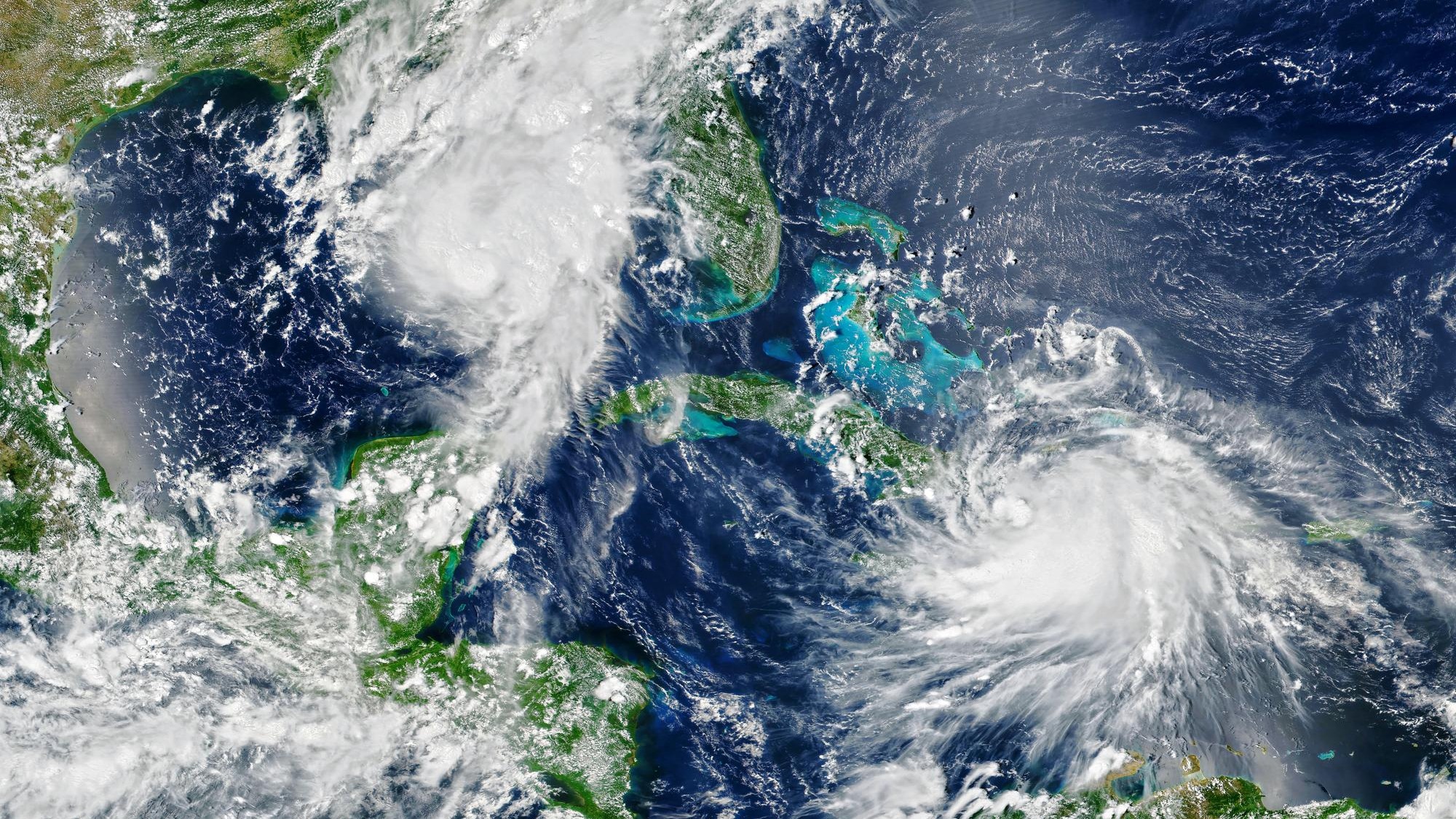
Homeowners in hurricane-prone states hoping for premium relief after a quiet storm season will likely be disappointed. NOAA’s Climate Prediction Center assigns a 55 percent chance that the 2026 Atlantic hurricane season finishes below normal, with 8 to 14 named storms and 3 to 6 hurricanes expected. Yet the way insurers set rates has little to do with any single season’s storm count, and a recent federal review of pricing practices confirms that premiums track property-level catastrophe risk and reinsurance costs far more than annual forecasts.
A quiet season does not quiet your renewal notice
The tension between seasonal outlooks and insurance bills is straightforward: forecasters measure basin-wide activity, while carriers price individual properties. NOAA’s 2026 outlook projects an accumulated cyclone energy range of 45 to 115 percent of median activity, driven largely by expectations that El Niño conditions will suppress storm development through increased vertical wind shear. Colorado State University’s Tropical Meteorology Project reaches a similar conclusion, citing an El Niño transition as the primary factor behind its own below-average numbers, with forecast updates scheduled for June 10, July 8, and August 5.
But NOAA itself cautions that seasonal totals say nothing about where or whether any storm makes landfall. A single hurricane striking a populated coast can generate more insured losses than an entire above-average season that stays over open water. That disconnect is exactly why insurers rely on long-term catastrophe models rather than year-to-year predictions when they file rates with state regulators.
In practice, that means your renewal notice reflects a long horizon of potential losses, not the odds that this year will be quiet. Even a forecast that heavily favors a below-normal season does not materially alter the probability that your particular neighborhood will experience damaging winds or storm surge over the multi-decade time frame insurers care about. As a result, homeowners often experience cognitive whiplash: headlines promise a “sleepy” season, while renewal packets show double-digit increases.
How catastrophe models and reinsurance costs override the forecast
A Government Accountability Office report titled “Homeowners Insurance: Premiums Generally Tracked Inflation but Rose More in Disaster-Prone Areas” (GAO-26-107867) lays out the mechanics. Carriers use validated catastrophe models that simulate thousands of hypothetical storm seasons, weighting geography, building construction, and historical loss patterns. The models draw on decades of data, not a single year’s outlook. Regulators, according to the GAO’s insurance review, expect insurers to document how their exposure data reflect the actual distribution of insured properties rather than any seasonal prediction.
These models generate an expected annual loss for each policy, plus a range of severe but plausible scenarios. Companies then layer in expenses, profit targets, and the cost of capital needed to survive extreme events. Because the models already incorporate quiet and active eras, one season’s forecast is statistically insignificant relative to the long record of hurricane behavior.
Reinsurance, the coverage that insurers themselves buy to protect against large losses, adds another layer. Reinsurance contracts reprice annually based on global catastrophe trends, interest rates, and the reinsurer’s own capital position. When reinsurance costs climb, carriers pass those increases through to policyholders regardless of whether the Atlantic season turns out to be busy or calm. The GAO found that premiums generally kept pace with broader inflation but rose faster in areas with high catastrophe exposure, a pattern consistent with reinsurance repricing rather than storm-count tracking.
The practical result is that a homeowner in coastal Florida or the Texas Gulf Coast faces rate pressures shaped by the modeled probability of a major hurricane hitting that specific ZIP code over the next several decades. A below-average 2026 season would not change that modeled probability in any meaningful way, because the models already account for quiet years alongside active ones. Even a streak of calm seasons would have to persist for many years before actuaries could justify materially lower catastrophe loads in their rate filings.
Gaps in the data and what policyholders should watch next
Several questions remain open. Individual carrier filings are often confidential or highly technical, making it difficult for homeowners to see exactly how catastrophe models, reinsurance costs, and inflation interact in a given rate. The GAO noted data limitations in some states, and its detailed online methodology appendix underscores how challenging it is to disentangle weather, exposure growth, and market structure from the final premium on a bill.
For policyholders, the most useful signals over the next year will not be the number of named storms but the direction of reinsurance renewals, state-level regulatory responses, and any changes in building codes or mitigation incentives. Strengthening a roof, elevating mechanical systems, or adding storm shutters can sometimes earn credits that partially offset broader market pressures, even if they cannot fully counteract rising catastrophe and reinsurance costs.
Consumers should also pay attention to availability, not just price. In some coastal counties, carriers are tightening underwriting guidelines, raising deductibles, or exiting entirely. A quiet 2026 season might slow that trend at the margins by preserving industry capital, but it is unlikely to reverse it. The core drivers-long-term hurricane risk, concentration of expensive coastal development, and the global cost of capital-operate on time scales much longer than a single forecast window.
The bottom line is that a benign hurricane outlook is welcome news for safety but a poor predictor of what will show up in your mailbox. Until regulators, reinsurers, and carriers see sustained evidence that long-run risk has changed, homeowners in hurricane country should plan for premiums that reflect decades of storms, not just the next one.