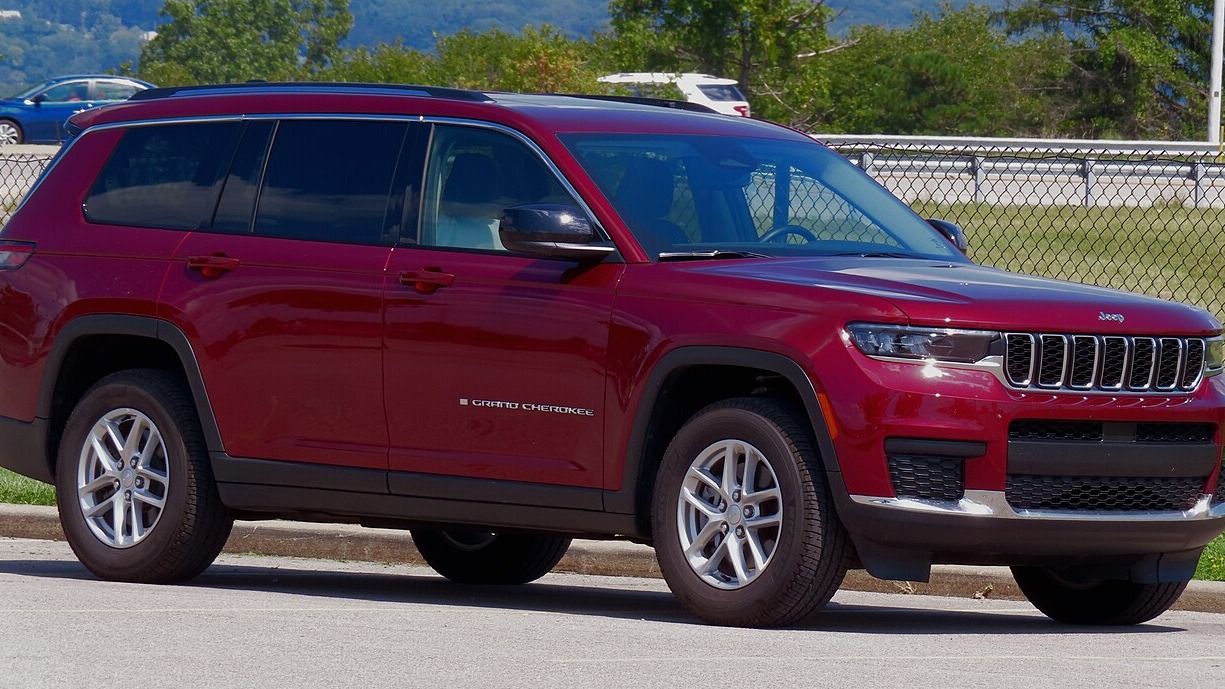
Owners of roughly 419,000 Jeep Grand Cherokee and Grand Cherokee L SUVs now face an open safety defect: the side airbags in their vehicles may inflate too late during a crash. The National Highway Traffic Safety Administration has logged the action as Campaign 26V328000, covering model-year 2022 through 2024 vehicles that do not fully meet the federal standard for side-impact protection. Stellantis plans to fix the problem with a free software update at dealerships, but the recall raises pointed questions about how a timing flaw in airbag control software went undetected across three production years.
Why delayed side-airbag deployment puts Grand Cherokee occupants at risk
The core problem is straightforward. In a side collision, curtain and seat-mounted airbags must inflate within a narrow window to position themselves between an occupant and the intruding structure. When that window is missed, even by milliseconds, the protective cushion arrives after the occupant has already begun moving toward the point of impact. That lag can allow the head or torso to contact the door, B-pillar, or an intruding vehicle before the bag is fully pressurized, reducing the margin of protection the system is designed to provide.
The recall filing ties the defect to noncompliance with federal side-impact rules, the regulation codified at 49 CFR 571.214 that sets injury criteria and deployment performance requirements for side-impact protection. Those rules assume that restraint systems, including airbags and seatbelts, work together as a coordinated system. If one element lags, the entire injury profile can shift, especially for smaller occupants or those seated closer to the impact side.
The scope of the recall, spanning three consecutive model years, suggests the issue is rooted in software or calibration data loaded onto the airbag control module rather than a mechanical change introduced partway through production. If a single hardware revision or crash-sensor redesign were responsible, the affected population would likely cluster around one model year or a narrower build-date range. Instead, the 419,000-unit count stretches across the full 2022 through 2024 Grand Cherokee lineup, which points toward a persistent software condition present from the platform’s launch. That pattern is consistent with a control-module calibration that passed internal validation but fell short under the specific test conditions FMVSS No. 214 requires.
What the NHTSA filing and federal standard reveal
The official recall notice confirms the affected vehicles are Jeep Grand Cherokee and Grand Cherokee L models. The defect summary states the SUVs do not fully comply with the side-impact protection standard, and the associated Part 573 manufacturer report filed by Stellantis provides the technical basis for the determination. The remedy is a dealer-installed software update that recalibrates airbag deployment timing at no cost to owners, with Stellantis responsible for notifying both dealers and registered drivers.
FMVSS No. 214 itself spells out the injury thresholds and dummy-response limits that a vehicle must satisfy in a standardized side-impact crash test. The regulation does not prescribe a single deployment speed; instead, it sets outcome-based criteria for head, thorax, and pelvis injury metrics measured on test dummies. A vehicle fails when its airbag system cannot keep those readings below the regulatory limits. The noncompliance language in the recall filing indicates that Stellantis identified test results, or internal analysis equivalent to test results, showing the Grand Cherokee exceeded at least one of those limits because of late inflation.
For consumers trying to understand how this fits into the broader safety landscape, NHTSA’s own recall and crash datasets offer context on how frequently airbag calibration issues surface across the industry. They show that while software-based fixes have become more common as vehicles grow more complex, timing-related problems in core restraint systems still trigger heightened regulatory scrutiny because of their direct link to injury risk.
Unanswered questions about the three-year airbag calibration gap
Several details are still unclear from the public filings. The documents do not spell out whether the issue was first uncovered during internal Stellantis testing, routine compliance checks, or NHTSA’s own audit program. They also do not explain why the calibration remained in place for three full model years before being corrected, or whether any running production changes were attempted prior to the formal recall.
Another open question is how close the Grand Cherokee came to meeting the regulatory thresholds. A narrow miss suggests the timing error was small but still unacceptable under federal law; a larger gap would point to a more fundamental oversight in the original development and validation process. Either way, the outcome is the same for owners: a recognized safety defect that requires a software update before the vehicle can be considered fully compliant.
The filings also do not address whether the late-deploying side airbags are associated with any real-world crashes or injuries. NHTSA typically flags such incidents when they are documented and clearly linked to the defect, but the absence of that language does not guarantee that no events have occurred. It may simply reflect that the agency and Stellantis have not established a definitive connection at this stage.
What affected Jeep owners should do now
Owners of 2022–2024 Grand Cherokee and Grand Cherokee L SUVs should watch for mailed recall notices from Stellantis and can proactively check their vehicle identification number on NHTSA’s recall portal to confirm whether their SUV is covered. Once parts and software are available, scheduling a dealer visit promptly will minimize the period during which occupants could be exposed to elevated risk in a side-impact crash.
Until the remedy is installed, drivers cannot change the airbag timing themselves, but they can reduce exposure by avoiding unnecessary high-speed driving and ensuring all occupants use seatbelts properly, which remain the primary restraint system. After the update, owners should keep documentation of the repair with their service records, both for peace of mind and for potential resale questions about the recall in the future.