Roughly 225,000 Jeep, Ram, and Dodge vehicles still on American roads carry Takata airbag inflators that federal regulators say could kill their occupants in an otherwise survivable crash. On Feb. 11, 2026, the National Highway Traffic Safety Administration told owners of those vehicles to stop driving them immediately until a free dealer repair is completed. The warning covers models dating back more than two decades, and the fact that so many remain unrepaired after years of recall notices raises hard questions about whether current outreach methods can reach the owners who need them most.
Why 225,000 unrepaired Takata vehicles triggered a federal stop-driving order
NHTSA’s Feb. 11, 2026 consumer alert is not a routine recall expansion. The agency placed these vehicles in its most severe risk category, reserved for Takata inflators whose propellant can degrade and cause the metal housing to rupture during deployment. When that happens, steel fragments can be launched at the driver or front passenger. At least 27 deaths and hundreds of injuries in the United States have been linked to Takata inflator failures across all automakers, and the inflators in these Chrysler, Dodge, Jeep, and Ram models are among those NHTSA considers most dangerous. The federal alert names FCA US (now part of Stellantis) as the manufacturer responsible for the roughly 225,000 vehicles still awaiting repair.
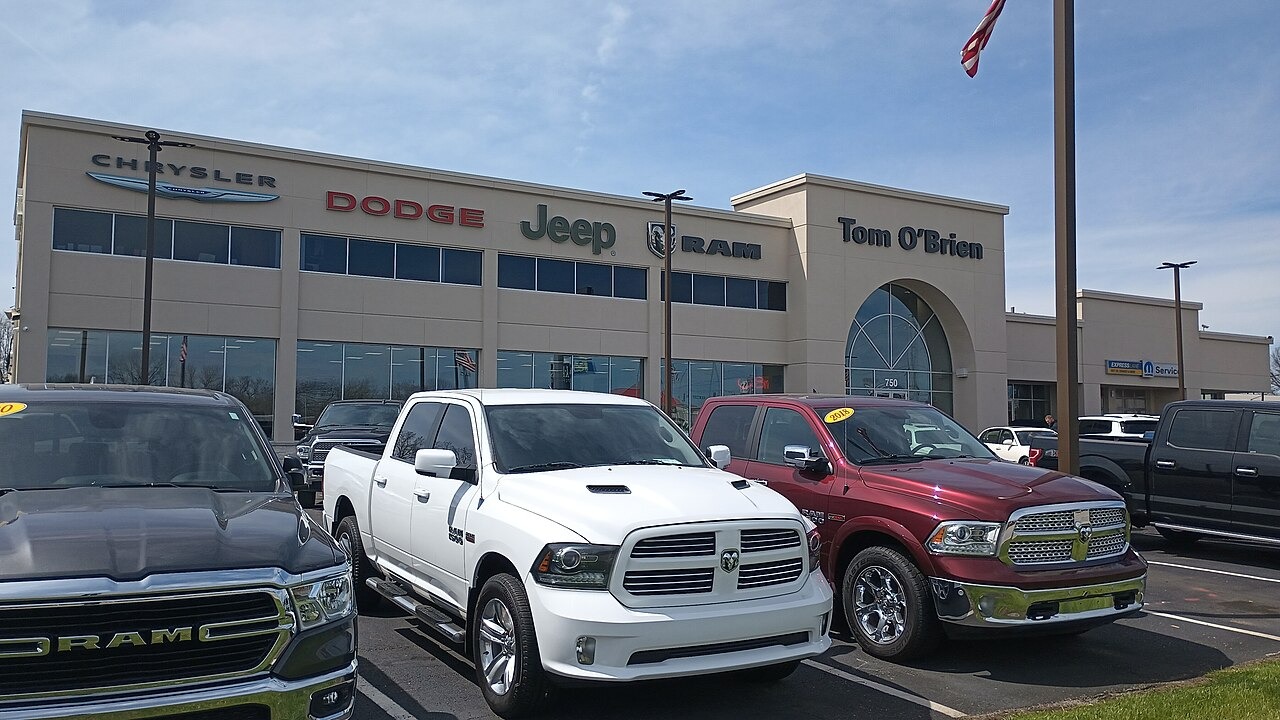
The affected models span a wide range: 2003 through 2010 Dodge Ram pickups, 2007 through 2016 Jeep Wranglers, plus certain model years of the Dodge Durango, Dodge Dakota, and Dodge Magnum. Six separate recall campaigns are tied to the warning, including campaign 16V352, 19V018, 15V312, 15V313, 16V947, and 18V021. Some of these campaigns were opened as far back as 2015, meaning parts and dealer capacity have been available for years. The sheer age of the vehicles, many now on their second or third owner, helps explain why traditional mail-based recall notices have failed to close the gap.
Older trucks, lost owners, and the limits of recall outreach
The independent monitor appointed to oversee the Takata coordinated remedy program filed an update with NHTSA describing the persistent difficulty of reaching owners of older vehicles. Trucks and SUVs that have changed hands multiple times often have no current registration address on file, which means recall letters go to the wrong mailbox. The monitor’s findings, available through NHTSA documentation, point to a structural problem: standard notification tools lose effectiveness as vehicles age and ownership records become stale.
A related question is whether geography plays a role. Takata inflators degrade faster in hot, humid climates, and states with weaker recall-notification enforcement may have lower completion rates. NHTSA’s campaign-level data tracks national repair totals but does not always capture the nuances of where unrepaired vehicles are clustered or why some communities respond more slowly than others. That leaves safety officials and automakers trying to infer patterns from incomplete information while the riskiest inflators remain on the road.
In the meantime, the people most likely to be driving these vehicles are also the ones least able to absorb a sudden loss of transportation. Older pickups and SUVs often serve as work trucks or family haulers for lower-income households. Asking those owners to park their vehicles indefinitely, even for a life-saving repair, can feel like an impossible request if they lack alternative transportation or cannot easily reach a dealership during business hours. This tension between immediate safety and everyday necessity complicates every “do not drive” directive.
Escalating warnings and what owners are being told to do
NHTSA has steadily ratcheted up its messaging around the most dangerous Takata inflators, moving from standard recall notices to more urgent advisories and, in some cases, explicit “park outside” or “do not drive” instructions. The agency’s broader Takata spotlight emphasizes that these inflators can fail without warning, even in minor crashes or during low-speed deployments that would otherwise be survivable.
For the roughly 225,000 Chrysler, Dodge, Jeep, and Ram vehicles now under a stop-driving order, the guidance is stark. Owners are urged to contact a dealer immediately to schedule a free replacement of the defective inflator and to arrange towing or mobile repair where available. Automakers typically cover the full cost of parts and labor and may offer loaner vehicles in some cases, but the burden of taking the first step still falls on the owner, who must recognize the urgency and act on it.
Regulators and safety advocates argue that this is no longer a routine maintenance issue but a clear-cut emergency. Every day an unrepaired vehicle remains in service is another day when an otherwise survivable crash could turn fatal because of shrapnel from a rupturing inflator. For families who have already lost loved ones to Takata explosions, the persistence of hundreds of thousands of unrepaired vehicles is more than a statistic; it is evidence that the system designed to protect drivers is still leaving too many of them behind.
Whether NHTSA’s latest warning will finally move the needle depends on factors far beyond a single press release. Closing the remaining gap will likely require more aggressive outreach, creative partnerships with community organizations, and practical support for owners who cannot easily give up their vehicles. Until then, the aging trucks and SUVs still carrying Takata inflators will remain a rolling reminder that even well-publicized recalls can fail to reach the people who need them most.