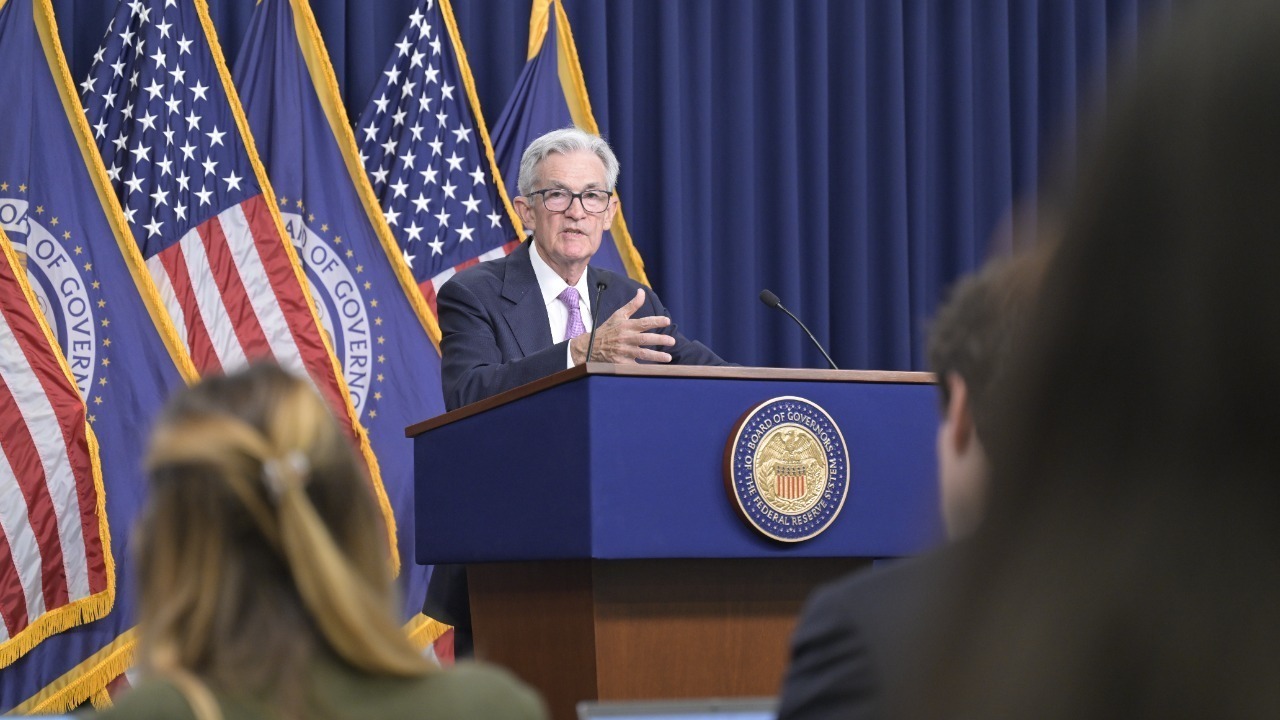
Seventeen of 18 Federal Reserve officials now see inflation risks tilted to the upside, a near-unanimous shift that emerged from the June 16-17, 2026 FOMC meeting and its accompanying Summary of Economic Projections. The Committee held rates steady and stated that inflation “remains elevated” relative to its 2 percent goal, pointing in part to supply shocks including energy prices. For borrowers, savers, and businesses watching for any sign of rate cuts, the signal is blunt: relief is not close.
Near-unanimous inflation concern and what it means for rates
The scale of the tilt is striking. In the projections released after the June meeting and summarized in the June 17 statement, 17 of 18 participants flagged upside risks to their own inflation forecasts. That ratio leaves almost no internal dissent on the direction of the threat. The practical consequence is straightforward: when nearly every voting and non-voting policymaker believes prices are more likely to accelerate than to cool, the bar for cutting interest rates rises sharply.
The statement itself attributed part of the inflation pressure to supply-side forces, specifically naming energy as a contributor. That language matters because supply shocks are harder for the Fed to offset with rate policy alone. Raising or cutting the policy rate mainly influences borrowing costs and demand; it does little to increase the supply of oil, refine gasoline, or untangle shipping bottlenecks. If energy costs are the primary driver pushing officials toward upside risk assessments, then the Fed’s own assumptions about future energy prices in subsequent projection rounds will be the variable to watch.
For rate policy, this configuration creates an asymmetry. As long as officials see inflation risks skewed to the upside, they are more likely to tolerate weaker growth than to risk a renewed price surge. That does not mean rate hikes are imminent, but it does suggest that cuts will require clearer evidence that inflation is not only falling toward 2 percent but is likely to stay there even if energy markets remain volatile.
How March projections set the baseline for June’s shift
The sharpness of the June tilt becomes clear only against the backdrop of the March 2026 projections, which showed a more balanced distribution of inflation risk assessments among participants. In March, views were more evenly spread across upside, downside, and broadly symmetric risks. Between March and June, that distribution swung to near-total agreement on upside risk. For a committee that usually moves in gradual steps, such a rapid consolidation of opinion is unusual.
Several developments likely contributed. Inflation data in the intervening months showed slower-than-hoped progress in some core measures, while energy and other commodity prices rebounded from earlier declines. Those outcomes would naturally push officials to reassess earlier optimism that price pressures were on a smooth glide path lower. The June projections, in effect, mark a reset of that optimism: the committee is no longer treating elevated inflation as a fading legacy of past shocks, but as a risk that could be reignited.
The International Monetary Fund reached a parallel conclusion months earlier. In its April 2026 consultation with the United States, the IMF Executive Board warned of upside inflation risks linked to energy, commodities, and their pass-through into broader price measures, a view laid out in the Fund’s Article IV assessment. The fact that an outside institution with independent analytical staff arrived at a similar reading strengthens the case that the risk assessment reflects real economic conditions, not just internal Fed groupthink.
Unresolved questions after the June projections
Despite the clarity of the headline message, several gaps remain. The Summary of Economic Projections does not identify which participant holds which view, so it is impossible to know whether the single holdout who did not flag upside risk is a voting member of the Committee or a regional bank president without a vote this year. That distinction could matter if the holdout’s reasoning reflects regional conditions-such as weaker labor markets or cooling rents-that the majority has discounted.
The statement’s reference to supply shocks “including energy” also leaves open the question of which other forces officials had in mind. Tariff changes, shipping disruptions in key trade routes, and swings in global commodity prices are all plausible candidates. Each would have different implications for how persistent the current inflation risk might be. For example, a temporary shipping disruption might argue for patience, while a broad-based rise in traded-goods prices tied to new tariffs could sustain inflation pressure for longer.
Another unresolved issue is how this risk tilt interacts with the Fed’s growth and unemployment forecasts. If officials now see inflation as more likely to surprise on the upside, they may be less willing to assume a rapid decline in unemployment without renewed price pressure. That would translate into a higher implied “cost” of achieving further labor-market gains, reinforcing the case for keeping policy restrictive.
For households and firms, the message is to plan on a higher-for-longer rate environment. Mortgage borrowers and corporate treasurers may want to lock in funding where possible, while savers can expect deposit and money-market yields to remain comparatively attractive. Until incoming data clearly and persistently challenge the Fed’s new consensus on upside inflation risks, the path toward lower rates will remain narrow, and any pivot is likely to be cautious rather than abrupt.