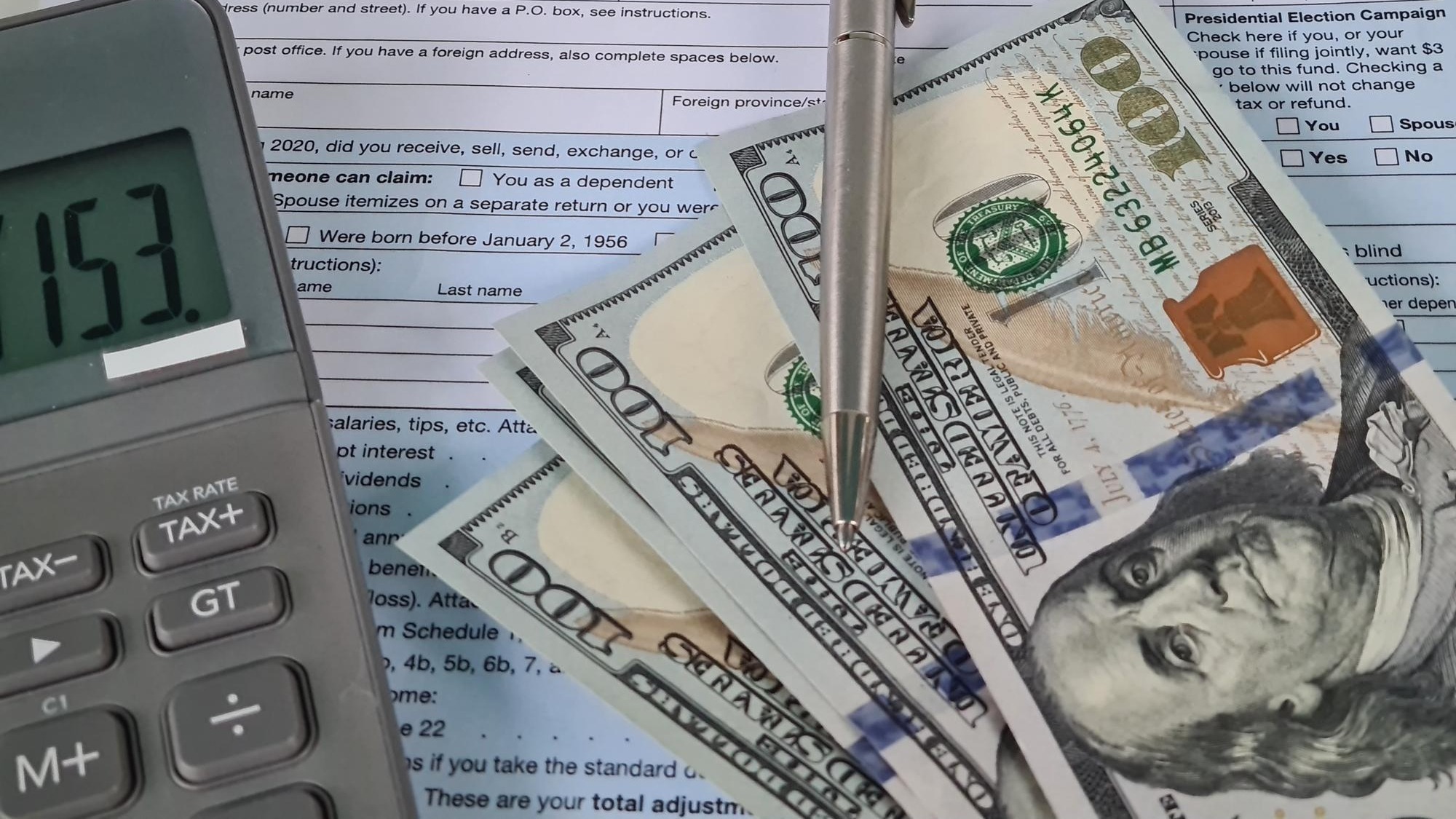
Millions of Americans treat a spring tax refund as a windfall, but each oversized check confirms the same thing: the filer handed the federal government an interest-free loan for up to twelve months. With the 2026 filing season already underway and IRS processing data accumulating week by week, the gap between what workers owe and what their employers send to the Treasury on their behalf remains one of the most overlooked personal-finance decisions of the year.
Why over-withholding costs workers real money right now
Every pay period, an employer withholds estimated federal income tax and sends it directly to the IRS in the worker’s name. When the amount withheld exceeds the actual tax liability calculated on a return, the difference comes back as a refund, sometimes months after the calendar year ends. The IRS itself notes that too much withholding means the worker will not have use of that money until a refund arrives. That lost access is not theoretical. Dollars sitting at the Treasury cannot pay down credit-card balances, earn interest in a savings account, or cover routine expenses during the year they were earned.
The federal government, for its part, faces no obligation to compensate filers for the delay on a routine refund. Under 26 U.S. Code Section 6611, interest on overpayments generally does not begin accruing until well after the return due date, and only then under narrow conditions spelled out in the implementing regulation, Treasury regulation 301.6611-1. For the vast majority of filers who receive their refunds within a few weeks of filing, the government keeps the time value of those dollars entirely.
A testable idea sits at the center of this problem. If taxpayers ran the IRS Withholding Estimator during the first half of a given tax year and adjusted their W-4 accordingly, their average refund size should drop compared with matched filers who never used the tool. The IRS tracks weekly refund totals through its filing-season statistics tables, but no publicly available dataset currently links individual estimator usage to actual refund outcomes. That data gap means the strongest version of the claim, that the tool reliably shrinks refunds at scale, cannot yet be confirmed with micro-level evidence.
What IRS filing data and federal law reveal about refund scale
The IRS publishes cumulative filing-season statistics each week during tax season. Data for the week ending February 20, 2026, captured early-season refund activity including average direct-deposit refund amounts, according to the agency’s own newsroom release. These weekly snapshots, organized on the IRS filing-season statistics hub, let anyone compare refund volume and dollar totals across years without relying on secondhand reporting. The annual IRS Data Book adds a longer view, documenting total refunds issued and returns processed across an entire fiscal year.
None of these datasets, however, break refunds down by the withholding elections that produced them. The gap matters because it prevents a direct measurement of how many workers deliberately over-withhold as a forced-savings strategy versus how many simply never revisit their W-4 after starting a job. Without that detail, analysts can see the scale of refunds but not the behavioral patterns behind them.
What the public data does show is the persistence of large refunds as a feature of the tax system. Year after year, tens of millions of direct-deposit refunds move from the Treasury back to household bank accounts in the first half of the calendar year. For policymakers, that pattern represents a massive, recurring shift of liquidity away from workers during the year they earn their income. For individual filers, it represents a choice-whether conscious or not-to wait for money that could have been available in every paycheck.
How the IRS withholding estimator fits into the picture
To help workers calibrate their withholding more precisely, the IRS offers an online Withholding Estimator along with detailed estimator FAQs. The tool asks for information about income, filing status, credits, and deductions, then suggests how many withholding allowances or extra dollar amounts to claim on a W-4. In principle, using it early in the year and updating a W-4 promptly should reduce the odds of a large refund or an unexpected tax bill.
Yet the absence of linked microdata between estimator usage and actual refunds makes it difficult to quantify that impact. The IRS can show, in aggregate, how many refunds it issues and the average amount. It can also describe how the estimator is designed to work. What it cannot currently demonstrate with public evidence is how much behavior actually changes when workers encounter the tool.
That limitation does not erase the underlying math. A worker who trims withholding enough to reduce a typical $2,400 annual refund down to $400, for example, would see roughly $2,000 more spread across paychecks during the year. Whether those extra dollars go toward debt payments, emergency savings, or everyday expenses, they represent regained control over cash flow that would otherwise sit with the government interest-free.
For now, the policy question and the household-level decision move on parallel tracks. Federal law continues to define when, and under what circumstances, the government pays interest on overpayments, largely shielding the Treasury from the cost of routine over-withholding. IRS statistics continue to document the size of the annual refund wave without showing the withholding choices that created it. And millions of workers continue to discover each spring that their own money has been waiting for them all along-locked inside a refund check that did not have to be so large.