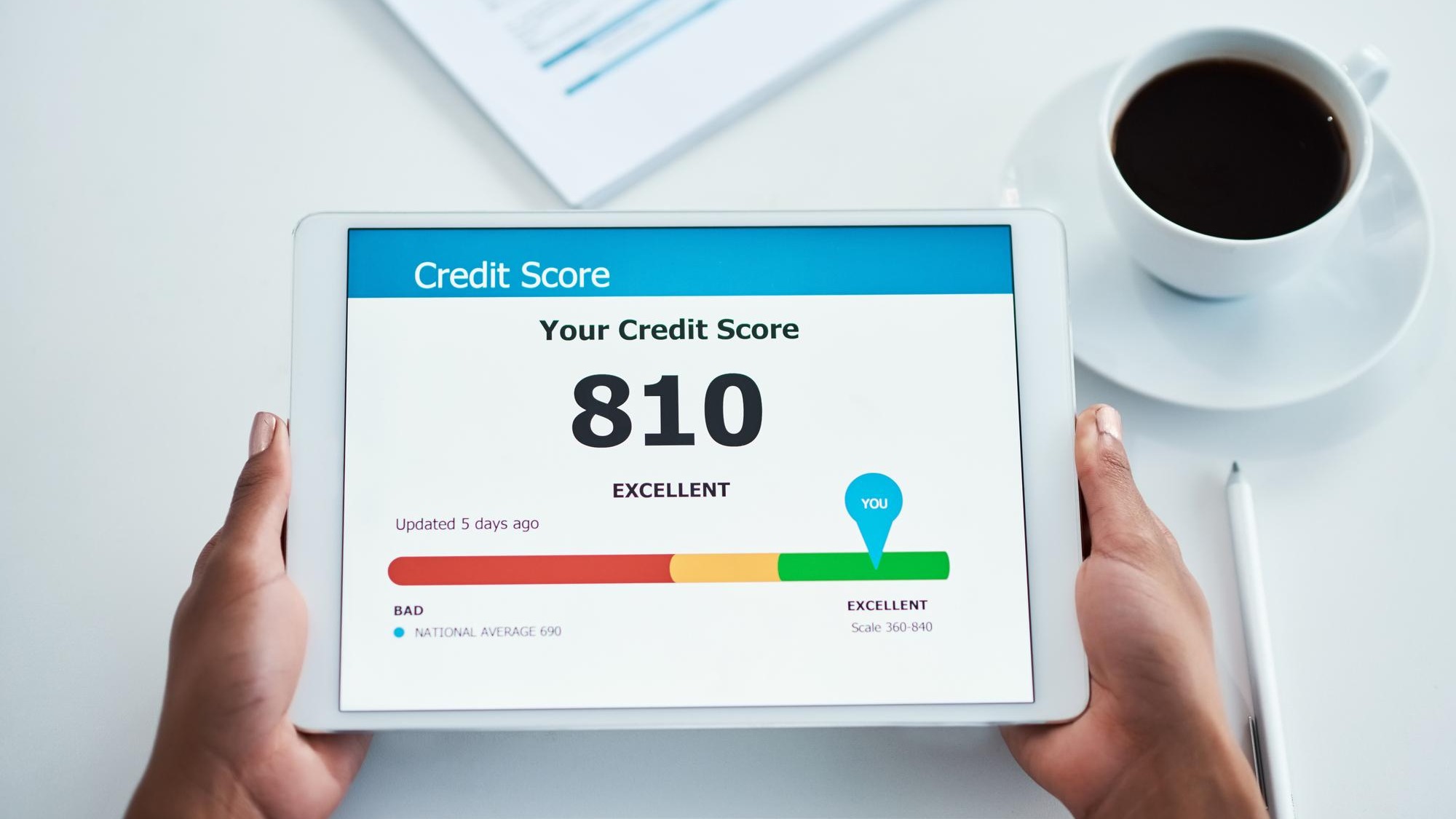
Two factors alone account for roughly 65 percent of what determines a consumer’s credit score, and millions of borrowers are making decisions about which one to fix first without clear evidence on sequencing. Fair Isaac has reported that payment history characteristics carry about 35 percent of predictive accuracy, while consumer indebtedness accounts for about 30 percent. Those weights, documented in a Federal Reserve report to Congress, mean that a single missed payment or a maxed-out credit card can shift a score by dozens of points, directly affecting the interest rates and loan terms available to anyone applying for a mortgage, auto loan, or credit card in 2026.
Why the 65-percent weight still shapes borrowing costs
With mortgage rates and auto-loan pricing still elevated compared to pre-2022 levels, even a modest score difference can translate into thousands of dollars in added interest over the life of a loan. The concentration of scoring weight in just two categories, payment history and indebtedness, means borrowers have a narrow but powerful set of levers to pull. Paying every bill on time and keeping balances low relative to credit limits are the two actions that move the needle most, according to federal consumer guidance from the Federal Trade Commission.
A practical question follows from those weights: should a borrower who has both late payments and high utilization tackle the balance first or the delinquency? One testable hypothesis holds that reducing utilization below 20 percent before resolving late-payment records would produce faster score gains over six months, because utilization updates appear on credit reports monthly while late-payment marks persist for years. No publicly available anonymized credit-file study has confirmed or rejected that sequencing claim, which leaves borrowers relying on general guidance rather than controlled evidence.
Federal data behind the 35-and-30 percent split
The specific factor weights trace to Fair Isaac’s own disclosures, as cited in the Federal Reserve Board’s report to Congress on credit scoring. That document states that payment history characteristics are the single most important category, carrying about 35 percent of predictive accuracy for the general population. Consumer indebtedness, which includes credit utilization ratios and total outstanding debt, follows at about 30 percent. The remaining predictive power is spread across length of credit history, new credit inquiries, and the mix of account types, none of which individually approaches the influence of the top two.
Federal agencies have built consumer guidance around those same priorities. The FTC advises consumers to pay bills on time and keep card balances well below their limits, framing those two habits as the most direct path to maintaining or improving a score. The Consumer Financial Protection Bureau offers tools for checking scores and understanding rights, accessible through the USA.gov portal. Together, these resources confirm that the scoring math has not publicly shifted in its broad outlines, even as newer credit products and buy-now-pay-later plans have entered the market.
Gaps in the evidence on score improvement sequencing
Several important questions remain open. The Federal Reserve report that established the 35-and-30 percent framework was published well before the current generation of scoring models, and neither Fair Isaac nor VantageScore Solutions routinely releases granular, anonymized data sets that would let outside researchers test different repair strategies head-to-head. As a result, much of the advice on whether to prioritize lowering utilization or addressing derogatory marks is inferred from general scoring principles rather than from randomized or quasi-experimental studies.
Existing public research tends to focus on correlations between credit characteristics and default risk, not on the month-by-month trajectory of scores after consumers change specific behaviors. For example, there is detailed information about how severe delinquencies predict future nonpayment, and about how high revolving balances signal financial stress. There is far less evidence on how quickly scores respond when a borrower who has both problems pays down a card to a low balance versus negotiating the removal or reclassification of a late-payment entry.
Timing also complicates the picture. Utilization can change with every statement cycle, so a large payment that brings balances down may show up in the next reporting period. By contrast, negative marks such as 30-day or 60-day delinquencies are typically reported as discrete events that remain on file for years, even if the account is later brought current. That asymmetry fuels the intuitive argument for attacking utilization first, but without broad, de-identified credit-file panels, analysts cannot quantify how often that approach produces meaningfully better short-term outcomes than, say, curing the most recent delinquency.
Policy discussions have occasionally touched on these gaps. Consumer advocates argue that more transparency around how different actions affect scores over time would help borrowers make informed choices, particularly those with limited resources who cannot simultaneously pay down debt and eliminate all delinquencies. Lenders, for their part, emphasize that scoring models are proprietary and that releasing detailed response functions could invite gaming or misinterpretation.
For now, the consensus from federal guidance is pragmatic rather than finely sequenced. Consumers are urged to avoid new late payments at all costs, to bring existing accounts current as soon as possible, and to steadily reduce revolving balances relative to limits. Those steps align with the 35-percent and 30-percent weights that dominate most scoring models, even if the precise ordering of actions has not been rigorously tested. Until more data is made available, borrowers looking to improve their scores must navigate with broad principles instead of precise road maps, knowing that the two biggest levers-paying on time and owing less-remain central to how their creditworthiness is measured.