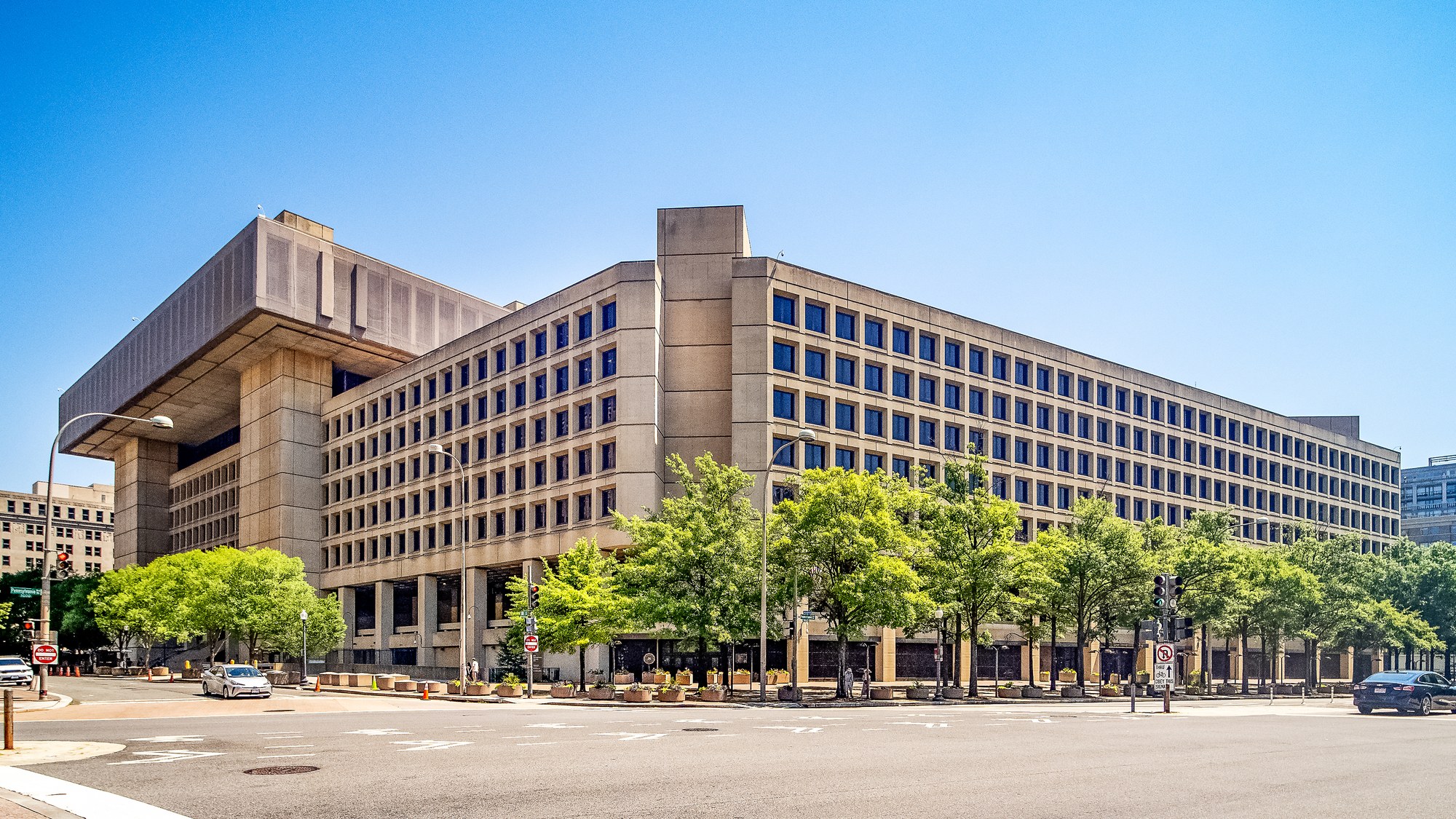
Federal and state authorities have charged Lancaster County, Pennsylvania, businessman Daryl F. Heller with orchestrating a fraud that collected roughly $402 million from about 2,700 investors over nearly eight years. The scheme allegedly promised fixed monthly returns from ATM machine investments but instead used new investor money to pay earlier participants. Both the Securities and Exchange Commission and the Department of Justice filed separate actions, while the FBI opened an active investigation to identify victims.
Why the $402 million ATM fraud case demands attention now
The dual enforcement actions landed simultaneously, a signal that federal agencies coordinated before going public. The SEC filed a civil complaint in the Eastern District of Pennsylvania, docketed as Case No. 25-cv-5036, naming Heller alongside two entities he controlled: Paramount Management Group, LLC, and Prestige Investment Group, LLC. The agency described the conduct as a Ponzi-like scheme built around an ATM offering that promised investors fixed monthly distributions.
The criminal side carries even steeper consequences. The U.S. Attorney’s Office for the Eastern District of Pennsylvania announced that a federal grand jury indicted Heller on charges of securities fraud and wire fraud. According to the indictment, the alleged conduct spanned from about January 2017 through December 2024, a period of roughly eight years during which investors believed their money was purchasing and operating ATM machines generating steady cash flow.
The government estimates investor losses at about $402 million. That figure places this case among the larger Ponzi-style frauds prosecuted in the Philadelphia federal court system in recent years. The length of the scheme raises hard questions about why the operation avoided detection for so long. One working theory centers on the mechanics of the pitch itself: ATM businesses generate small, frequent cash transactions that are difficult to audit remotely, making it easier to fabricate plausible-sounding revenue reports. If investor funds flowed through a limited number of accounts without corresponding equipment purchases, bank compliance teams would have needed to match inbound wires against verifiable ATM deployment records, a step that apparently did not trigger alarms for years.
SEC and DOJ evidence against Heller and his two firms
The SEC’s complaint lays out a straightforward allegation: Heller told investors their capital would fund ATM acquisitions and operations, and that they would receive fixed monthly distributions from the machines’ transaction fees. Instead, the agency says, those distributions came from money contributed by newer investors, the defining feature of a Ponzi structure. The civil case names both Paramount Management Group and Prestige Investment Group as co-defendants, indicating regulators view the two entities as vehicles for the same operation rather than independent businesses.
According to the SEC, investors were provided with documents that appeared to detail specific ATM locations, projected fee income, and fixed monthly payouts. The complaint alleges that in reality, many of the referenced machines were never purchased, and the promised revenue streams did not exist. When investors asked for proof of ownership or detailed transaction histories, they were allegedly given spreadsheets and summaries that regulators now characterize as misleading or fabricated. The agency also contends that some investor funds were diverted to cover operating expenses and other uses unrelated to the acquisition of ATM equipment.
On the criminal side, the indictment charges securities fraud and wire fraud, offenses that carry significant prison terms upon conviction. Prosecutors allege that Heller used interstate wire communications, including email and bank transfers, to solicit and move investor funds, satisfying the jurisdictional elements of wire fraud. The DOJ filing mirrors the SEC’s timeline, specifying the date range of the alleged conduct as January 2017 through December 2024 and pegging losses at about $402 million. While the criminal case focuses on proving intent to defraud beyond a reasonable doubt, the civil action seeks injunctions, disgorgement of ill-gotten gains, and monetary penalties under a lower burden of proof.
The FBI’s Philadelphia Division has set up a dedicated online portal to collect information from people who invested through Prestige Investment Group or Paramount Management Group. The form asks for details about ATM-related contracts, payment histories, and any communications received from Heller or his companies. Investigators say this information will help them verify the scale of the losses, trace the flow of funds, and identify additional witnesses who may be called to testify if the case proceeds to trial.
How the scheme allegedly operated for nearly eight years
Regulators describe the offering as deceptively simple. Investors were told that their money would be used to buy individual ATMs or pools of machines, often placed in high-traffic locations such as convenience stores or transportation hubs. In return, they were promised fixed monthly payments, typically framed as their share of transaction fees. The fixed nature of the payouts, however, is a red flag in any business where revenue naturally fluctuates with customer usage. According to the SEC, rather than tying distributions to actual fee income, Heller allegedly committed to predetermined amounts that could only be sustained by bringing in new capital.
To maintain credibility, the operation allegedly relied on consistent payments to early investors, reinforcing the appearance of a successful enterprise. As long as new investors continued to sign on, there was enough fresh money to cover withdrawals and monthly distributions. When recruitment slowed, pressure mounted to find additional sources of cash or delay payments, a dynamic common to Ponzi schemes. The complaint suggests that some investors attempted to redeem or transfer their interests, only to encounter delays or shifting explanations about the status of their machines.
Compliance experts note that the case also highlights gaps in how private investment offerings are monitored. Many such deals are exempt from full registration, reducing the level of routine scrutiny they receive. The SEC filing underscores the importance of verifying basic facts, such as whether the purported business assets exist and generate the claimed income. Prospective investors can independently check whether a promoter is associated with any registered entities or prior enforcement actions by searching the SEC’s EDGAR system and related databases.
What comes next for investors and regulators
Heller is presumed innocent unless and until proven guilty in court. The criminal case will proceed through initial appearances, potential plea negotiations, and, if necessary, trial. In parallel, the SEC’s civil action will move forward, though judges sometimes pause civil proceedings to avoid interfering with a related criminal prosecution. For investors, the key questions now are how much money can be recovered and how long the process will take. Any assets traced to investor funds may be frozen and ultimately distributed through restitution orders or court-supervised claims processes.
The case serves as a cautionary tale about investment products that promise steady returns from complex or opaque business models. Regulators are likely to use the allegations against Heller, Paramount Management Group, and Prestige Investment Group as an example in future investor education efforts, emphasizing the need for independent verification and skepticism toward guaranteed payouts. Whatever the outcome in court, the $402 million figure ensures that this alleged ATM fraud will remain a reference point in discussions about Ponzi-style schemes and regulatory oversight for years to come.