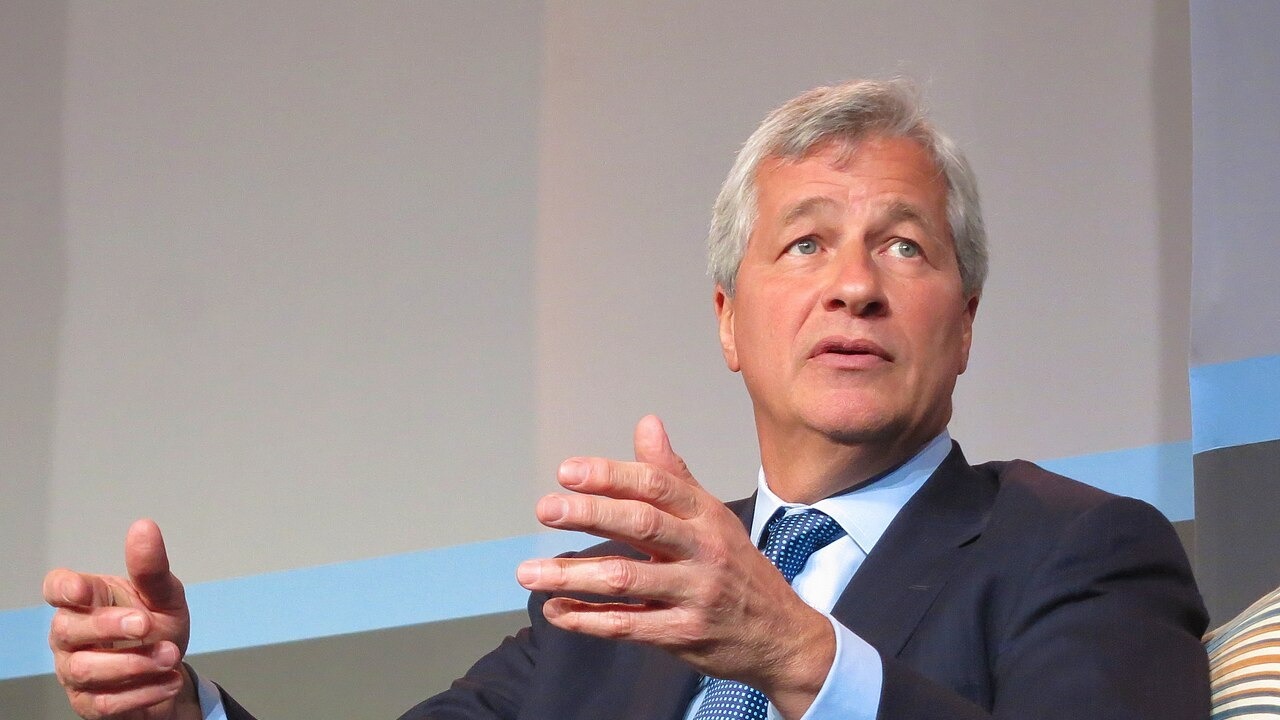
JPMorgan Chase CEO Jamie Dimon has warned that financial markets are showing “too much exuberance,” drawing a direct line to the conditions he observed before the dot-com crash of 2000 and the credit crisis of 2007. Dimon singled out rival banks for taking on excessive risk, saying they are doing “dumb things” that echo the competitive recklessness that preceded earlier market collapses. His remarks land as JPMorgan prepares to appear at the Bernstein Strategic Decisions Conference, putting the largest U.S. bank’s chief executive on record with a caution that investors and lenders cannot easily dismiss.
Why Dimon’s exuberance warning carries weight in 2026
Dimon’s track record gives his words a specific gravity that generic market commentary lacks. He ran JPMorgan through both the 2000 equity bust and the 2008 financial crisis, emerging with the bank’s balance sheet largely intact while competitors collapsed or required government rescues. When he now says he sees the same patterns forming, the comparison is not abstract. He is measuring current behavior against episodes he managed from inside one of the world’s largest financial institutions.
The tension is straightforward: if Dimon is right that competitors are again stretching for yield and loosening standards, the risk does not stay confined to those banks. Aggressive lending and trading by one set of institutions can pull pricing, credit terms, and deal structures across the entire sector. That dynamic is exactly what accelerated losses in 2007 and 2008, when banks that had avoided the worst subprime exposure still faced counterparty risk and market-wide repricing.
A working hypothesis worth testing is whether Dimon’s public warnings function as a leading sentiment indicator, one that correlates with equity corrections when paired with rising competitor leverage. The available evidence does not include the specific leverage data or internal metrics Dimon referenced, so the hypothesis remains open. What is clear is that Dimon has chosen to go public with his concern at a moment when major stock indexes sit near record levels, a combination that has preceded sharp reversals before.
Dimon’s “dumb things” charge and the pre-crisis parallel
In a Bloomberg video appearance, Dimon drew parallels to the era before the 2008 financial crisis, accusing JPMorgan’s rivals of engaging in the kind of risk-taking that looks profitable in calm markets but becomes destructive when conditions shift. His use of the phrase “dumb things” was deliberate and blunt, a departure from the measured language most bank CEOs deploy when discussing competitors.
Dimon did not name specific institutions or transactions. But the accusation carries an implicit message to regulators, shareholders, and counterparties: JPMorgan sees behavior it considers reckless, and it wants distance from the consequences. That posture mirrors what Dimon did in the years before 2008, when JPMorgan pulled back from certain mortgage products while rivals expanded aggressively into them.
JPMorgan is scheduled to present at the Bernstein conference, giving Dimon another platform to elaborate on his concerns. Whether he names specific risks or offers data to support his warnings will shape how seriously markets treat his latest comments. A detailed breakdown of problematic lending segments or leveraged trading strategies would likely sharpen regulatory scrutiny and could prompt investors to reprice exposed firms. A more general restatement of caution, by contrast, might be interpreted as an attempt to manage expectations without signaling imminent stress.
Implications for investors and regulators
For equity and credit investors, Dimon’s remarks raise the question of whether current valuations fully account for the downside of a turn in the credit cycle. If banks are competing aggressively on price and structure to win business, margins may look healthy now while masking a buildup of tail risk. Even institutions that avoid the riskiest deals can be hit indirectly through funding markets, counterparty exposures, and broad-based selloffs in financial stocks.
Regulators face a parallel challenge. Public comments from a systemically important bank CEO about rivals taking excessive risk are difficult to ignore, especially when they evoke the run-up to the last major crisis. Supervisors may feel pressure to revisit stress scenarios, scrutinize underwriting standards in fast-growing loan categories, or question whether existing capital and liquidity buffers are sufficient for a sharp downturn. At the same time, they must avoid overreacting in a way that could choke off legitimate credit growth.
Dimon’s framing also underscores the competitive incentives that can push banks toward the edge. When one institution loosens terms to win clients, others must decide whether to match those concessions or cede market share. In previous cycles, that dynamic often resolved in favor of growth, with discipline restored only after losses forced retrenchment. By speaking out now, Dimon appears to be trying to shift that equilibrium, signaling that at least one major player is willing to sacrifice some volume to preserve resilience.
How much of a turning point is this?
Whether Dimon’s warning marks the start of a broader rethink in financial markets will depend on how other executives, regulators, and investors respond in the coming months. If peers echo his concerns and begin highlighting their own risk controls, the sector could see a gradual tightening of standards without a dramatic shock. If, instead, competitors downplay the remarks and continue to prioritize growth, his comments may stand as an early marker of tension that only becomes fully appreciated after conditions deteriorate.
For now, the main takeaway is that one of the industry’s most experienced leaders is publicly questioning the sustainability of current behavior. In a period of strong asset prices and benign credit conditions, such a warning cuts against the prevailing optimism. History suggests that when exuberance and caution collide, the adjustment can be abrupt. Dimon’s decision to raise his hand before the fact, rather than explain losses after the fact, is a signal that investors and policymakers will be weighing carefully as they assess how much risk is truly embedded in today’s markets.