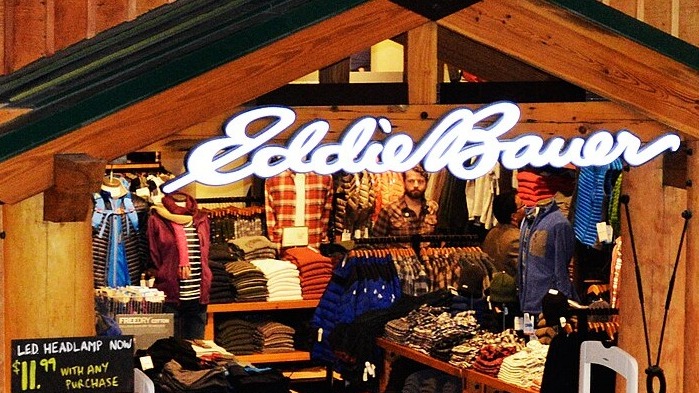
Eddie Bauer LLC, the 104-year-old outdoor retailer, filed for voluntary Chapter 11 bankruptcy protection in the District of New Jersey on Saturday, setting the stage for a court-supervised sale of the business. All 175 of the company’s U.S. and Canadian stores face permanent closure if no buyer emerges during the process. The filing came with the backing of the company’s secured lenders under a restructuring support agreement, or RSA, that was signed before the petition hit the docket.
Lender-backed RSA and the odds of a third-party buyer
The structure of this bankruptcy matters as much as the filing itself. Eddie Bauer did not stumble into court unprepared. The company entered into an RSA with its secured lenders before filing, locking in their support for a sale process. In practical terms, that agreement gives those lenders significant influence over the timeline and terms of any deal. Secured creditors in a pre-negotiated Chapter 11 typically retain the right to credit-bid their debt, meaning they can use what the company owes them as currency in the auction rather than putting up new cash.
That dynamic tilts the playing field. An outside buyer would need to outbid the lenders’ credit position with actual dollars, a high bar when the retailer’s brick-and-mortar footprint spans 175 locations across two countries. The RSA effectively functions as a floor for the sale, but it also narrows the realistic pool of acquirers. If no third party steps forward with a superior offer, the lenders themselves could end up owning the business or directing its wind-down.
Marc Rosen, the executive quoted in the company’s press release, framed the filing as a path to maximize value and protect the brand. But the pre-arranged lender support suggests the outcome may already be largely shaped, with limited room for a surprise white-knight bidder. Employees, landlords, and vendors now face weeks or months of uncertainty while the court process plays out, watching to see whether the lenders opt to reorganize the retailer or simply harvest its remaining assets.
What the court filings and press release confirm
The voluntary Chapter 11 cases were filed in the U.S. Bankruptcy Court for the District of New Jersey, where the official docket is now live. The company directed creditors and other parties to the Stretto case administration site for filings and claims information, a standard step in large retail bankruptcies meant to centralize notices and deadlines. According to reporting from the Associated Press coverage, the process is structured as a court-supervised sale, and if that sale cannot be completed, the company will begin winding down its U.S. and Canadian operations entirely.
The press release did not name the secured lenders party to the RSA, nor did it disclose the dollar value of the company’s outstanding debt, inventory, or lease obligations. Employee headcount across the 175 stores also went unmentioned. Those details may surface in first-day motions and schedules filed with the court in the coming days, but for now the public record is thin on the financial specifics that would help outside bidders or affected workers gauge the scale of the situation.
What is clear is that the Chapter 11 filing is not a simple pause-and-reorganize move. The company has already framed its path forward as a sale or, failing that, a wind-down. That framing limits the range of potential outcomes and signals to the market that Eddie Bauer is not seeking a long, open-ended restructuring but a relatively swift resolution, even if that means shuttering all stores.
Open questions for Eddie Bauer’s 175 stores and their workers
Several critical pieces of information are still missing from the public record. No stalking-horse bidder has been publicly identified, leaving open whether any party has already signaled interest in buying the chain or its intellectual property. The company has not said how long it expects stores to remain open during the Chapter 11 process, whether all locations will continue operating, or if near-term closures are planned to conserve cash.
For store employees, the biggest questions center on timing and treatment. The filings so far have not detailed how many workers are employed across the U.S. and Canada, what severance policies might apply in a liquidation scenario, or how accrued vacation and other benefits will be handled. In many retail bankruptcies, courts are asked early on to approve wage and benefits payments to keep operations stable, but until those motions are filed and ruled on, staff are left to speculate about their job security.
Landlords and vendors face their own uncertainties. The fate of 175 leases will depend on whether a buyer wants to keep a meaningful brick-and-mortar footprint or focus on online sales and a smaller store base. Vendors, meanwhile, must decide whether to keep shipping goods to a debtor whose long-term survival is in doubt, often weighing the risk of nonpayment against the hope of preserving a longstanding relationship.
Consumers, too, have open questions. The company has said little publicly about how returns, gift cards, and loyalty programs will be treated during the Chapter 11 process. In past retail bankruptcies, courts have sometimes allowed businesses to honor gift cards and promotions to maintain goodwill, but such decisions are case-specific and depend on the debtor’s liquidity and the views of major creditors.
As the Eddie Bauer case moves deeper into Chapter 11, the answers to these questions will emerge through court filings, hearing transcripts, and any eventual sale agreement. For now, the lender-backed RSA, the threat of a full wind-down, and the lack of disclosed financial detail point to a process tightly controlled by secured creditors, with workers, landlords, vendors, and shoppers all waiting to see whether a buyer steps up in time to keep the brand’s physical presence alive.