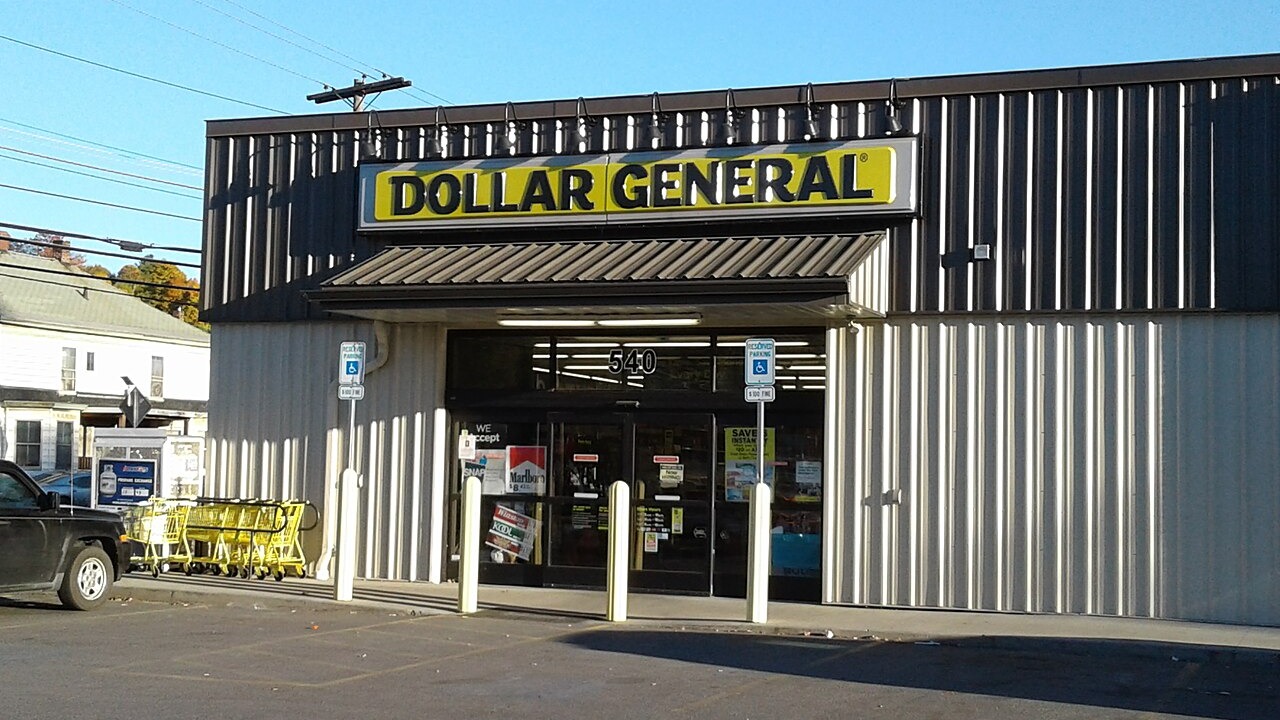
Millions of American households earning less than $30,000 a year are running out of room in their budgets, and the discount retailer that depends on them most is feeling the squeeze. Dollar General has described its core shoppers as “very stretched,” a characterization that aligns with federal data showing persistent price increases on groceries and energy, the two categories that consume the largest share of low-income spending. The tension between stagnant purchasing power and rising costs for essentials is now showing up in the company’s sales performance and margin pressure.
Food Prices and Thin Budgets Collide at Dollar General
The strain Dollar General identified traces directly to grocery inflation. The official CPI tables track food-at-home prices separately from the broader all-items index, and the food component has repeatedly outpaced overall inflation in recent periods. For households below $30,000 in annual income, food and energy together can account for a far larger share of total spending than they do for higher earners. When those specific prices climb faster than wages, the effect is immediate: shoppers trade down, cut quantities, or defer purchases entirely.
Dollar General operates thousands of stores concentrated in rural and Southern counties where the share of households in that income band tends to exceed the national average. That geographic footprint means the retailer’s same-store sales are especially sensitive to food-price swings. A reasonable expectation, based on the available data, is that counties with above-median concentrations of sub-$30,000 households would show greater sales volatility during months when food-at-home inflation outstrips headline inflation. No public dataset currently matches store-level transactions to county-level income distributions at the granularity needed to confirm that pattern precisely, but the directional logic is supported by the federal price and income data.
For Dollar General, the problem is not just traffic but basket composition. As food prices rise faster than discretionary categories, low-income shoppers tend to reallocate every spare dollar toward groceries and basic household supplies. That can lift sales of private-label canned goods or cleaning products while depressing purchases of seasonal items, apparel, or home décor that carry higher margins. The result is a sales mix that leans more heavily on necessities, squeezing profitability even if overall revenue holds steady or grows modestly.
Federal Data Confirm the Pressure on Low-Income Households
The Census income statistics document how many American households fall below the $30,000 threshold. That population is large, and it is disproportionately located in the same regions where Dollar General has built its store base. The annual snapshots from the Census Bureau’s Current Population Survey confirm the income distribution, though they do not update on the monthly or quarterly cycle that would align neatly with retail earnings reports.
Separately, the Federal Reserve’s Distributional Financial Accounts show that lower-income groups carry elevated debt-service burdens relative to their incomes and hold thinner liquid savings compared with higher brackets. Those balance-sheet conditions mean that even modest price increases on staples can force difficult tradeoffs. A household with little cash buffer absorbs a grocery price spike very differently than one with months of savings. The Fed data, while aggregated nationally rather than at the zip-code level, reinforces the picture Dollar General’s own language describes: customers who are stretched thin and making harder choices about what goes into the cart.
Oversight bodies have also highlighted how data quality and transparency shape our understanding of economic stress. Reviews by the Commerce Department inspector underscore the importance of accurate federal statistics for policymakers and businesses that rely on them. For retailers serving low-income communities, the reliability of inflation and income measures can influence everything from pricing strategies to decisions about where to open or close stores.
Gaps in the Evidence and What to Watch Next
Several important pieces of this story remain incomplete. No publicly available earnings-call transcript or SEC filing excerpt has been matched to a specific named Dollar General executive using the exact phrase “very stretched” in the reporting reviewed here. The characterization is consistent with the company’s public commentary about its customer base, but precise attribution to a speaker and date would strengthen the claim. Readers following the company should look for the next quarterly earnings call for direct executive language on consumer strain, as well as any updated guidance that explicitly links sales trends to food and energy inflation.
Another gap is the lack of high-frequency, geographically granular data connecting local income distributions, price changes, and store-level performance. Analysts are left to infer relationships using national aggregates and company-wide results. In practice, that means the story of Dollar General’s “very stretched” shoppers is best understood as a composite: federal statistics on inflation and income, broad financial indicators of household vulnerability, and the retailer’s own description of how its customers are behaving.
Even with those limitations, the direction is clear. As long as food-at-home and energy prices remain elevated relative to incomes at the bottom of the distribution, retailers built around low-price essentials will face a paradox: their stores become more important to struggling households, yet those same households have less money to spend once they cover the basics. How Dollar General navigates that tension – through pricing, assortment, and cost control – will be a key indicator of how far thin budgets can stretch in an era of stubbornly high everyday prices.