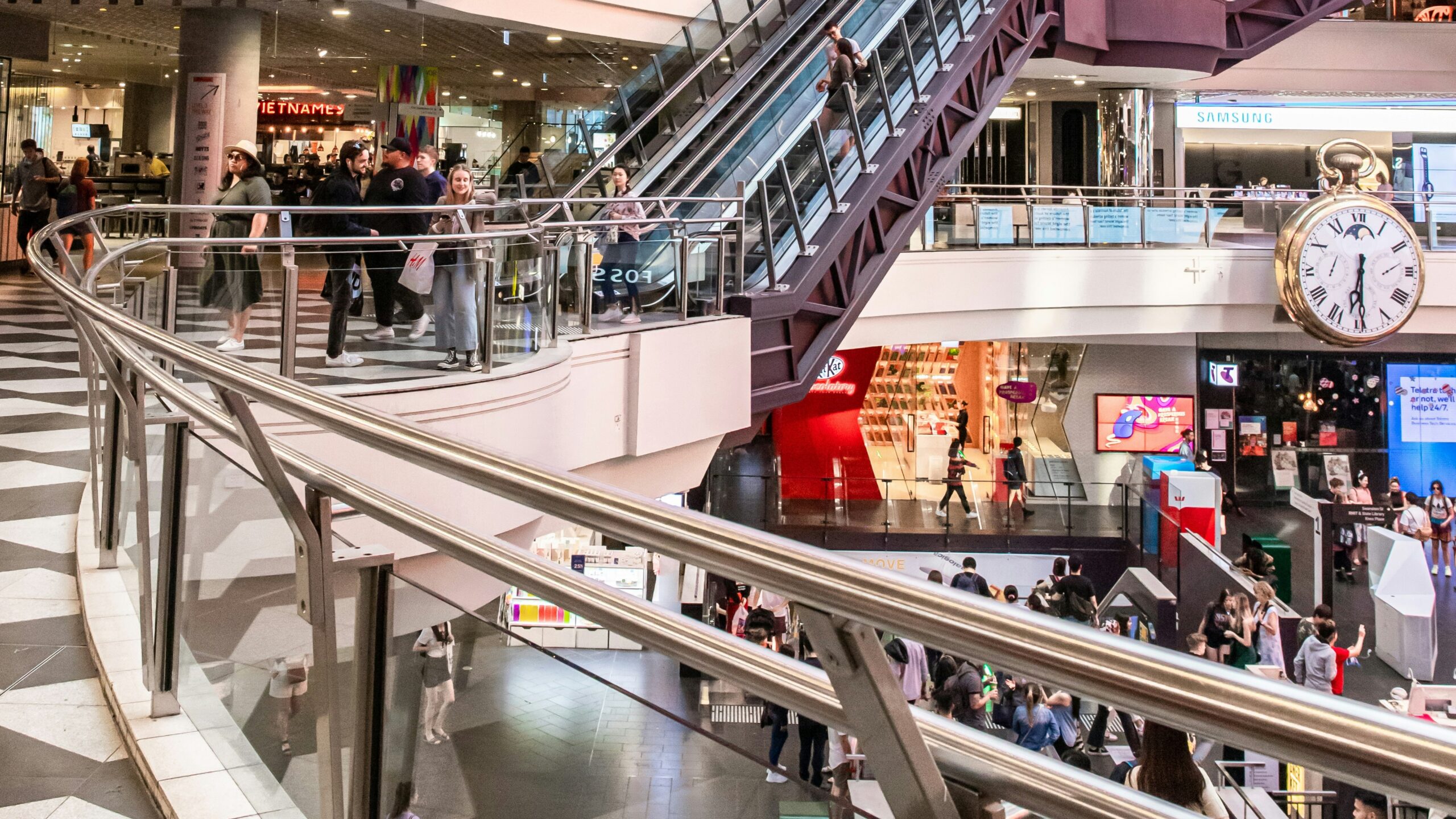
Every one of the roughly 460 francesca’s mall locations is closing for good after the women’s apparel and accessories chain filed for Chapter 11 bankruptcy protection for the second time. The case, filed in U.S. Bankruptcy Court for the District of New Jersey, has already triggered court-approved liquidation sales across the entire store fleet, run by three advisory firms. For thousands of mall-based workers and the landlords who leased space to the retailer, the filing ends any remaining possibility that the brand could survive as a brick-and-mortar business.
A second filing turns restructuring into full liquidation
The first francesca’s bankruptcy, filed in late 2020, was designed to keep the business alive. The company entered that proceeding as a voluntary Chapter 11 aimed at a sale, as outlined in a company announcement describing its intent to find a buyer and preserve operations. That process produced plan materials and disclosure documents hosted through the Stretto case administration website and incorporated into regulatory filings tied to Francesca’s Holdings Corp., detailing how the assets would move to a new ownership vehicle.
The current case tells a different story. Rather than seeking a new owner or negotiating with creditors to emerge as a going concern, the company announced that Tiger Group, SB360 Capital Partners, and GA Group have begun court-approved store-closing sales across the entire fleet. The company’s statement, distributed through its regular press channels, makes clear that the mandate this time is to wind down operations, not to restructure for another chapter under new ownership.
The distinction matters. A sale-focused filing preserves the possibility of continued operations, even if under a different capital structure and management team. A liquidation-focused filing, by contrast, is explicitly about converting inventory and other assets into cash and shutting down the business permanently. The gap between these two outcomes, separated by roughly five years, illustrates how quickly conditions can deteriorate for specialty retailers anchored in enclosed malls. The 2020 filing assumed a buyer existed who saw long-term value in the brand and its lease portfolio. The current filing suggests that even after a transfer to new owners and a reset of the store base, the business still could not sustain itself.
Court records and the liquidation machinery already in motion
The new case is docketed as Case 26-11312 under Judge MEH in the District of New Jersey, listing the debtor as Francesca’s Acquisition, LLC, et al. That entity name points directly to the corporate structure that emerged after the 2020 sale process, indicating that the buyer or successor from the first bankruptcy is now itself in Chapter 11. In other words, the vehicle created to rescue francesca’s has ended up in the same court system, now pursuing an orderly exit instead of a turnaround.
Three firms are handling the wind-down. Tiger Group, a disposition and valuation specialist, is joined by SB360 Capital Partners and GA Group in running going-out-of-business events at every remaining store. The company’s press materials confirm that these sales are underway nationwide, meaning shoppers visiting any francesca’s location will find marked-down merchandise, fixture sales, and signage advertising final days. As inventory thins out, stores will shutter on a rolling basis, and mall corridors that once featured the chain’s teal signage will transition to darkened, papered-over windows.
The speed of the liquidation rollout is notable. Unlike the 2020 case, when the company continued operating stores while it searched for a buyer, the current filing launched closing sales immediately. That timing suggests the company and its advisers concluded before the petition date that no reorganization path was viable and that maximizing recovery for creditors required converting inventory to cash as quickly as possible. It also implies that vendor relationships, lease obligations, and available financing left little room for a drawn-out marketing process or another attempt at a going-concern sale.
What mall landlords and workers face as stores empty out
For enclosed mall operators, the loss of roughly 460 leases at once creates a concentrated vacancy problem. Francesca’s locations typically occupied small to mid-sized inline spaces, the kind of storefronts that malls rely on to fill corridors between anchor tenants and to diversify their merchandising mix. Replacing that many leases simultaneously will test landlords who are already dealing with reduced foot traffic and a shrinking pool of tenants willing to commit to long-term mall deals, especially in secondary and tertiary markets.
Some landlords may be able to backfill the spaces with off-price concepts, local boutiques, or non-retail uses such as medical tenants and service providers. Others may face prolonged downtime, particularly where francesca’s was one of the few remaining fashion tenants drawing younger shoppers. Because the chain’s stores were spread across a wide range of properties and markets, the impact will not be uniform, but for certain centers the closures could accelerate broader repositioning or even contribute to decisions to redevelop or partially demolish underperforming wings.
Workers at those locations face immediate job uncertainty. The company’s current filings and public releases do not yet disclose updated employee counts, and they do not specify severance terms or transition assistance. What is clear from the court-approved liquidation timeline is that store-level positions will end as each location completes its closing sale and surrenders its lease. Some employees may be retained temporarily to help with inventory counts, fixture removal, and final reconciliations, but those roles are, by definition, short term.
The trajectory from the first bankruptcy to the second also raises questions about the private-equity and acquisition playbook for distressed retail. Francesca’s Acquisition, LLC, the entity now in Chapter 11, was created to buy the brand out of its 2020 case with the expectation that a cleaner balance sheet, rationalized store base, and refreshed merchandising strategy would restore profitability. Instead, the acquirer’s own vehicle is now liquidating, which suggests that the problems ran deeper than what balance-sheet surgery alone could fix. Structural shifts in how consumers shop, ongoing mall traffic declines, and the challenge of maintaining relevance in a crowded apparel market likely compounded the company’s legacy issues.
Unanswered questions after the second petition
Several pieces of the story remain unclear from the initial wave of court documents and public statements. The filings have not yet detailed how much, if any, value will remain for unsecured creditors once inventory, fixtures, and intellectual property are sold. It is also not yet known whether any party will acquire the francesca’s name, customer lists, or e-commerce assets out of the estate, potentially reviving the brand as an online-only business or a small-format concept under different ownership.
Another open question is how lease rejection will play out across the portfolio. While the case caption and early motions confirm that stores are closing, they do not spell out the exact timing for each location or how quickly landlords will regain control of their spaces. For some property owners, an early surrender could allow build-outs for replacement tenants to begin sooner; for others, the loss of rent without an immediate backfill will pressure already thin operating margins.
There are also implications for vendors and trade partners who supplied francesca’s under assumptions shaped by the 2020 restructuring. Many of those parties extended terms or continued doing business on the belief that the first Chapter 11 had stabilized the company. The second filing, ending in liquidation, may prompt suppliers across the retail sector to reassess how they evaluate counterparty risk when a chain emerges from bankruptcy under new ownership but continues to face the same market headwinds.
For now, what is certain is that francesca’s is disappearing from the physical retail landscape. As liquidation banners go up and merchandise is cleared out, the chain’s exit underscores the limits of turnaround strategies in a segment where traffic, competition, and consumer behavior have all shifted rapidly. The conclusion of this second Chapter 11 will close a chapter not only for the company’s investors and employees, but also for the malls that once counted on its teal storefronts as a reliable draw in an increasingly uncertain environment.