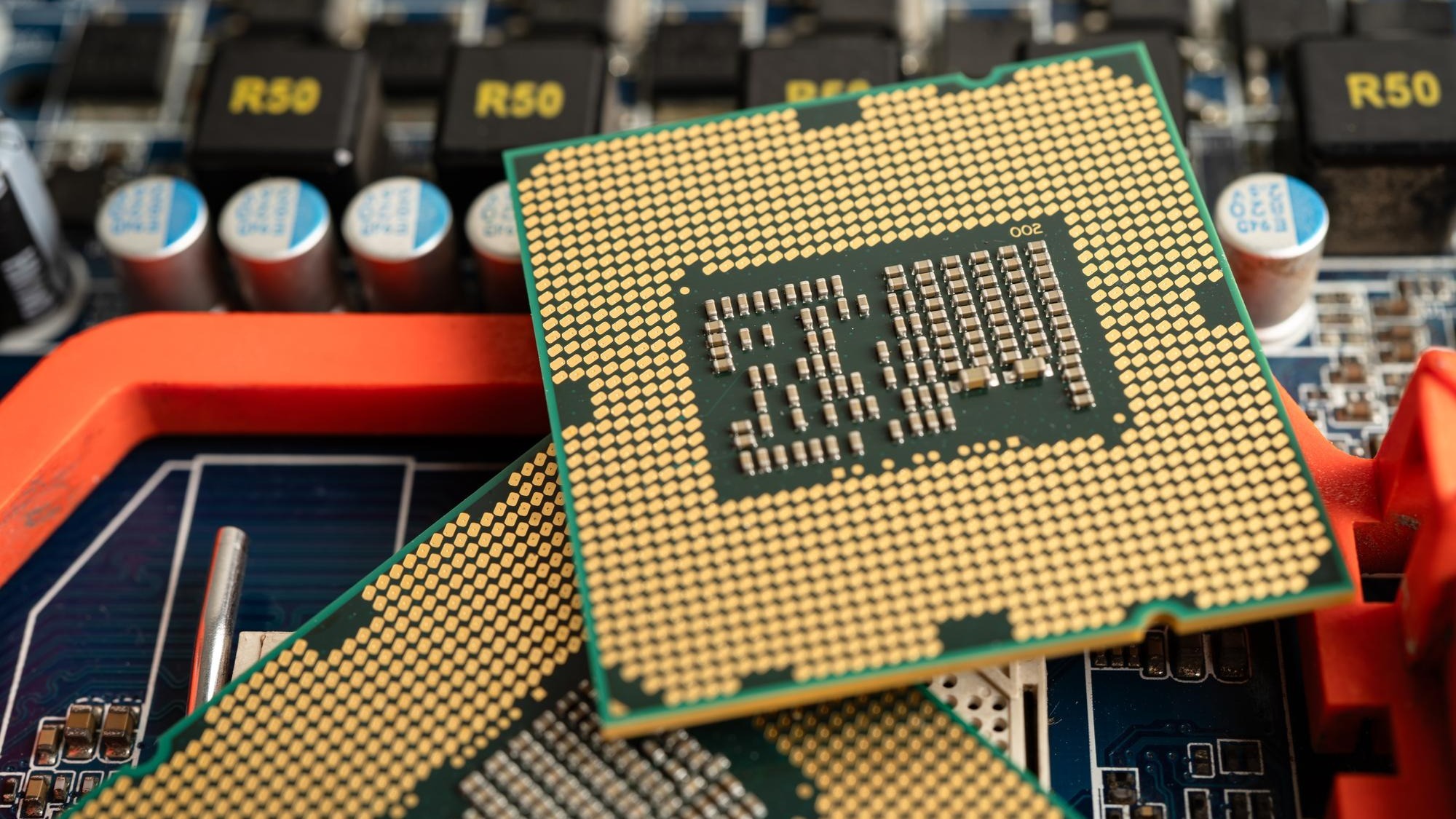
Michael Burry, the investor known for his bet against the housing market before the 2008 financial crisis, has flagged that the Philadelphia Semiconductor Index (SOX) has stretched further above its long-term trend than at any point since the dot-com peak in 2000. His firm, Scion Asset Management, reported put options on the iShares Semiconductor ETF as of September 30, 2025, and Burry has said he continues to hold those bearish positions. The warning lands at a moment when the semiconductor sector has supplied an outsized share of S&P 500 gains, raising the question of what happens to the broader market if the chip trade reverses.
Why the SOX stretch above trend carries real risk for the S&P 500
The semiconductor rally has not been a sideshow. According to Reuters analysis, the chip sector’s run-up made an outsized contribution to S&P 500 gains in 2026. That concentration means the index’s headline performance depends heavily on a narrow group of chip stocks. If those names pull back, the broader market loses its biggest engine of returns.
Burry’s comparison to the dot-com era is specific. He has pointed to a weekly relative strength index (RSI) reading on the SOX that exceeds the level reached at the 2000 peak. The hypothesis that such extreme momentum readings precede negative three-month forward returns in at least 70 percent of prior cases is testable in principle, but the exact RSI value Burry cited and the historical dataset behind that claim have not been published in any regulatory filing or primary data release from Scion. The comparison rests on secondary reporting of his public statements rather than a disclosed research methodology.
That distinction matters because stretched technical readings do not guarantee losses. Momentum can persist far longer than bears expect, and the current AI-driven demand cycle for advanced chips has a different demand profile than the speculative buildout of 2000. Capital expenditure by cloud providers, sovereign AI initiatives, and on-device processing needs have all created structural demand that did not exist a generation ago. Still, the degree of concentration in a handful of semiconductor names leaves the S&P 500 unusually exposed to a sector-specific correction, regardless of whether GDP growth remains solid.
From a portfolio-construction standpoint, the risk is asymmetrical. If semiconductor valuations simply tread water while earnings catch up, the broader index can still perform reasonably well. But if sentiment turns sharply-because of an earnings disappointment, a slowdown in AI spending, or a policy shock that hits high-multiple growth stocks-the same concentration that powered recent gains could amplify losses. The SOX’s distance from its long-term trendline means even a reversion to historical averages could translate into a sizable drag on the S&P 500.
Scion’s 13F filing and the limits of the public record
The strongest verifiable evidence of Burry’s position comes from a regulatory filing. Scion’s Form 13F-HR, submitted on November 3, 2025, lists holdings as of September 30, 2025, and shows put options tied to the iShares Semiconductor ETF among the fund’s reportable positions. That document is the most recent primary-source confirmation of the fund’s portfolio composition available through the SEC’s EDGAR system.
Burry has said he was still holding puts on the iShares Semiconductor ETF. That statement, however, postdates the 13F snapshot by several months. No subsequent 13F filing or amendment has been located in the public record to confirm whether those puts were maintained, increased, or closed after September 30, 2025. The gap between the last regulatory disclosure and more recent public comments creates a blind spot for anyone trying to track whether Scion’s actual exposure matches the bearish thesis Burry has broadcast.
This is a recurring pattern with Burry’s public commentary. He frequently shares market views through social media or interviews and then deletes or stops referencing them. The result is that his stated positions can appear more continuous than the documentary record supports. Investors attracted by his reputation may assume that a view he voiced months earlier still reflects a live, sized trade, when the only hard evidence is a dated filing that provides no insight into intramonth adjustments or hedging activity.
Regulatory disclosures themselves also have limits. Form 13F reports long U.S. equity holdings and certain options but omits many other instruments, including most short positions, swaps, and other derivatives. Even when a put position appears, the filing does not reveal the strike prices, maturities, or whether the options are part of a broader spread or market-neutral strategy. A position that looks like an outright sector bet could in practice be one leg of a more complex trade.
For investors weighing Burry’s semiconductor warning, the key is to separate two questions. One is whether the SOX’s extreme move relative to its trend and the S&P 500’s dependence on chip stocks justify caution. The other is whether Scion’s disclosed portfolio and Burry’s public statements provide a reliable guide to how he is actually positioned today. The first question turns on valuations, earnings durability, and macro conditions; the second turns on the inherent lag and opacity of the public record.
That distinction does not negate the underlying risk Burry is highlighting. A market in which a single high-momentum sector dominates index-level returns is more vulnerable to a reversal in that sector, even if the timing is uncertain. But investors who treat Burry’s comments and past regulatory filings as a real-time trading signal risk overestimating how much they truly know about his current exposure-and underestimating how quickly the semiconductor narrative itself could change.