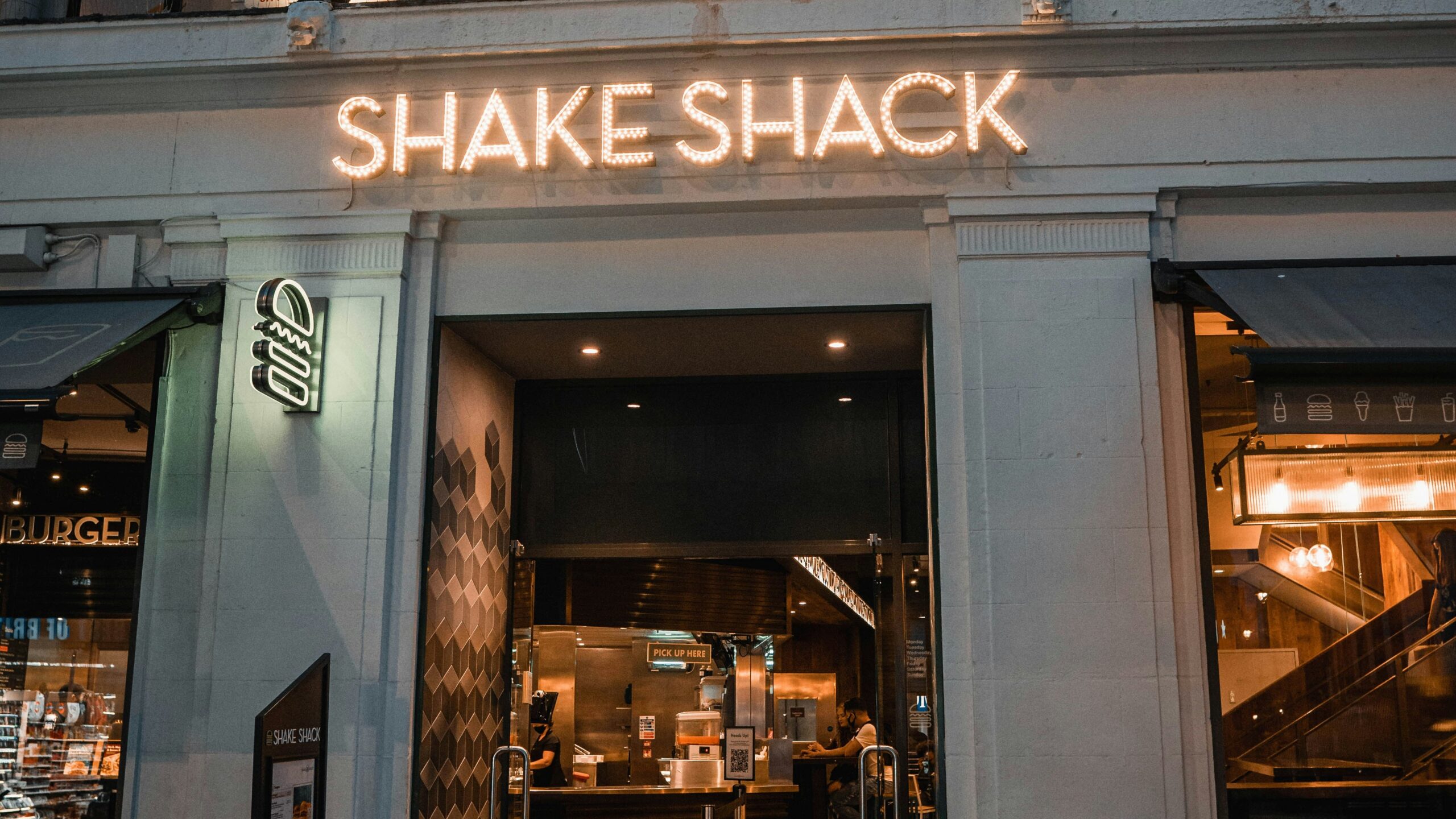
Shake Shack’s stock fell sharply after the burger chain revealed that its sales growth came entirely from higher prices, not from attracting more diners. Guest traffic declined for at least two consecutive quarters, according to the company’s own filings, even as same-store sales ticked higher. The split between rising tabs and shrinking foot traffic offers one of the clearest illustrations yet of a consumer economy moving at two speeds: wealthier customers absorbing price increases while budget-conscious diners simply stop showing up.
Why falling guest counts hit Shake Shack harder than a sales miss
A restaurant chain can mask softening demand for a while by charging more per visit. That strategy works until the higher prices push away enough customers to drag total revenue lower. Shake Shack’s recent results suggest the company is approaching that threshold. For the 13 weeks ended June 25, 2025, same-Shack sales rose 1.8 percent, but guest traffic fell 0.7 percent, according to the company’s most recent quarterly filing. The prior quarter showed the same dynamic in starker terms: same-Shack sales climbed 2.2 percent while guest traffic dropped 1.9 percent.
The gap between those two sets of numbers tells a specific story. Price and menu mix drove the entire sales increase in both periods. No additional customers walked through the door. If average check growth continues to outpace traffic recovery, especially above a roughly 4 percent annualized pace, the chain faces a hard ceiling on price-led growth. At some point, the math reverses: higher prices cannot compensate for an accelerating loss of visits, and the leverage that once boosted margins begins to work in the opposite direction as fixed costs are spread over fewer transactions.
Management acknowledged the pressure directly. In a fiscal second quarter 2026 business update filed as an SEC exhibit, Shake Shack cited macro uncertainty and competition as the reasons for trimming its outlook. The company updated guidance for both Q2 FY2026 and the full fiscal year, lowering expected ranges for comparable sales and profitability metrics in the same document that outlined its latest guidance update. That revision was released ahead of June investor conferences, a timing choice that signaled urgency rather than routine disclosure and left little doubt that the traffic slowdown is shaping near-term strategy.
Price and mix drove every dollar of same-store gains
The two quarterly snapshots from Shake Shack’s 10-Q create a clear pattern. In the earlier period, same-Shack sales grew 2.2 percent on the back of a 1.9 percent decline in guest traffic. In the later period, the sales gain narrowed to 1.8 percent and the traffic decline improved slightly to negative 0.7 percent. Both quarters share the same underlying structure: price and mix increases accounted for the entirety of the comparable sales gains, with no contribution from higher customer counts.
That pattern carries real consequences for investors and for the broader restaurant sector. When a brand known for premium burgers and shakes cannot grow its customer base even modestly, it raises questions about whether the wider fast-casual category has hit a spending wall among middle-income consumers. Wealthier diners may continue to pay $12 or more for a burger, but the customers who once treated Shake Shack as an occasional upgrade appear to be trading down to cheaper chains, cooking at home, or skipping discretionary meals out altogether. For a concept built on urban office traffic and destination outings, that kind of pullback is difficult to offset.
From a valuation standpoint, the quality of Shake Shack’s same-store sales has deteriorated even as the headline numbers remain positive. Investors typically reward restaurants that can grow both traffic and check size, seeing it as proof of brand strength and pricing power. By contrast, a pattern of rising average checks paired with falling visits often signals a brand leaning too heavily on price to paper over demand issues. If that mix persists, analysts may begin to discount the durability of the current sales base and question whether earnings expectations adequately reflect the risk of further traffic erosion.
The operational implications are just as stark. Declining guest counts can lead to underutilized labor, excess capacity, and pressure on new-store economics. Shake Shack has been expanding its footprint beyond its original coastal strongholds, but weaker traffic trends make it harder to justify aggressive unit growth. New locations depend on building a loyal customer base quickly; if the broader brand is struggling to draw incremental visits, newer markets may ramp more slowly or fall short of targeted returns.
Management has several levers to pull in response. The company can moderate future price increases, lean into limited-time offerings that emphasize value, or adjust portion sizes and menu architecture to protect margins without further alienating price-sensitive guests. Digital channels and loyalty programs offer another avenue to re-engage lapsed customers with targeted promotions rather than broad-based discounting that could dilute the brand. However, each of these options carries trade-offs, and none fully resolves the core challenge of winning back diners who have already decided that Shake Shack no longer fits their budget.
For now, the numbers point to a brand caught between two consumer realities. Higher-income customers are keeping average checks elevated, allowing Shake Shack to post modest same-store gains. At the same time, a steady drip of disappearing visits suggests that a meaningful slice of its audience is opting out. Unless traffic stabilizes and then returns to growth, the company’s ability to rely on pricing alone will run out of road, forcing a more fundamental rethink of how a premium burger chain competes in a stretched consumer economy.