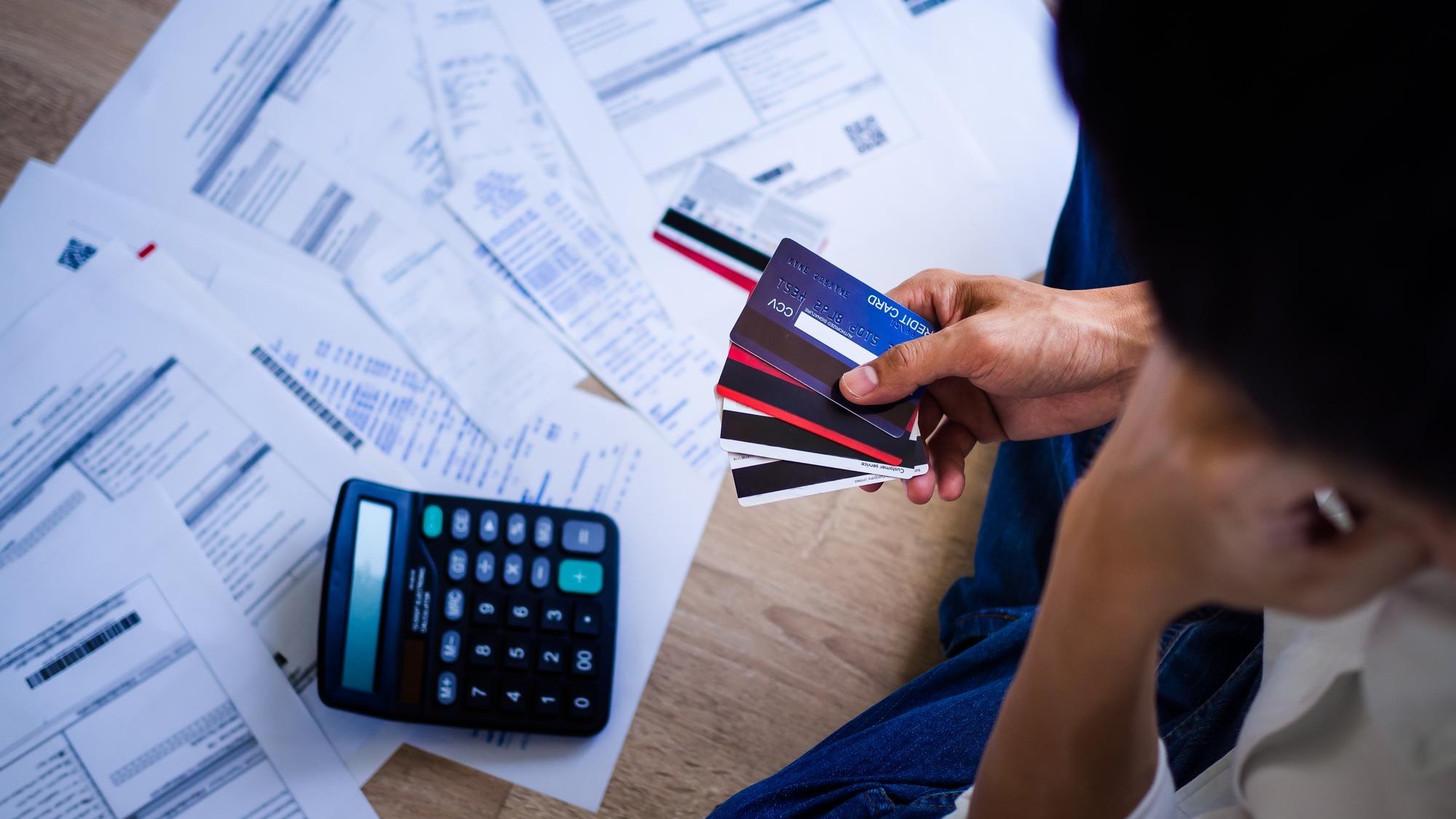
More Americans are missing credit-card payments than at any point since the aftermath of the Great Recession. Federal Reserve data for the first quarter of 2026 show the delinquency rate on credit-card loans at commercial banks climbed to 3.82 percent, the highest reading in roughly 15 years. The figure caps a steady rise from pandemic-era lows and signals growing strain on household budgets still absorbing the effects of aggressive interest-rate increases.
Higher rates, not higher unemployment, are driving missed payments
The pattern in the data points to borrowing costs rather than job losses as the primary pressure on cardholders. The Federal Reserve raised the federal-funds rate by more than five percentage points between early 2022 and mid-2023, and most credit-card interest rates moved in lockstep. Because revolving balances carry variable rates, the cumulative cost of carrying debt grew sharply even as the labor market stayed relatively tight. Unemployment has hovered near historically low levels throughout the same period in which credit-card delinquencies climbed quarter after quarter.
That divergence matters for how policymakers and lenders interpret the stress. A spike in missed payments driven by mass layoffs would suggest broad economic deterioration. A spike driven by the weight of compounding interest on existing balances tells a different story: consumers who took on debt when rates were near zero are now paying far more to service it, and some cannot keep up. The Fed’s own researchers have explored this distinction. A FEDS Note published in late 2025 analyzed credit-card and auto delinquency dynamics since the pandemic using the Consumer Credit Panel and Equifax data. That analysis attributed part of the rise to post-pandemic normalization and shifts in borrower composition rather than a broad economic downturn.
What the Fed’s own numbers reveal about credit-card stress
The Board of Governors publishes a quarterly statistical release tracking charge-off and delinquency rates on loans and leases at commercial banks. The first-quarter 2026 reading of 3.82 percent on credit cards stands out because it exceeds levels recorded before the 2008 financial crisis and trails only the peak reached during the recession itself. Other consumer loan categories have not shown the same degree of deterioration, which isolates revolving credit as the primary trouble spot.
Separate data series available through the Federal Reserve Bank of St. Louis track similar metrics and confirm the upward trend visible in the bank-call-report figures. The consistency across multiple primary datasets rules out a measurement quirk in any single series. For the roughly 180 million Americans who hold at least one credit card, the practical meaning is straightforward: carrying a balance has become significantly more expensive, and a growing share of borrowers are falling at least 30 days behind.
These delinquency statistics sit alongside rising charge-off rates, which capture loans that banks have written off as unlikely to be repaid. The Fed’s consolidated charge-off tables show that while losses on credit cards remain below Great Recession peaks, they have moved up in tandem with late payments. That suggests some portion of today’s delinquencies are hardening into permanent losses rather than brief payment hiccups, a trend that banks and regulators will be watching closely.
Gaps in the data and what to watch next
The Fed’s primary tables do not break delinquencies down by borrower income, age, or geography. That limits the ability to determine whether the stress concentrates among lower-income households, younger borrowers who accumulated debt during the pandemic, or specific regions hit harder by housing or energy costs. The FEDS Note using the NY Fed and Equifax data points to some compositional effects-such as more subprime borrowers holding cards again after pandemic-era tightening-but the aggregate numbers cannot show which communities are bearing the brunt of higher rates.
Several indicators will shape how concerning the current spike becomes. One is whether delinquency rates keep rising even if the Federal Reserve begins easing policy. If lower benchmark rates translate quickly into reduced annual percentage rates on cards, some borrowers could regain their footing. But because card pricing also reflects banks’ funding costs and risk appetite, rate cuts may not fully reverse the run-up in borrowing costs.
Another factor is the trajectory of household incomes. As long as wage growth outpaces inflation and employment remains strong, many families can juggle higher interest payments by trimming discretionary spending. If job growth slows or real wages stagnate, more households may find themselves choosing which bills to pay each month, with unsecured debts like credit cards often slipping to the bottom of the stack.
Regulators and consumer advocates are also watching how lenders respond. Tighter underwriting standards-lower credit limits, fewer approvals for marginal applicants-could prevent some borrowers from becoming overextended, but they also restrict access to credit for households that rely on cards to smooth expenses. On the other side, aggressive marketing of balance-transfer offers or “buy now, pay later” plans could simply reshuffle existing debts without reducing overall leverage.
For now, the rise in credit-card delinquencies looks less like the opening act of a broad financial crisis and more like a painful adjustment to a higher-rate world. The burden is falling hardest on those who entered that world with large revolving balances and limited savings. How quickly delinquency rates stabilize-or whether they continue climbing-will offer one of the clearest real-time gauges of whether U.S. households can adapt to the new cost of borrowing without tipping into deeper financial distress.