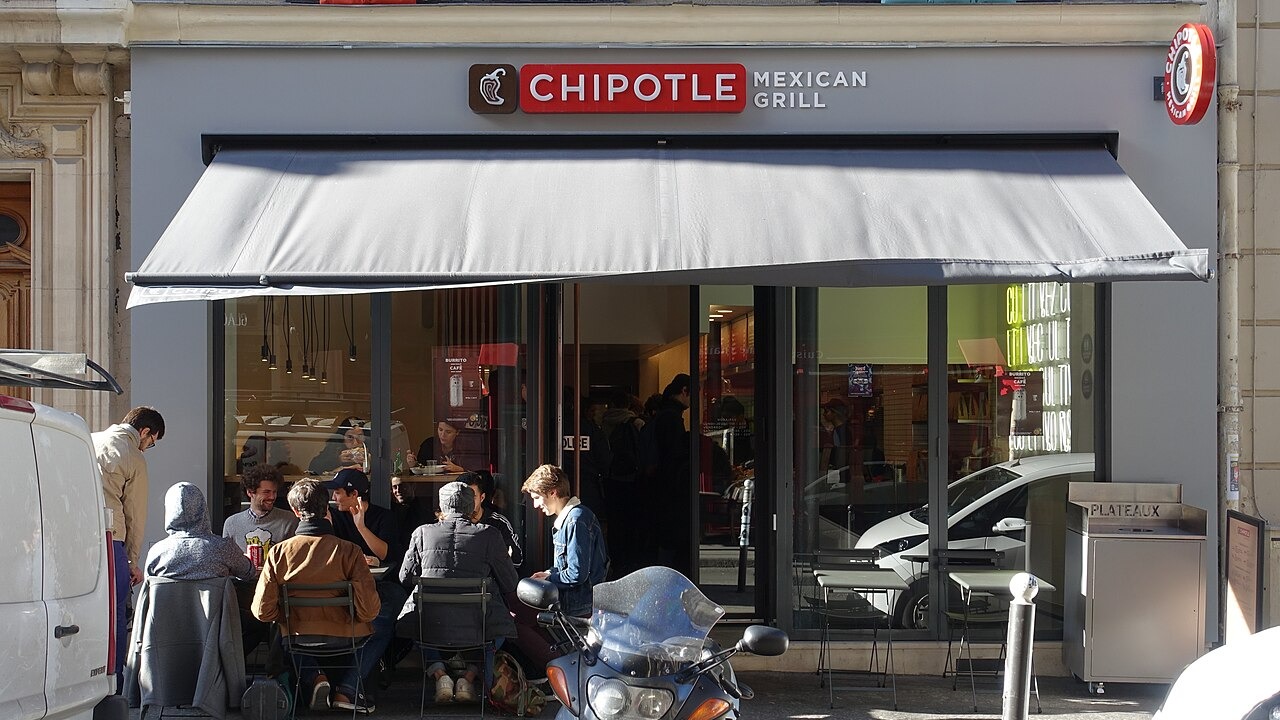
Chipotle Mexican Grill told investors in its Q1 2026 earnings release that customers across all income levels are pulling back on spending, a shift from earlier quarters when the company described the pressure as concentrated among lower-income diners. The disclosure, filed as an SEC exhibit, signals that persistent restaurant-price inflation and broader household financial stress have spread well beyond the consumers who first started cutting visits.
How restaurant inflation and household stress are squeezing every bracket
The company’s own language in its Q1 2026 earnings exhibit stated that customers across all income levels are adjusting their behavior. That framing marks a clear escalation from prior quarters, when Chipotle pointed mainly to trade-down patterns among its lowest-earning guests. The distinction matters because it suggests the chain can no longer count on higher-income diners to offset softening traffic from budget-conscious households.
Federal data backs the broader pattern. The Bureau of Labor Statistics continues to track sustained price increases in the food-away-from-home category through its Consumer Price Index tables, which cover restaurant and takeout spending nationally. At the same time, the Bureau of Economic Analysis reported softening real consumer spending in its personal income data, showing that the pullback extends across the broader economy and is not limited to a single restaurant chain or food category.
The Census Bureau’s Household Trends survey adds another dimension. HTOPS results show rising shares of households reporting difficulty paying usual expenses, and that strain is appearing across income brackets, not just among the lowest earners. When families at middle and upper-middle incomes start reporting trouble covering routine bills, discretionary spending on restaurant meals is among the first things to shrink.
What Chipotle’s filing reveals and what it leaves out
Chipotle’s SEC exhibit provides the company’s own characterization of demand trends, but it does not include income-stratified transaction data or traffic counts broken out by customer segment. The statement that all income levels are cutting back is a management observation disclosed to investors, not a granular dataset. That gap means outside analysts cannot independently verify whether higher-income visit frequency fell by the same percentage as lower-income visits or whether the declines are simply directionally similar.
The federal datasets carry their own limits. BEA personal consumption expenditure tables track spending in broad service categories but do not isolate fast-casual restaurant spending by household income quintile. The BLS food-away-from-home price series captures inflation at the category level without tying price changes to specific chains or outlet types. And while HTOPS microdata files capture expense difficulty by income group, the Census Bureau has not cross-tabulated those results against restaurant visit frequency. Each source confirms a piece of the story, but no single public dataset connects restaurant-price inflation to visit-frequency declines across every income tier in the way Chipotle’s management described.
Unresolved questions for investors and policymakers
For investors, the first unresolved question is how much of Chipotle’s slowdown is cyclical and how much reflects a structural shift in consumer behavior. If higher-income guests are merely pausing visits until inflation cools or wage growth catches up, traffic could rebound without major changes to pricing or menu strategy. If, instead, those customers have permanently recalibrated what they are willing to pay for a fast-casual meal, Chipotle and its peers may face a tougher path to sustaining margins built on years of price increases.
A second question is whether the pressure is evenly distributed across markets. The company did not disclose how visit patterns vary between higher-cost coastal regions and lower-cost interior markets, or between urban and suburban trade areas. Without that geographic detail, it is difficult to know whether the pullback among higher earners is concentrated in a few overheated housing and labor markets or has become a truly national phenomenon.
There is also uncertainty around substitution effects. The filing does not clarify whether customers are skipping restaurant meals altogether, trading down to cheaper chains, or shifting toward grocery and at-home preparation. Federal spending data suggest that consumers are becoming more selective across many discretionary categories, but they do not pinpoint how much restaurant demand is being displaced versus deferred. That distinction matters for both revenue forecasting and decisions about future store openings.
For policymakers watching the same trends, the open question is how much additional strain households can absorb before cutbacks in services like dining out begin to spill over into employment. Restaurants are major local employers, and a broad-based decline in traffic could eventually translate into slower hiring or reduced hours. Yet the available data, including Chipotle’s own commentary, stop short of drawing a direct line from household stress to labor-market weakness.
Ultimately, Chipotle’s disclosure that customers across all income levels are tightening their belts fits with a growing body of federal statistics pointing to widespread financial pressure. But the absence of detailed, income-linked restaurant data leaves analysts to infer more than they can prove about who is cutting back, by how much, and for how long. Until companies or agencies release more granular information, both Wall Street and Washington will be forced to navigate this shift with only a partial view of how inflation is reshaping Americans’ everyday spending choices.