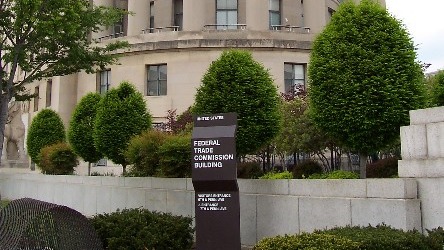
The Federal Trade Commission is sending 1,821 refund checks totaling more than $2.8 million to homeowners who paid for mortgage-relief services that never delivered. The recipients were victims of an operation that used the brand names Golden Home Services and Home Matters USA to collect upfront fees while falsely promising to negotiate loan modifications. The refunds, announced in June 2026, arrive nearly four years after federal and state regulators first moved to shut the scheme down, and they represent a fraction of the $19 million a court ordered the operators to surrender.
Why a $19 million judgment produced $2.8 million in refund checks
The gap between what a court orders and what victims actually receive is a recurring pattern in federal telemarketing enforcement. In this case, a federal court in February 2024 ordered operators to turn over $19 million for consumer refunds and civil penalties. The checks now going out total more than $2.8 million, roughly 15 cents on the dollar of the full judgment amount.
That shortfall traces back to how these cases unfold. The FTC and the California Department of Financial Protection and Innovation filed their joint complaint in September 2022, and a court immediately granted a temporary restraining order with an asset freeze. Such freezes capture whatever liquid funds exist at the moment of shutdown. But scam operators rarely keep large cash reserves. The $19 million figure in the February 2024 orders reflects the scale of alleged consumer harm and penalties, not a sum sitting in a bank account waiting to be distributed. Post-shutdown collection efforts, including asset liquidation and cooperation requirements imposed on banned individuals, typically yield far less than the headline judgment.
The result is a familiar tension: regulators win sweeping court orders and permanent bans, but the money already extracted from consumers has largely been spent. The 1,821 homeowners now receiving checks are getting partial restitution rather than full recovery of what they lost. According to the FTC’s June 2026 announcement, the agency is using all available funds recovered from the defendants to provide these refunds, underscoring both the limits of post-judgment collection and the importance of early intervention before losses mount.
How the Golden Home Services scheme operated and collapsed
The operation targeted homeowners struggling with mortgage payments. According to the FTC’s September 2022 complaint, the defendants made deceptive promises to negotiate loan changes on behalf of borrowers and falsely claimed ties to government COVID-19 relief programs. The scheme operated under multiple aliases, including Golden Home Services and Home Matters USA, collecting fees before performing any meaningful work.
Marketing pitches often suggested that consumers were pre-approved for relief or that the companies had special relationships with lenders or government programs. In reality, regulators say, the defendants provided little or no actual assistance, leaving many homeowners deeper in financial distress after paying hundreds or thousands of dollars in illegal upfront fees. The complaint alleges that some consumers were encouraged to stop communicating with their mortgage servicers, a step that can increase the risk of default or foreclosure.
The enforcement timeline stretched across multiple years. After the initial shutdown and asset freeze in September 2022, the case moved through federal court until February 2024, when judges issued summary judgment against individual defendants and default judgment against corporate entities. Those orders permanently banned the operators from telemarketing and debt-relief services. The FTC filed the matter under case number 2123099, and the California DFPI participated throughout the action, coordinating evidence collection and consumer outreach.
The June 2026 refund distribution marks the latest phase of that enforcement arc. In its refund announcement, the FTC said it is mailing checks to affected homeowners nationwide, reflecting funds recovered through the court-ordered monetary judgment. While the total is far below the calculated consumer harm, regulators point to the permanent bans and public enforcement record as deterrents to similar schemes.
What homeowners receiving checks should know
JND Legal Administration is handling the refund distribution. Recipients have a 90-day window to cash their checks. The FTC’s refund notice explains that consumers who receive a check should deposit or cash it promptly, and that the agency never requires payment or personal financial information in order to release a refund. Anyone with questions about the payments can contact the refund administrator using the information provided in the mailed notice.
Consumers who believe they were harmed by the Golden Home Services or Home Matters USA operation but do not receive a check are encouraged to monitor the FTC’s refund page for updates. Additional distributions are sometimes possible if the agency later recovers more money through continued collection efforts. However, given the typical pattern in these cases, regulators caution that any future payments are likely to be modest.
The case also serves as a broader warning about mortgage-relief offers. Federal and state regulators emphasize that it is illegal for companies to charge upfront fees for mortgage-assistance services and that legitimate help is often available at little or no cost from housing counselors approved by the U.S. Department of Housing and Urban Development or directly from loan servicers. Homeowners who receive unsolicited promises of guaranteed modifications, especially when asked to pay in advance or stop talking to their lender, are urged to treat those offers as red flags and to report them to enforcement agencies.