A South Korean memory-chip maker has pulled off the largest American stock-market debut ever staged by a company based outside the United States. SK Hynix, one of the world’s biggest producers of the memory chips that sit inside laptops, phones and the data centers running artificial intelligence, listed shares on Wall Street and raised a sum large enough to reorder the record books for foreign listings. The debut arrived in the middle of a jittery summer for stocks, which made the size of the deal all the more striking.
For older investors who watch the market from the safe distance of a retirement account, an offering of this scale is worth understanding less as a stock tip than as a signal. A single company raising tens of billions of dollars in one sitting says something about the mood of the institutional buyers who move markets, and about how much appetite remains for the technology names that have powered most of the gains of the past few years. That read matters even for households that will never own a share of the company directly.
The size of the deal
The numbers behind the listing are what set it apart. According to market coverage published by Yahoo Finance on July 10, 2026, SK Hynix’s Nasdaq debut raised roughly $26.5 billion and the stock jumped about 14% on its first day of trading. That combination — an enormous cash haul and an immediate pop — made it the largest U.S. listing ever completed by a company headquartered abroad.
To put the figure in perspective, most initial public offerings that count as large raise a few billion dollars at most. A raise north of $26 billion is closer in size to the value of an entire mid-tier public company, gathered in a single day of selling stock. The demand needed to absorb that many shares at once points to deep-pocketed funds willing to place a very large bet on the future of memory chips.
Why a Korean chipmaker chose Wall Street
Companies list where the money is, and for a raise of this magnitude the deepest pool of capital remains the United States. American markets offer a scale of buyers — pension funds, index funds, insurers and asset managers — that few other exchanges can match, along with the visibility that comes from trading alongside the biggest technology names in the world.
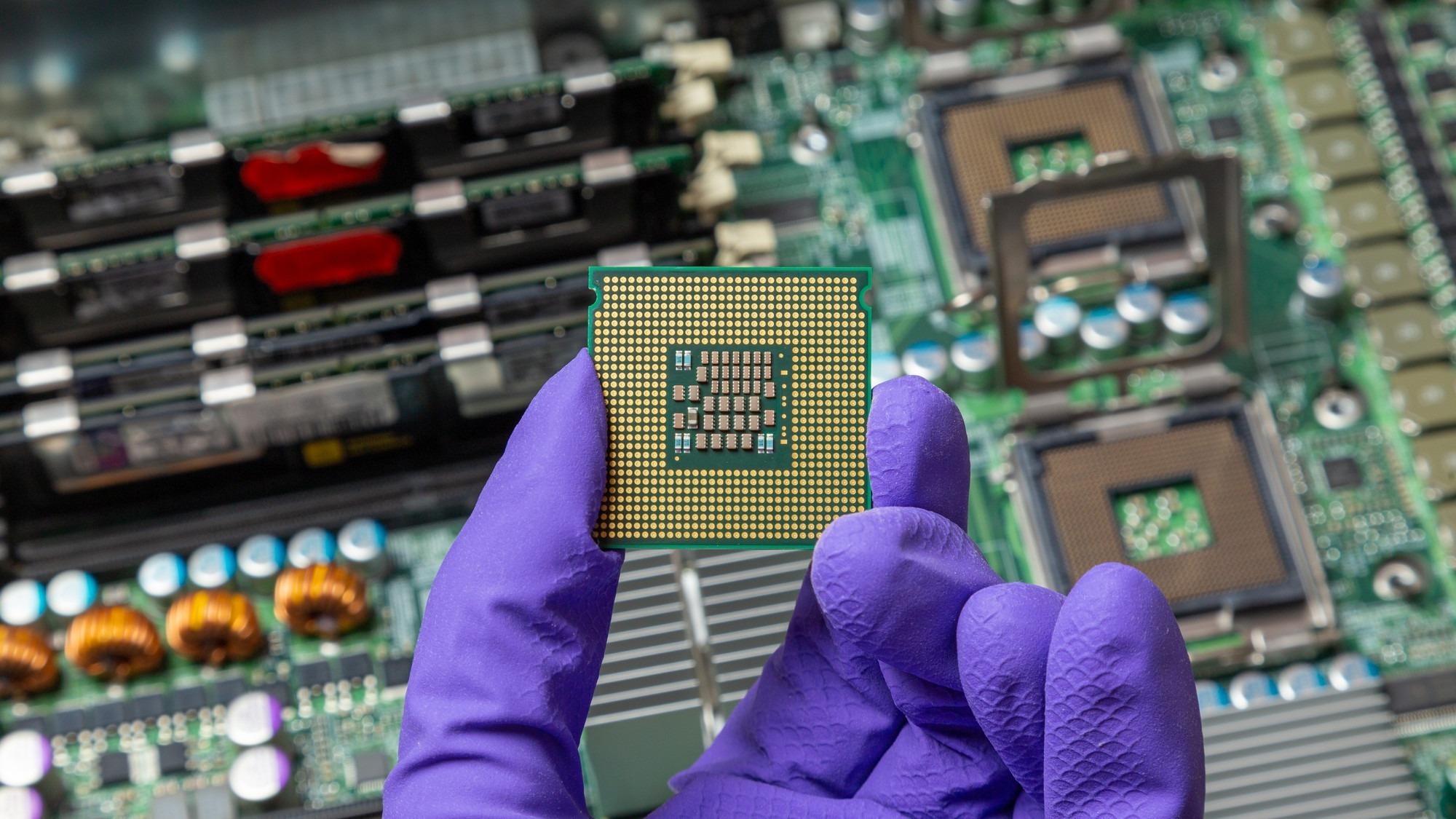
The timing also reflects where demand for chips is heading. Memory is no longer a sleepy commodity business. The specialized high-bandwidth memory used to feed artificial-intelligence systems has become one of the most sought-after products in the semiconductor industry, and SK Hynix is a leading supplier. Tapping public investors for tens of billions of dollars gives the company room to expand production to meet that demand, which is precisely the story it needed to sell to justify the raise.
A record set against a nervous market
What makes the debut unusual is the backdrop. The broader market for new listings has been uneven for much of the year, with plenty of would-be issuers waiting on the sidelines for calmer conditions. As tracked by CNBC’s coverage of the IPO market, sentiment toward new offerings tends to swing sharply with the mood of the overall market, and a shaky tape often pushes companies to delay rather than price a deal.
Against that hesitation, a foreign chipmaker choosing to list — and finding buyers for $26.5 billion of stock — stands out. It suggests that investors are still willing to concentrate money in the handful of themes they believe in most, even while trimming exposure elsewhere. That kind of narrow enthusiasm can lift the market’s headline numbers while masking weakness beneath the surface, a dynamic worth keeping in mind when a single sector appears to be doing most of the heavy lifting.
What it means for retirement-age investors
The practical lesson for someone nearing or in retirement is not to chase the debut. Newly listed shares are among the most volatile corners of the market, prone to sharp swings as early investors lock in gains and the price settles. A 14% first-day pop can reverse just as quickly, and buying into that kind of excitement rarely suits a portfolio built to last decades and weather downturns.
The more useful takeaway is about concentration. Many retirement accounts already hold heavy exposure to a small group of large technology and semiconductor companies, often without the owner realizing it, because those names dominate the popular index funds that anchor so many plans. A blockbuster chip listing is a reminder to check how much of a nest egg quietly rides on a single theme. When one sector is carrying the market, the accounts most exposed to it enjoy the ride on the way up and feel the drop hardest on the way down.
The bigger signal
Beyond any one stock, the debut is a data point about where confidence sits in the summer of 2026. Big money is still willing to commit enormous sums to the artificial-intelligence build-out, and it is willing to do so through American markets even as questions swirl about valuations, interest rates and the durability of the rally. That is a genuinely bullish signal in one narrow lane, and a reminder in every other lane that enthusiasm this focused tends to leave the rest of the market thin.
For retirees, the sensible response is the unglamorous one: know what a portfolio actually holds, keep exposure to any single theme within limits that allow for a good night’s sleep, and treat record-setting headlines as information rather than invitations. The largest foreign listing in U.S. history is an impressive milestone for one Korean chipmaker. Whether it proves to be a smart entry point or a late-cycle peak will not be clear for years, which is exactly why a plan built for the long haul should not hinge on the answer.
This article was produced with AI assistance and reviewed before publication.
Free tool for readers: Not sure whether your own retirement is on track? You can check your free Retirement Safety Score — a 0–100 number plus a few personalized steps — in about five minutes, with no sign-up required to see your score.