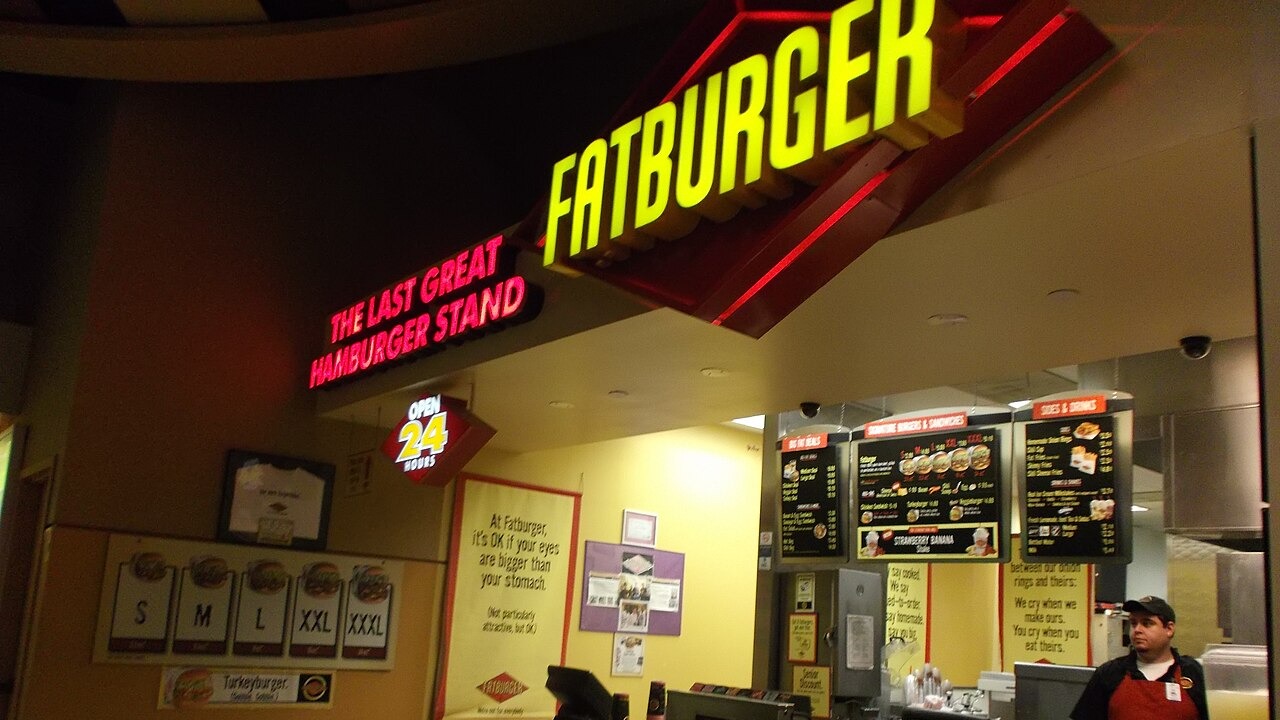
One of the best-known franchising companies in American casual dining has entered court protection, and the collapse touches a long list of names that diners recognize from strip malls and food courts across the country. FAT Brands, the parent of Fatburger, has filed for Chapter 11 bankruptcy, dragging a stable of familiar restaurant chains into the same reorganization.
The filing is notable less for any single brand than for the sheer breadth of the portfolio behind it. FAT Brands spent years buying up chains, and that acquisition spree left it responsible for a roster of restaurants that now share a single balance sheet under strain. When the parent stumbled, the trouble spread across the whole collection at once.
A portfolio built by acquisition
The company grew by rolling up recognizable but middle-tier restaurant concepts. According to a rundown of 2026 restaurant collapses compiled by Cheapism, the bankruptcy spans 17 chains, including Fatburger, Round Table Pizza and Johnny Rockets. Other holdings picked up over the years include Twin Peaks, Smokey Bones, Marble Slab Creamery, Great American Cookies and Ponderosa.
That structure was the point of the business model. FAT Brands positioned itself as a franchising machine, collecting royalties from operators who ran the restaurants under its banners. In theory, a diversified set of brands was supposed to smooth out the ups and downs of any one concept. In practice, the debt taken on to assemble the collection became the problem.
$1.3 billion in debt
The scale of the borrowing is what pushed the company over the edge. FAT Brands filed for bankruptcy protection carrying roughly $1.3 billion in debt, a load that outpaced the cash the business could generate, as Fox Business reported. Much of that obligation came from the securitized financing the company used to fund its acquisitions, and creditors moved to accelerate a large tranche of it late in 2025, demanding repayment the company said it could not meet.
The bankruptcy also swept in Twin Hospitality Group, the entity that operates the Twin Peaks sports-bar chain and had been spun off from FAT Brands in 2025. Both filed together, underscoring how tightly the operating pieces remained connected even after the corporate reshuffling meant to separate them.
Why it filed
The company framed the filing as a way to restructure rather than shut down. A breakdown from Restaurant Dive laid out the pressures that converged: a heavy interest burden, sluggish traffic at several of its casual-dining brands, and a refinancing wall the company could not clear on favorable terms. Chapter 11 gives management room to renegotiate with lenders, shed unprofitable locations and keep the franchising engine running while the debt is reworked.
For franchisees, that distinction matters. Most FAT Brands restaurants are owned and operated by independent franchise partners, not by the parent directly. A corporate bankruptcy does not automatically close those locations, and many are expected to keep serving customers throughout the process. But the reorganization can still ripple down to operators through changes in fees, support and supply arrangements, and some underperforming company-run units have already gone dark. Earlier in the year, a batch of Smokey Bones and Johnny Rockets locations closed permanently as the company trimmed its footprint.
The wider retirement-age stake
Store-level closures grab attention, but the more durable lesson for older Americans sits one layer up, in how a company this size financed its growth. FAT Brands built its empire on borrowed money and leaned on the assumption that steady royalty income would comfortably cover the interest. When traffic softened and refinancing costs climbed, the math stopped working — a pattern that has surfaced repeatedly among heavily indebted consumer companies over the past two years.
That pattern is worth noting for anyone holding corporate bonds, high-yield funds or dividend-paying consumer stocks inside a retirement account. Franchisors and restaurant operators often appear in income-focused portfolios because they can throw off reliable cash in good years. The FAT Brands filing is a reminder that a company can look busy and even be expanding its brand count right up until the debt behind that expansion comes due. Concentration in a single sector, or in the debt of a single acquisitive parent, magnifies the damage when the reorganization arrives.
For retirees who simply eat at these restaurants, the near-term effect is modest: gift cards, loyalty points and local franchises may continue with little visible change while the courts sort out the balance sheet. The people most exposed are franchise owners who sank savings into a location, employees at company-run units, and investors who held the parent’s stock or its higher-yielding debt.
What comes next
Bankruptcy cases of this size tend to grind on for months. The company will work to convert debt into equity, close or sell weaker brands, and emerge with a lighter obligation load. Some chains in the 17-brand portfolio may be sold to new owners, and a few of the smallest concepts could disappear entirely. The Fatburger and Johnny Rockets names are likely to survive in some form, given their recognition, but the corporate structure around them is set to look different when the case closes.
The takeaway for a household budget or a retirement plan is less about which burger chain endures and more about the warning embedded in the numbers. A recognizable brand is not the same as a sound balance sheet, and steady expansion can mask a debt problem rather than solve it. Checking whether a retirement portfolio is overexposed to heavily leveraged consumer companies is the kind of quiet housekeeping that pays off precisely when a headline like this one lands.
This article was produced with AI assistance and reviewed before publication.
Free tool for readers: Curious where your retirement stands on a 0–100 scale? You can get your free Retirement Safety Score in about five minutes — no account, no bank details, just your number and a few steps to improve it.