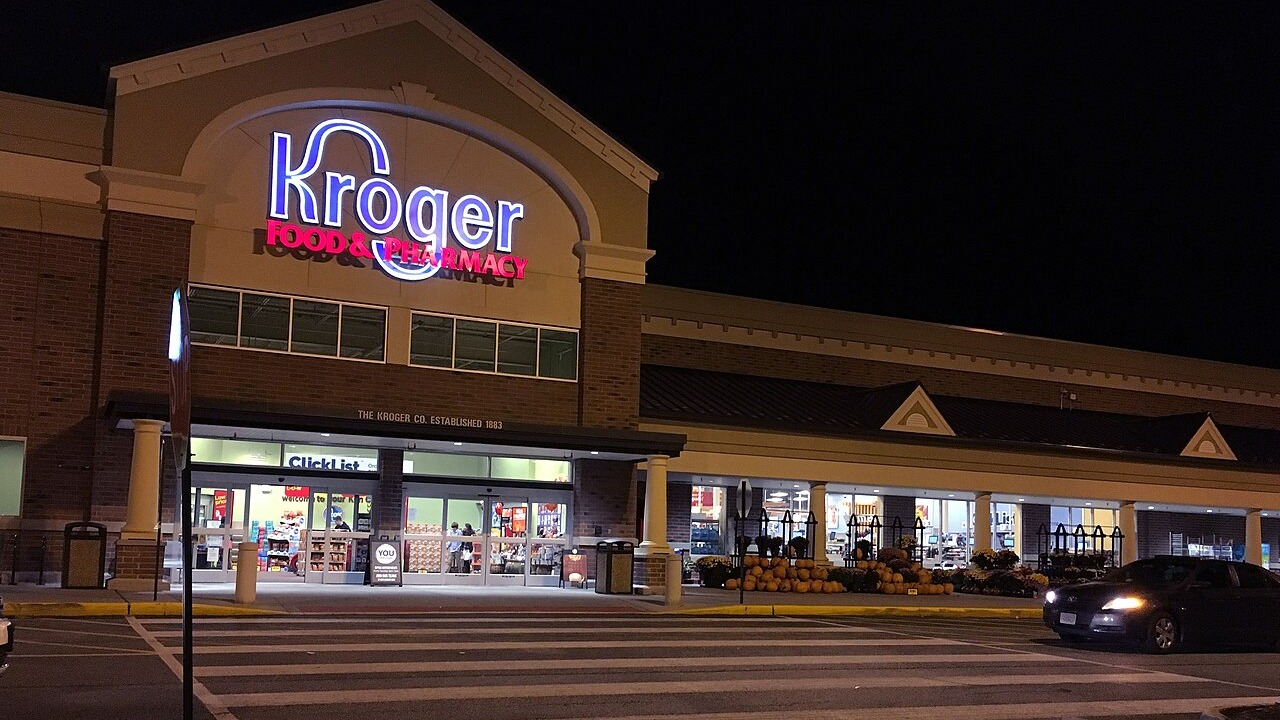
Kroger, the largest traditional supermarket operator in the United States, plans to close about 60 stores over the next 18 months as profits come under pressure. The grocery giant disclosed the plan to investors, framing it as a way to sharpen a sprawling store network at a moment when the economics of selling groceries have grown tougher across the industry.
Sixty stores is a small fraction of a chain that operates thousands of locations under Kroger and its many regional banners. But the decision matters beyond the raw number, because it signals that even the biggest, most efficient grocer in the country sees reason to retrench. When the market leader starts trimming, it is worth asking what the move says about the business of feeding America — and about the towns where those particular stores are the anchor.
Why a grocery leader is pulling back
The closures are tied directly to profit pressure. Grocery is a famously thin-margin business, where a chain keeps only a few pennies of profit on each dollar of sales and makes its money on enormous volume. That model works beautifully when costs are stable and shoppers are spending freely. It gets painful when labor, shrink, and the cost of goods climb faster than a retailer can raise prices without driving customers away.
That squeeze is the backdrop to Kroger’s decision to close roughly 60 locations over 18 months as its profitability slips, according to a report on the store-closing plans. Closing underperforming stores is a standard lever: shutting a location that loses money or barely breaks even can improve the company’s overall margins even if it does nothing to grow sales. It is defense, not offense — a way to protect profitability rather than expand the business.
Competition adds to the strain. Traditional supermarkets are fighting on several fronts at once: warehouse clubs and mass-market chains undercut them on price, discount grocers keep expanding, and online delivery has changed how many households shop for staples. A legacy grocer with a large physical footprint has to constantly ask whether each store still earns its place, and 60 of Kroger’s evidently do not.
The pressure is sharpened by how sensitive grocery shoppers have become to price. After several years of steep food inflation, more households are comparing costs across stores, trading down to store brands, and steering their spending toward whichever retailer offers the best deal that week. That behavior rewards the lowest-cost operators and punishes any location that cannot match them, and it leaves a traditional supermarket with less room to protect a weak store by simply raising prices. Against that backdrop, closing the stragglers becomes less a choice than a necessity.
What closures mean for shoppers and workers
For customers, a store closing is more than an inconvenience. In many neighborhoods a supermarket is a critical piece of daily life, and its loss can create what researchers call a food desert — an area where residents, especially older adults and those without reliable transportation, struggle to reach fresh, affordable groceries. When the closest store shuts, the nearest alternative may be miles away, a real hardship for anyone who does not drive.
The impact on workers is just as concrete. Supermarkets employ large numbers of cashiers, stockers, butchers, bakers and department managers, many of them long-tenured and dependent on those paychecks. Federal labor data on retail sales workers underscores how many households rely on exactly these frontline grocery jobs. A closure can mean a transfer to a distant store for some employees and a layoff for others, and grocery work is often a mainstay for older workers who value stable, local employment.
Older shoppers on fixed incomes feel the pinch in a particular way. A lost neighborhood store can force a switch to a pricier or less convenient option, adding cost and difficulty to a household budget that was already stretched by years of elevated food prices. For this group, the closest supermarket is not an abstraction on a corporate spreadsheet; it is where the week’s essentials come from.
The investor’s read
Kroger is a widely held public company, a fixture of dividend-oriented and index portfolios owned by millions of Americans who never set foot in its corporate offices. A plan to close stores because profits are sliding is the kind of development investors should track carefully, because it speaks to the health of the underlying business. The details behind such decisions — restructuring charges, updated guidance, changes in strategy — appear in a company’s public disclosures, including the current reports filed with securities regulators.
There is a measured way to read the news. Closing a modest slice of a huge store base can be a sign of disciplined management rather than distress — a company culling weak locations to protect the strong ones. The concern would be if 60 stores is the start of a longer retrenchment rather than a one-time cleanup. Investors near retirement, who lean on portfolio stability and dividends, have reason to watch which way the trend runs and to avoid over-concentrating in any single name, however dependable it looks.
A signal from the checkout line
Grocery is often treated as recession-resistant, on the theory that people always have to eat. That reputation is largely deserved, which is what makes the Kroger closures notable. When even the nation’s leading supermarket operator finds it necessary to shut stores to defend its profits, it points to real strain in a corner of retail long thought to be sturdier than most.
For shoppers, the practical response is worth keeping in mind: know where the alternatives are before a familiar store disappears, and factor rising food costs into a household budget. For workers, the reminder is the same one echoing across retail in 2026 — that even stable-seeming employers can shrink, and that an emergency cushion and a current resume are worth maintaining. And for the grocery industry, Kroger’s pullback is a quiet but clear signal that the thin margins holding the whole model together have gotten thinner still.
This article was produced with AI assistance and reviewed before publication.
Free tool for readers: Not sure whether your own retirement is on track? You can check your free Retirement Safety Score — a 0–100 number plus a few personalized steps — in about five minutes, with no sign-up required to see your score.