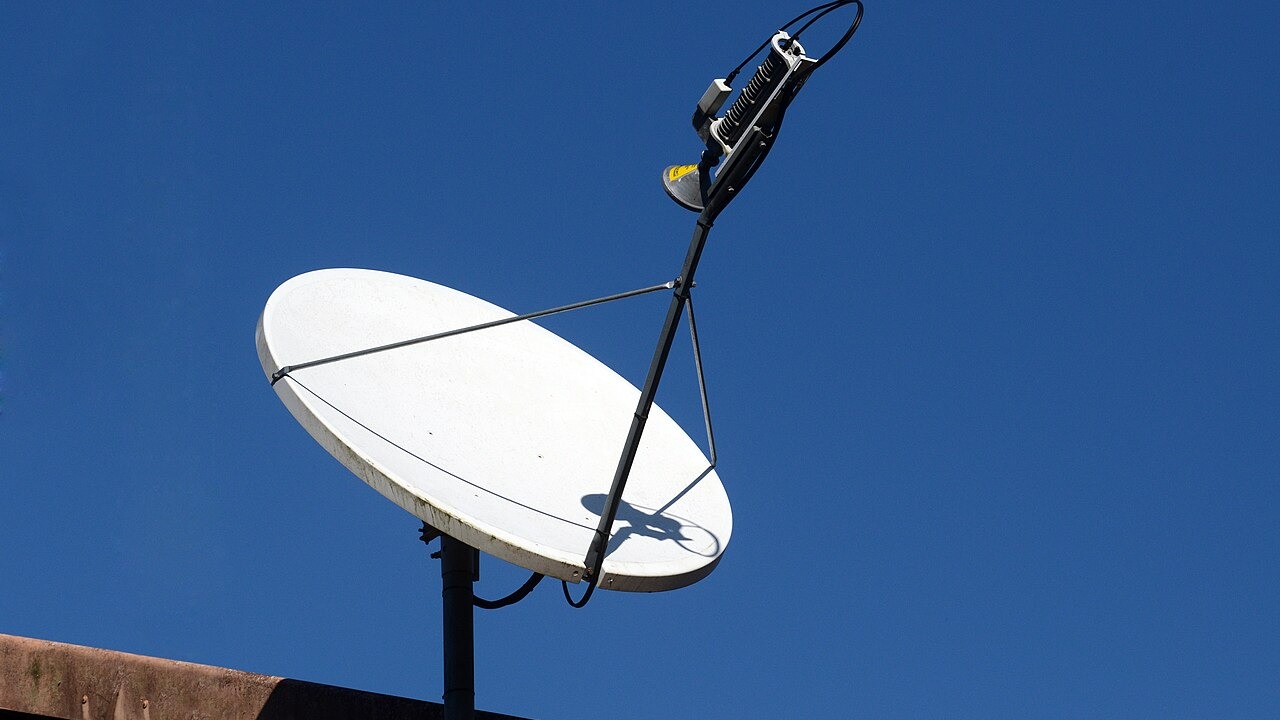
The satellite dish bolted to millions of American rooftops now belongs to a company working its way through federal bankruptcy court. At the end of June 2026, the corporate family behind DISH TV placed its satellite-television and wireless arms into Chapter 11, seeking court approval for a debt overhaul that had already been negotiated with its largest lenders.
For the households that still receive television by satellite, many of them older Americans in rural areas where cable and fiber never arrived, the news lands as another reminder that a service once treated as permanent has become a shrinking business. The filing does not switch off anyone’s programming, but it does formalize the restructuring of a company that has been losing pay-television subscribers for years.
The stakes here are less about tonight’s channel lineup than about the durability of a service that fixed-income retirees have written into their monthly budgets. Separating the headline from the day-to-day reality starts with what was actually filed, and what was deliberately left out.
What the filing actually covers
On June 30, 2026, DISH DBS Corporation and certain subsidiaries, including DISH Wireless, filed prepackaged Chapter 11 cases in the U.S. Bankruptcy Court for the Southern District of Texas, with holders of more than 88% of DISH DBS’s secured and unsecured notes already signed on to the plan. A “prepackaged” case means the terms were agreed before the petition was filed, which typically compresses the time a company spends under court supervision.
The proceeding is designed to resolve maturing satellite-television debt and to wind down the wireless business, an effort trade coverage framed as a restructuring of roughly $10 billion in subsidiary obligations. Court filings, creditor notices, and the claims process are being administered through the case’s dedicated restructuring docket.
Several well-known brands were kept outside the cases. EchoStar Corporation, Hughes Satellite Systems, and the entities behind Boost Mobile and Gen Mobile are not filing entities, and the company has stated that DISH TV and Sling TV operations continue without interruption for customers.
Why the timing came down to a single debt payment
The immediate trigger was narrow. A $2.0 billion block of 7.75% senior secured notes matured on July 1, 2026, and under the agreed plan those notes were to be retired using proceeds from a $20.25 billion sale of wireless spectrum licenses. That transaction, part of a broader monetization of airwaves announced through EchoStar’s investor channel, had not closed on schedule because of regulatory and administrative delays.
Without the incoming sale proceeds, the company said, DISH DBS did not have enough cash on hand to repay the maturing notes while continuing to meet its ordinary obligations. The prepackaged filing was the mechanism chosen to hold creditors together and to make the plan binding rather than risk a disorderly default. The company has indicated that the matured notes are to be paid in full in cash once the spectrum sale closes or on the plan’s effective date.
A separate piece of the wind-down sits outside the bankruptcy entirely. Regulators required the company to establish a $2.4 billion fund to address claims tied to the decommissioning of its 5G wireless network, an arrangement documented in the federal regulatory record and structured to prioritize smaller claims. That fund is administered on its own track, not through the Chapter 11 estate.
A satellite business that keeps shrinking
Behind the debt mechanics sits a slower structural problem. Traditional pay-television has been shedding customers for a decade as households move to streaming, and satellite has felt the decline acutely because it lacks the broadband bundle that cable operators use to retain subscribers. The company’s own periodic disclosures, available through its investor filings, have tracked steady erosion in the satellite subscriber base quarter after quarter.
That shrinkage is the backdrop that makes a debt load built in a larger era harder to carry. Fewer subscribers means less recurring revenue to service borrowings that were sized when the dish was closer to a mass-market staple. The restructuring does not reverse that trend; it reorganizes the balance sheet around it while the company leans on spectrum sales for cash.
What the bankruptcy means for current customers
For a household with a dish on the roof, the practical answer is that service is designed to keep running. The company has emphasized that DISH TV and Sling TV are not filing entities and that the process is not intended to disrupt programming, billing, or customer support. It has also asked the court for authority to keep paying vendors, retailers, and other trade partners so that the pipeline delivering channels stays intact.
Older viewers who rely on satellite as their primary television source therefore face no immediate change to what appears on screen. The more meaningful watch item is longer term: whether a reorganized company continues investing in a declining product, or gradually steers its remaining customers toward streaming alternatives. Retirees who budget carefully may want to note where their programming, equipment, and any prepaid balances sit, simply as ordinary financial housekeeping during a corporate transition.
The path out of Chapter 11, and what to watch
Because creditors backed the plan before it was filed, the company has said it is targeting an exit from Chapter 11 before the end of the third quarter of 2026. Prepackaged cases with this level of lender support often move quickly, though court approval is still required and timelines can slip.
The clearest signals for the months ahead are the closing of the spectrum sale, which supplies the cash to retire the maturing notes, and the continued trajectory of satellite subscribers. A leaner balance sheet buys time; it does not by itself answer whether satellite television has a durable future. For the audience that has kept the dish longest, that second question is the one worth tracking.
This article was produced with AI assistance and reviewed against the cited sources before publication.
For readers planning ahead: a free tool called RetireShield will rate retirement readiness from 0 to 100 in about five minutes and suggest a few fixes, with no sign-up to see the score.