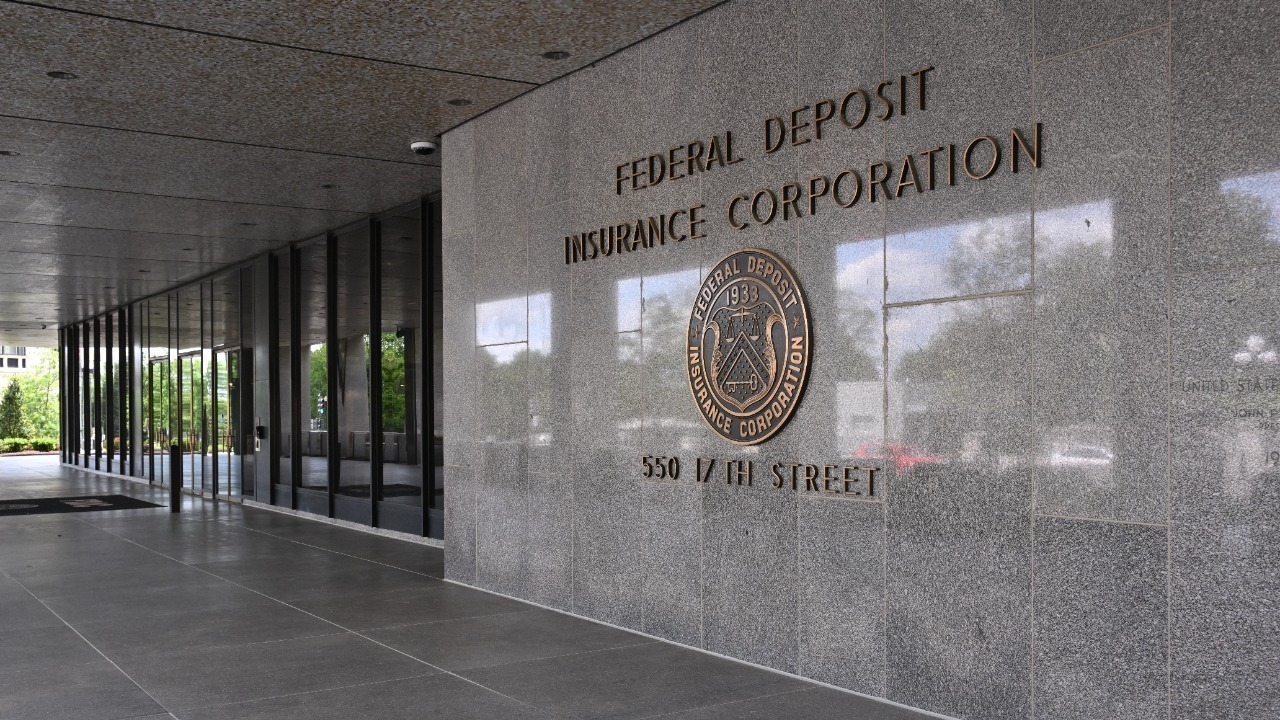
Depositors with balances above $250,000 at a tiny Indiana thrift are now waiting to learn how much of their money they will recover after federal regulators shut down the institution on July 10, 2026, marking the third U.S. bank failure this year. Kentland Federal Savings and Loan Association, with roughly $3.7 million in total assets, joins two earlier closures that have already forced the FDIC to sort insured from uninsured accounts at institutions in Chicago and rural Georgia.
Three closures in six months and who they hit hardest
The year started with the January 30 closure of Metropolitan Capital Bank and Trust in Chicago, Illinois. That institution held about $261 million in assets and $212 million in deposits as of September 30, 2025. First Independence Bank of Detroit, Michigan, stepped in and assumed substantially all deposits while purchasing most of the failed bank’s assets. Depositors whose accounts fell within the federal insurance ceiling kept seamless access to their funds, experiencing the failure largely as an administrative change rather than a crisis.
On May 1, Community Bank and Trust of West Georgia became the second failure. According to the FDIC’s page for that closure, deposits over the insurance limit are being reviewed to determine ownership and coverage, a process that can delay repayment for weeks or longer while examiners verify how accounts are titled and whether any can be split into separately insured categories.
The third failure arrived when the Office of the Comptroller of the Currency appointed the FDIC as receiver for Kentland Federal Savings and Loan Association in Kentland, Indiana, citing unsafe and unsound practices and critical undercapitalization in its order. With approximately $3.7 million in total assets, the thrift ranks as one of the smallest institutions to be closed in recent years, but its size does not eliminate the risk for customers whose balances exceed the federal insurance ceiling. The FDIC’s own running summary of 2026 resolutions listed only the earlier two closures as of its last update, underscoring the lag that can occur between a receivership appointment and the agency’s public tallies and data tables.
Why balances above the $250,000 ceiling face real loss risk
Federal deposit insurance covers $250,000 per depositor, per bank, per ownership category. Any dollar above that line becomes an unsecured claim against the failed bank’s receivership estate, according to FDIC guidance on paying depositors. The agency illustrates the math starkly: a single account holding $255,000 yields a $250,000 insured payment, and the remaining $5,000 enters a claims process with no guaranteed timeline or full recovery. How much ultimately comes back depends on how much the FDIC can recover by selling loans, securities, and other assets of the failed institution, minus the costs of administering the receivership.
Smaller community banks and thrifts often lack the formal sweep programs or collateralized arrangements that some larger institutions use to protect very large operating balances, such as those held by businesses or local governments. That leaves many high-balance customers exposed if they do not actively structure their accounts across ownership categories or multiple banks. In a failure like Kentland’s, an individual who kept $400,000 in a single savings account would likely see $250,000 paid out quickly, while the remaining $150,000 would be frozen and converted into a receivership claim that may or may not be repaid in full.
By contrast, depositors who spread funds across different ownership categories-such as individual, joint, and certain retirement accounts-can increase their insured coverage at a single institution without exceeding the $250,000 cap in any one category. The FDIC’s insurance rules recognize each category separately, but they do not provide special treatment simply because a bank is small or locally owned. In every case, the same ceiling applies, whether the institution holds billions in assets or only a few million.
What affected customers can expect next
For Kentland Federal’s insured depositors, the FDIC typically arranges either a transfer of accounts to another institution or a direct payout by check or electronic deposit within a few business days. Customers with balances above the limit, however, will receive a receivership certificate for their uninsured portion rather than immediate cash. As the FDIC liquidates the failed thrift’s assets, it will periodically declare dividends to these certificate holders, distributing whatever funds are available after expenses and higher-priority obligations are covered.
In prior small-bank failures, uninsured depositors have sometimes recovered most of their funds over time, but outcomes vary widely. The quality of the loan portfolio, the level of problem assets, and the costs of resolving the institution all influence the final recovery rate. Until the FDIC completes a detailed review of Kentland Federal’s books and begins selling assets, customers with large balances will have little visibility into how much they may ultimately recoup.
The clustering of three failures within six months does not, by itself, signal a systemic crisis, but it does highlight how quickly a localized problem can become a personal liquidity shock for depositors who exceed insurance limits. For households and businesses that rely on community banks, the lesson is blunt: knowing the $250,000 cap, understanding ownership categories, and using multiple institutions when necessary can be the difference between a routine bank resolution and a sudden, painful loss.
Free tool for readers: It’s free, takes about five minutes, and there’s no sign-up to see your result: get your free Retirement Safety Score — a 0–100 number plus a few personalized steps for making your money last.