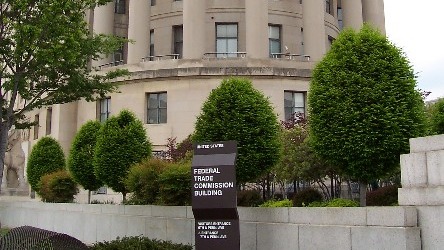
Nearly half a million people who lost money to a credit-repair pyramid scheme are now receiving refund checks from the Federal Trade Commission. The agency has begun mailing more than $10.9 million to 443,048 consumers who paid Financial Education Services between May 2019 and May 2022. The checks represent a fraction of the more than $213 million the operation collected through illegal upfront fees and deceptive earnings promises, but they mark the first direct cash return to victims since the FTC shut the company down.
How a $213 million credit-repair scheme collapsed
Financial Education Services pitched itself as a credit-repair company, but the FTC’s complaint described a different business model. The company charged consumers illegal advance fees for credit-repair services and recruited them as sales agents with promises of large commissions. Those commissions depended almost entirely on signing up new participants rather than delivering legitimate credit help. Most agents lost money, according to the FTC’s refund program page.
The FTC filed its complaint in May 2022, obtaining a court-ordered asset freeze and an immediate shutdown of the operation. The agency alleged the company took more than $213 million from consumers through a structure that rewarded recruitment over any real service. That enforcement action froze the assets needed to fund eventual refunds and stopped the scheme from signing up new victims.
Stipulated final orders entered on August 5, 2024, imposed permanent bans on the operators, barring them from running similar operations in the future. The case, filed under FTC Matter Number 2223030, moved from shutdown to settlement to distribution over roughly four years, with the court overseeing how frozen assets would ultimately be returned to consumers.
What 443,048 refund checks actually cover
The current $10.9 million distribution covers consumers who paid Financial Education Services during a three-year eligibility window, from May 2019 through May 2022. Recipients have 90 days to cash their checks. The FTC has not published a breakdown of individual check amounts, but simple division puts the average refund at roughly $25 per consumer, a small share of the total losses the agency documented.
That gap between the $213 million collected and the $10.9 million returned reflects a common reality in pyramid-scheme enforcement. Operators typically spend, transfer, or conceal most of the money before regulators act. Asset freezes capture what remains, and courts distribute those frozen funds. The result is that victims recover cents on the dollar rather than full restitution, even when regulators prevail in court and secure permanent bans on the people responsible.
For anyone who receives a check, the practical step is simple: deposit or cash it within the 90-day window. The FTC emphasizes that it never requires consumers to pay money, provide bank account passwords, or hand over sensitive personal data to receive a legitimate refund. Anyone who gets a call, text, or email demanding a fee in exchange for processing an FTC refund should treat it as a scam and report it to the agency.
How to verify an FTC refund
Consumers who are unsure whether a check is real can take a few straightforward steps. First, they can compare the information on the check with the details in the FTC’s public refund announcement, including the name of the case, the approximate amount being distributed, and the refund administrator handling the mailings. The agency also maintains a dedicated refund page for each case, listing a toll-free number and email address that consumers can contact with questions.
People who believe they were harmed by Financial Education Services but do not receive a check are not necessarily out of options. In many FTC cases, additional distributions occur if more money is recovered through related enforcement actions or if uncashed checks are later reallocated to other eligible consumers. The refund page for the case will be updated if future rounds of payments are approved by the court.
Consumers who suspect they are being targeted by a similar credit-repair pitch today can use this case as a warning sign. Red flags include demands for large upfront payments before any work is performed, guarantees of specific credit-score improvements, and recruitment-heavy business models that emphasize signing up new members over selling a real product or service. Under federal law, legitimate credit-repair companies cannot charge fees until they have delivered the promised results.
Broader lessons for consumers
The Financial Education Services case underscores how quickly fraudulent credit schemes can scale and how slowly money comes back to those harmed. Over a few years, the operation collected hundreds of millions of dollars, yet only a small portion could be recovered and returned. For many consumers, the modest refunds now arriving in the mail will not erase the financial damage, but they do represent a measure of accountability and a formal recognition that the conduct was unlawful.
As regulators continue to pursue similar schemes, the FTC encourages consumers to report suspicious credit-repair offers, income opportunities that look like recruiting chains, and any demand for advance fees tied to improving a credit report. Those complaints help the agency spot patterns, bring new cases, and, when possible, secure refunds like the ones now going out to more than 400,000 people.
Free tool for readers: Most people don’t find out they’re off track until it’s too late. You can see where your retirement stands with a free Retirement Safety Score in about five minutes — no sign-up required to see it.