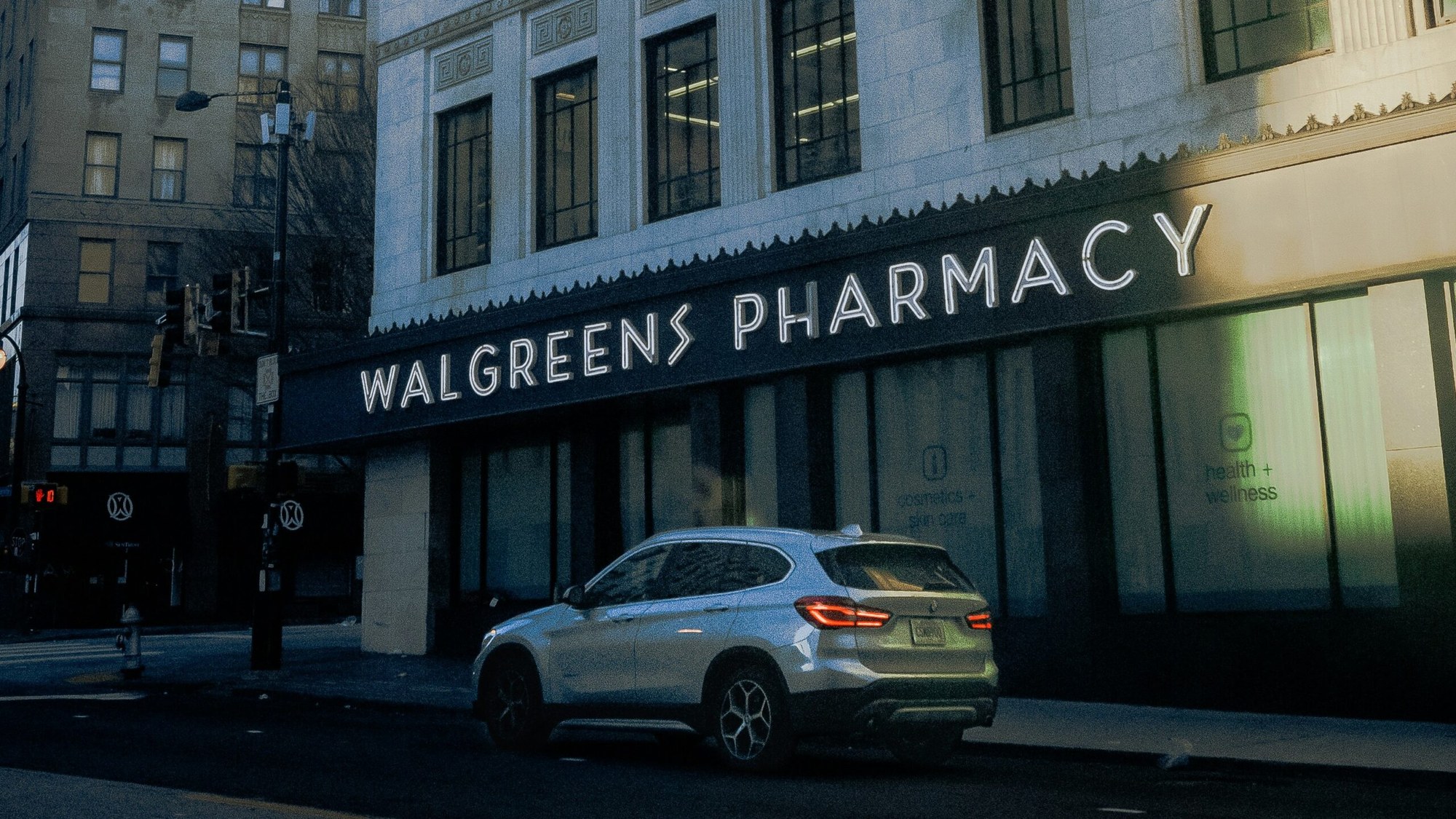
Walgreens is not disappearing from the corner, but the pharmacy chain is still trimming its footprint in 2026, and the closures keep landing hardest on neighborhoods where an older resident already has to plan a trip to fill a prescription. The company now expects to shut fewer than 100 stores this year, a fraction of the roughly 700 once feared, yet that smaller number still means real pharmacies going dark in real ZIP codes.
The current round: fewer than 100 stores, far short of last year’s fears
Walgreens is closing under 100 locations in 2026, a sharp pullback from earlier internal projections that had put the figure closer to 700, according to Fox Business reporting published Aug. 5, 2026. The company confirmed closures in the District of Columbia, Illinois, Missouri, New Jersey, New York, South Carolina, Texas, Virginia, Washington state and Wisconsin, including two Chicago stores, a Rockford location, and a roughly 500,000-square-foot distribution center in Houston. A New Jersey store in Bogota and a South Carolina location in Beaufort were both scheduled to close Aug. 6. None of that adds up to a chain in collapse — Walgreens still runs more than 8,000 stores nationwide — but it is a steady drip of closures layered on top of the ones that came before it.
Free retirement updates: Enrollment and claim windows come and go, and missing one can cost you real money. The free Retirement Shield newsletter keeps you ahead of the deadlines that matter. Sign up free.
The 1,200-store plan behind this year’s cuts
This year’s closures are the latest installment of a plan Walgreens announced in October 2024, when it said it intended to shutter roughly 1,200 underperforming stores over three years, with about 500 targeted for fiscal 2025 alone. That pace has since slowed. Private equity firm Sycamore Partners took Walgreens private in a roughly $10 billion deal in 2025, and its new owners moved to scale back the closure schedule, according to Rolling Out’s Aug. 3, 2026 reporting. Company leadership has described the cuts as a “store optimization strategy” rather than a retreat from the pharmacy business, even as executives have acknowledged that close to a quarter of the remaining store fleet is not turning a profit. The Houston distribution center closure alone eliminated at least 628 jobs, split mostly between Illinois and Texas.
Which states have lost a Walgreens so far in 2026
Confirmed 2026 closures span at least a dozen states, with the heaviest concentration so far in Illinois, where the Chicago and Rockford closures came after a Chatham neighborhood location lost more than $1 million to theft and falling prescription sales. Walgreens regional Vice President Reginald Johnson told reporters in May that shutting a store is “the last resort,” not a goal, when the company announced that particular closure. California, Florida, Massachusetts, New York and Ohio have also seen closure waves this year on top of the states named in the company’s own confirmed list. Anyone unsure whether a nearby location is affected can check directly with Walgreens or the local store, since the retailer typically transfers prescription records to the nearest open pharmacy rather than requiring a patient to track them down independently.
When a nearby pharmacy disappears, seniors carry the medication burden
The stakes of a pharmacy closing are not evenly distributed by age. Research mapping pharmacy access nationally has found that people 65 and older make up a larger share of residents in “pharmacy desert” areas — where the nearest pharmacy is too far for many to reach without a car or a long trip — than in areas with adequate pharmacy coverage, according to a peer-reviewed mapping study of elderly pharmacy access published in PLOS One. Nearly 90% of seniors report taking at least one prescription drug in a given year, and close to 60% take four or more, so losing the closest pharmacy is not a minor inconvenience for that group — it can mean a longer drive, a missed refill, or leaning on mail-order service that does not suit every medication or every household. Walgreens is not the only chain shrinking its footprint this year; rival Rite Aid has already wound down its remaining stores through bankruptcy, and CVS has closed more than 1,100 locations since 2022, meaning the squeeze on in-person pharmacy access is a broader retail trend, not an isolated Walgreens decision.
What to check before a local Walgreens goes dark
For a retiree who relies on a specific store for refills, blood-pressure checks, or vaccine appointments, the practical move is confirming status early rather than discovering a locked door on refill day. Store-level closure notices typically post weeks in advance, and pharmacy records move automatically to the nearest surviving location, but insurance coordination and any auto-refill scheduling tied to the old store number do not always transfer cleanly. Calling ahead, or asking a pharmacist directly whether a location is on this year’s list, remains the most reliable way to avoid a gap in a maintenance medication.
This article was researched and drafted with the assistance of AI and reviewed by The Financial Wire editorial team.
More Financial Reading
- Adding someone to your bank account: tax traps and smart moves
- The ideal retirement withdrawal rate so your savings actually last