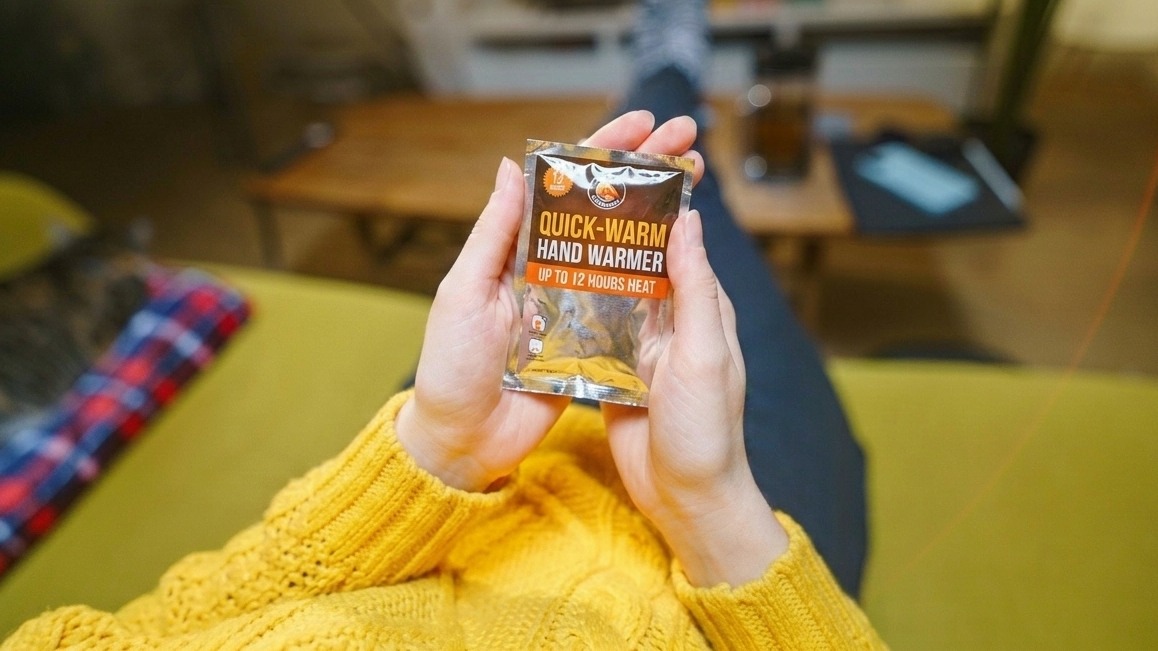
A federal recall of roughly 1.5 million rechargeable hand warmers has landed a popular cold-weather gadget on the government’s danger list, and the notice carries an unusually grim detail: one owner has died. The devices, sold under the OCOOPA brand, can overheat and catch fire because of the lithium-ion batteries packed inside them. For older shoppers who bought the pocket-sized warmers to ease arthritis, poor circulation, or simply cold hands, the recall arrives with a remedy that costs nothing to use.
The U.S. Consumer Product Safety Commission announced the action in early August 2026, and it reaches units sold over nearly eight years through some of the largest retailers in the country. Anyone who still owns one is being told to power it down and stop using it immediately.
Why the OCOOPA Hand Warmers Were Pulled From Shelves
The recall covers OCOOPA-branded rechargeable warmers imported by Shenzhen Street Cat Technology and sold from September 2018 through May 2026 on Amazon, Walmart.com, and the company’s own websites for between $15 and $60. According to the CPSC recall notice, the lithium-ion battery can overheat and ignite, creating a fire and burn hazard. Regulators logged 1,480 reports of the warmers overheating, resulting in 15 fires and 350 burn injuries. One of those incidents was fatal: an 83-year-old in San José, California, died in February 2026.
Seven models fall under the recall — UT3053, UT3056, ZLS-118, ZLS-118S, ZLS-118D, H01 and H01(PD). The model number is printed on each device, so owners can match it against the list before taking any other step. The warmers were often bought as gifts or stocking stuffers, which means many sit in drawers, coat pockets, and glove boxes long after the person who purchased them has forgotten the brand.
Free retirement updates: A quiet rule change can shrink a Social Security or Medicare check, with no warning. The free Retirement Shield newsletter catches these early and explains what to do about it. Get it free by email.
How the Full Refund Works
OCOOPA is offering a full refund to owners of a recalled warmer, issued either as an OCOOPA gift card or in the original form of payment. To qualify, an owner writes the word “RECALLED” in permanent marker on the device, then submits a photo showing that marking, the model number, and the product’s three-digit batch number through the company’s product recall page. No receipt from the original purchase is required, which matters for gadgets bought years ago or received as gifts. Once the claim is processed, the refund is issued.
The refund path is worth acting on rather than shrugging off, and not only for the money back. The instruction to mark the unit “RECALLED” serves a second purpose: it disables the device as a working product and prevents it from being resold, re-gifted, or fished out of a drawer next winter by someone who never heard about the recall. A warmer that quietly keeps its charge is the exact scenario regulators are trying to head off, and the marking step is what closes that door.
Why Lithium Battery Fires Turn Serious So Fast
The hazard behind this recall is not unique to hand warmers. Lithium-ion cells store a large amount of energy in a small space, and a defective or damaged one can slip into what engineers call thermal runaway — a self-feeding chain reaction that pushes temperatures high enough to ignite the device and anything near it. A warmer left charging overnight on a nightstand or tucked into bedding sits inches from fabric that burns easily, which is part of why fire officials treat these small products as an outsized risk for people who are less mobile or slower to react.
Recalled units should not be thrown in household trash or a curbside recycling bin, where a crushed battery can spark a fire in a truck or transfer station. Many communities run household hazardous-waste drop-offs that accept lithium batteries, and the recall instructions take priority: mark the device, photograph it, and file for the refund rather than tossing it. The warmers are also worth keeping away from bedding and upholstered furniture in the meantime, and unplugging once charged rather than leaving them on a charger overnight — the conditions under which overheating incidents most often turn dangerous.
Why Older Owners Face the Sharpest Risk
The single death tied to this recall involved an 83-year-old, and that is not incidental. Hand warmers are marketed heavily to people with arthritis, Raynaud’s, poor circulation, and other conditions that make cold hands genuinely painful — a population that skews older. The same buyers are, on average, less able to react quickly to a fire that starts on a nightstand or in a coat pocket, and more likely to keep a warmer close to the body or under blankets for hours. That overlap between who uses the product and who is most vulnerable to its failure is part of why a burn-and-fire hazard in a small gadget rises to the level of a fatality report at all.
A Familiar Danger in Everyday Gadgets
Rechargeable hand warmers join a long line of battery-powered conveniences — e-bikes, portable chargers, cordless tools — that regulators have flagged after overheating reports piled up. The pattern rarely announces itself before the recall, which is why matching a model number against an official notice is the practical defense. Consumers can also sign up for direct recall alerts from the safety commission, which pushes notices by email as they are issued rather than leaving people to stumble onto them. For a household running on a fixed income, a recalled warmer is a rare case where the safest move and the refund happen to point in the same direction.
This article was researched and drafted with the assistance of AI and reviewed by The Financial Wire editorial team.
More Financial Reading
- How many CDs can you park at 1 bank? FDIC rules you must know
- Adding someone to your bank account: tax traps and smart moves


