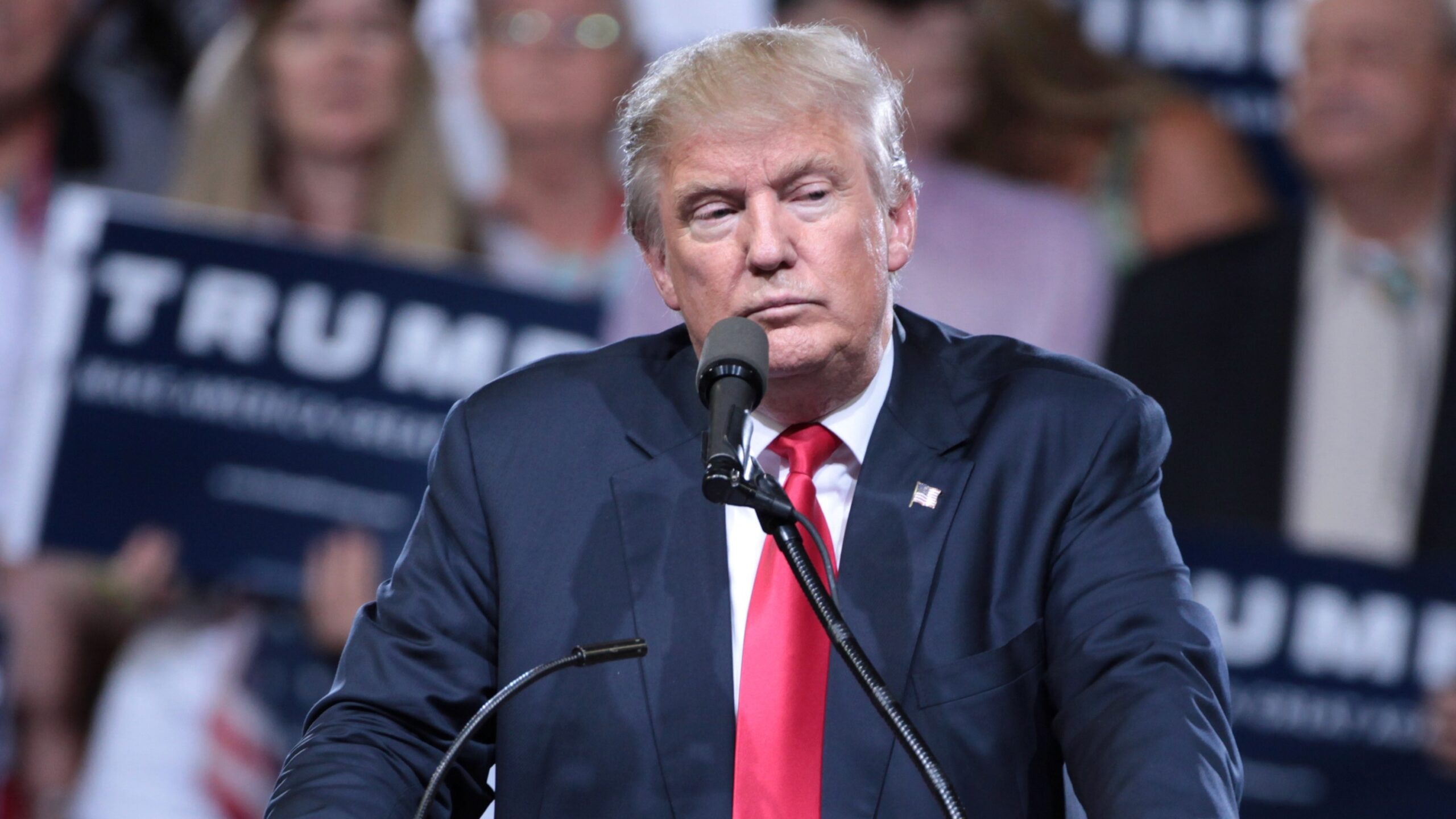
President Donald Trump spent much of 2025 and early 2026 promising that tariff revenue would fund a $2,000 “dividend” check for American households. Retirees on fixed incomes, many of whom watch every federal payment closely, were among the most attentive to that promise. Financial analysts now say the payment is close to impossible, and the reason is not political gridlock alone but a Supreme Court ruling that erased the money that was supposed to pay for it.
The Supreme Court Ruling That Emptied the Tariff Fund
On February 20, 2026, the Supreme Court ruled 6-3 in Learning Resources, Inc. v. Trump that the International Emergency Economic Powers Act, or IEEPA, does not give a president authority to impose tariffs. The law had been the legal basis for the administration’s broad “reciprocal” tariffs and the separate tariffs tied to fentanyl trafficking. Chief Justice John Roberts wrote for the majority that the power to set tariffs is a taxing power the Constitution assigns to Congress, not the executive branch.
The practical effect arrived fast. According to the Congressional Research Service’s legal analysis of the published opinion, the IEEPA-based tariffs terminated at midnight Eastern time on February 24, 2026, four days after the ruling. That single change wiped out the bulk of the tariff collections the administration had pointed to as the source of dividend funding, and it opened the door to refund claims from importers who paid the invalidated duties, which would shrink any leftover balance further.
Free retirement updates: Miss an enrollment or claim deadline and it may be gone. Our free Retirement Shield newsletter keeps readers ahead of the ones that matter. Get the free newsletter.
Why the $2,000 Dividend Was Always a Stretch on the Math
Even before the court ruling, the arithmetic behind a $2,000 per-person dividend was strained. A single round of checks sent to a broad swath of adults and children, styled after the pandemic-era stimulus payments, could cost roughly $600 billion by outside budget estimates. The tariffs the administration had been collecting were bringing in a fraction of that amount annually, and a large share of that revenue is now gone. A Bankrate analyst told CNBC that tariff dividends were “a long shot from the beginning” and that the odds of the policy moving forward were “now effectively zero” once the ruling came down.
Retirees who track federal payments closely have reason to be skeptical of any promised lump sum tied to tariff revenue specifically, since that revenue source is now the subject of ongoing litigation over refunds rather than a stable funding stream.
The Bill That Would Actually Have to Pass Congress
A dividend or rebate check cannot be mailed on a president’s promise alone; it requires an act of Congress. The closest legislative vehicle is the American Worker Rebate Act of 2025, introduced in the Senate in late July 2025 to send tariff-funded rebates of at least $600 per adult and $1,200 per couple filing jointly, with additional amounts for children. As of late August 2026, Congress’s own bill tracker still lists the measure as sitting in the Senate Finance Committee, with no floor vote scheduled in either chamber. Even supporters of a rebate concept have not coalesced around this specific bill, and Treasury Secretary Scott Bessent has previously acknowledged publicly that any dividend would require new legislation Congress has shown little appetite to pass.
That leaves the $2,000 dividend in an unusual position: a proposal with no funding source, no bill moving through committee toward a vote, and a legal ruling that eliminated the specific tax the administration had cited as the payment’s origin.
What the Reversal Means for Household Budgets
For seniors who had penciled a hypothetical $2,000 payment into their household planning, the safest assumption going forward is that no such check is coming without a new law and a new funding mechanism, neither of which currently exists. Retirees should also be wary of any call, text, email, or social media post that asks for personal or banking information in order to “register” for a tariff dividend, since no federal agency is currently processing applications for one. Genuine federal benefit payments, including Social Security and Medicare-related notices, never require payment or bank verification through unsolicited outreach.
Anyone budgeting around the promise should instead track the concrete, already-scheduled cost-of-living adjustments to Social Security and Medicare premiums each fall, since those figures are set by statute and released on a predictable annual calendar rather than tied to the outcome of a stalled bill or a legal appeal.
The Administration’s Next Move on Tariffs
The ruling did not end the administration’s tariff strategy, only the legal basis it had been using. Officials have since signaled they intend to rely on other statutes, including trade laws that allow for narrower, product-specific tariffs subject to their own investigation and notice requirements, rather than the broad emergency authority the court rejected. Any new tariff structure built on those slower-moving laws would generate a different revenue stream, on a different timeline, and would still need Congress to authorize turning that money into direct payments to households. Until that combination of a stable revenue source and enacted legislation exists, the $2,000 dividend remains a proposal rather than a program, and older Americans budgeting for retirement should treat it accordingly.
This article was produced with AI assistance and reviewed by The Financial Wire editorial team.
More Financial Reading
- Bank statements: how long to keep them and when to toss them
- How many CDs can you park at 1 bank? FDIC rules you must know


