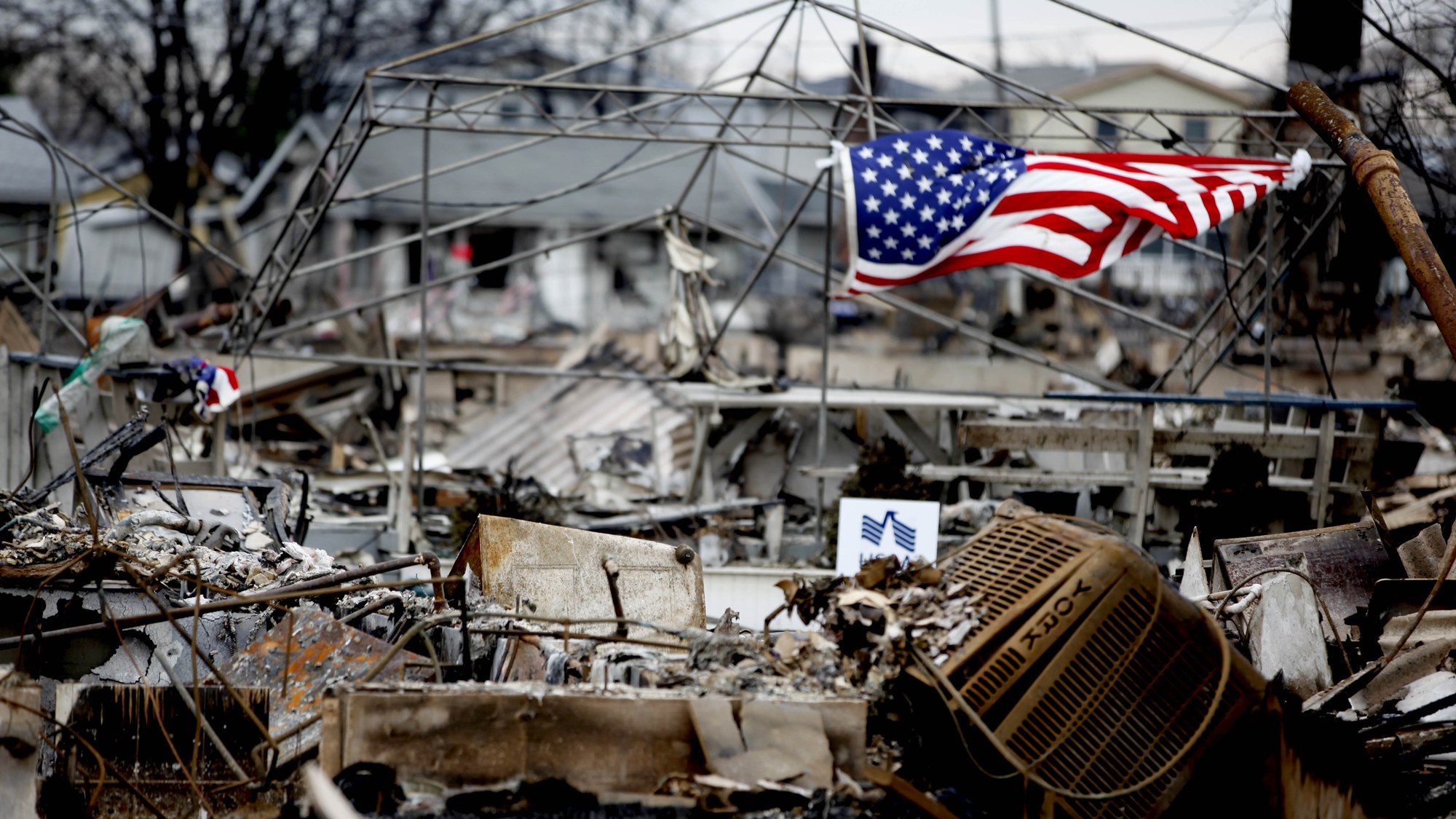
Twenty homeowners trying to rebuild after Hurricane Sandy paid a contractor about $2.5 million, only to lose more than $1.5 million when promised work went unfinished or was performed improperly. A federal judge has now sentenced the contractor to 48 months in prison. Restitution will be determined later, so the sentence does not yet establish how much money victims will recover.
Recovery Grants Became Payments for Unfinished Homes
The U.S. Attorney’s Office for the Eastern District of New York said Alexander Almaraz contracted with homeowners who received New York Rising recovery funds. Between October 2015 and June 2019, at least 20 customers paid his company approximately $2.5 million to lift damaged houses, replace foundations and reconnect the structures. Prosecutors said the company failed to complete the promised scope while homeowners paid rent elsewhere and waited for safe homes.
Free retirement updates: Enrollment and claim windows come and go, and missing one can cost you real money. The free Retirement Shield newsletter keeps you ahead of the deadlines that matter. Sign up free.
The Loss Was More Than a Construction Shortfall
Home-elevation work leaves little room for partial performance. Families often must vacate while the house rests on temporary supports, and incomplete foundations can prevent a safe return. Prosecutors calculated more than $1.5 million in losses to the recovery program and individual victims. That amount reflects money diverted or wasted, but it does not capture extra rent, delay, financing costs or years of uncertainty. Disaster-recovery fraud is particularly damaging because the household has already absorbed a major property loss before the contractor controls the rebuilding funds.
Personal Purchases Traced Where the Money Went
The government said Almaraz used customer funds for credit-card bills, land in Kansas City and luxury vehicles, including a Lamborghini, Porsche and Jaguar. Those purchases helped prosecutors show that the missing money was not simply the result of a business failure or underestimated construction cost. Almaraz pleaded guilty to conspiracy to commit wire fraud in September 2024, and the new September 2026 event is his prison sentence. The restitution phase remains open, which means a court-ordered victim total has not yet been finalized.
Contract Controls Matter Most Before the First Large Draw
Major repair projects commonly use staged payments tied to completed work, inspections and documented materials. Disaster programs may add their own approvals, but a grant label does not guarantee a contractor will perform. Written milestones, proof of insurance, license checks and independent inspections create records that can limit exposure before the full project price leaves the homeowner’s control. No process eliminates fraud, especially when the home is uninhabitable and speed matters, but a payment schedule can keep a dispute from immediately consuming the entire reconstruction budget.
The Sentence Closes Only Part of the Financial Case
Four years in prison represents the criminal punishment. The unresolved restitution question concerns compensation and may depend on traceable assets, losses accepted by the court and a payment schedule after release. Even a large restitution order does not ensure rapid collection when the defendant lacks recoverable property. That gap separates courtroom accountability from household recovery. For the 20 homeowners, the case has reached a clear conviction and sentence, while the practical question of how much money returns remains unanswered.
The Age of Hurricane Sandy Does Not Make the Sentence Old
The storm struck in 2012 and the contracts ran from 2015 through 2019, but the dated event behind this report is the September 9, 2026 sentencing. That fresh judicial action supports current coverage without pretending the construction work happened recently. The elapsed years are part of the harm: homeowners waited through incomplete projects, relocation and criminal proceedings before the court imposed punishment. Accurate timing also separates the case from generic warnings recycled long after an event. The conviction and guilty plea predated this month; the four-year prison term is the new legal development that makes the financial history news again.
Prosecutors tied the money to New York Rising, a public recovery program established after the storm. That connection made the loss both personal and public: homeowners lost usable reconstruction funds, while program dollars failed to produce the repaired houses for which they were issued. The sentence addresses the contractor’s fraud, not the original disaster.
The court will next determine restitution with evidence from the individual victims and program. Until that figure is entered, the documented loss above $1.5 million is the reliable measure, while any prediction about the amount ultimately repaid would be premature.
Household Programs With Their Own Paper Trail
Disaster restitution is separate from ordinary benefit programs, but fixed-income households can face the same paperwork burden when seeking lawful support. LIHEAP, weatherization assistance and senior property-tax relief each require a distinct application.
The Benefits Checklist describes 11 programs in 69 pages and includes 2026 income limits with a printable tracker.
Open the household-assistance map in The Benefits Checklist.
AI tools assisted in researching and drafting this article, which was reviewed prior to publication.