Walmart is swapping paper price tags for digital shelf labels across its U.S. stores, a change that affects how quickly a posted price can move and how closely that price matches what actually rings up at the register. The retailer says the technology already covers thousands of locations, with the rest of its chain following on a timeline the company has laid out itself. For an older shopper working from a fixed monthly budget, the practical question isn’t what the new screens look like — it’s whether the number on them can still be trusted the moment it’s read, and how often that number changes between one trip to the store and the next.
From a Single Texas Store to a Chain-Wide Standard
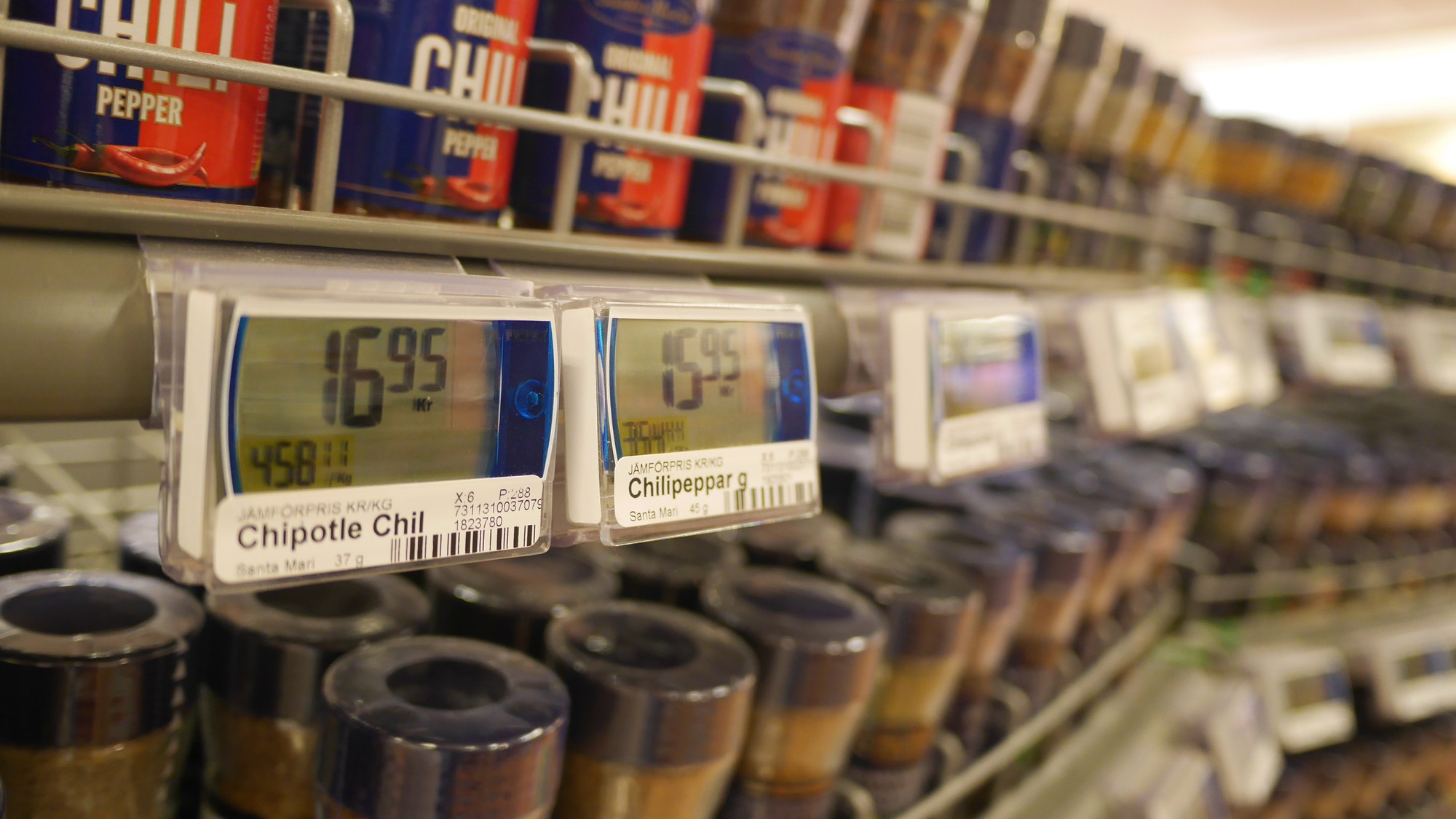
Walmart first introduced digital shelf labels in 2024, testing the small electronic screens at Store 266 in Grapevine, Texas, before setting a public target of installing them in 2,300 U.S. stores by 2026, according to the company’s own account of the pilot. The screens, built by outside technology partner Vusion Group, replace paper tags with digital displays that an associate updates from a handheld device rather than printing and swapping a new paper tag by hand; they show the same basic information a paper tag always did — item name, price and unit price.
A newsroom update Walmart posted in March 2026 says that 2,300-store milestone has already been reached, and that the company now expects digital labels to be chain-wide within the year. Coverage has gone from a single pilot store to a company-wide rollout in under two years, and Walmart describes the remaining expansion as a matter of when, not whether, every U.S. location gets the same screens.
Free download: Property-tax freezes, exemptions and circuit-breaker credits, plus LIHEAP and shutoff protections, and what to gather before applying. Get the free property tax and utility relief finder.
The Promise Behind the Screen: Shelf Price Equals Register Price
Walmart’s own explanation for the switch centers on accuracy rather than novelty. The company’s corporate site describes digital shelf labels as a tool meant to help make sure the price posted on the shelf is the price charged at checkout, with prices still set the same way they always have been — centrally, under Walmart’s Every Day Low Price approach, with an associate reviewing each change before it takes effect. The consistency argument is central to how Walmart describes its broader pricing strategy, not just the labels themselves: an approach built around holding a steady, published price rather than one that shifts by day or by shopper.
That distinction matters for a shopper doing the traditional kind of price comparison: reading a shelf tag, then checking it against the receipt. Walmart says the price on a digital label is the same for every customer in a given store, regardless of the time of day or who happens to be standing in the aisle — a single, centrally approved figure rather than one that varies shopper to shopper or hour to hour.
Thousands of Weekly Price Changes, Now Pushed Overnight
Part of what makes the labels useful to Walmart is the sheer volume of pricing activity behind a typical store. The company says a single location can carry more than 120,000 items and process thousands of price updates a week — new inventory, Rollbacks, temporary markdowns — on top of routine changes. Rollbacks, in Walmart’s own terminology, are temporary price cuts on specific items, distinct from the everyday shelf price, and both categories count toward that weekly volume. Under the old paper-tag system, that volume was one reason a shelf price could occasionally lag behind whatever a cashier’s scanner was actually charging; a change that once took multiple associates days to complete by hand now takes minutes through the digital system, according to Walmart’s account of the rollout.
Walmart says associates still review and approve every price change themselves, then push it through a centralized system typically outside of shopping hours, so the number on the shelf stays fixed while customers are in the store during the day. For someone comparing a price seen on one visit against a price seen on a later one, the shift Walmart describes is that updates happen overnight, between visits, rather than while a shopper is standing at the shelf reading the tag.
Keeping Sale Items Actually on the Shelf
Digital labels do more than post a price. Walmart says a feature called Stock to Light lets an associate flash an LED on a shelf label to find items that need restocking, while a companion feature, Pick to Light, guides associates to items ordered online for pickup or delivery. Both are aimed at closing the gap between an advertised price and an item actually being available to buy at that price — a gap that, for a shopper working around a rollback or a temporary markdown on a fixed budget, can matter as much as the number on the tag itself.
As the rollout moves from roughly 2,300 stores toward Walmart’s stated goal of chain-wide coverage within the year, the practical test for shoppers stays the one paper tags were always subject to: whether the number posted at the shelf is the number that shows up on the receipt. That is the specific promise Walmart itself has attached to the technology, store by store, as the expansion continues.
Property Taxes Don’t Update as Fast as a Shelf Tag
Walmart’s digital shelf labels can update a grocery price overnight, the moment an associate approves the change. The property tax bill that shows up in an older homeowner’s mailbox once a year moves far slower, and nothing about the bill itself flags whether a freeze, exemption or circuit-breaker credit already applies — or reminds a household to file the paperwork again before a benefit lapses. Renewal rules vary by state and by program, and a credit claimed for years can quietly disappear if a form nobody prints next to the bill goes unfiled.
The Senior Property Tax & Home-Cost Relief Kit is an 11-page kit covering the 5 kinds of property-tax relief along with heating, cooling and home-repair help for older homeowners and renters.
Look up the application log and renewal calendar built into The Senior Property Tax & Home-Cost Relief Kit.
This article was researched and drafted with the assistance of AI and reviewed by an editor.