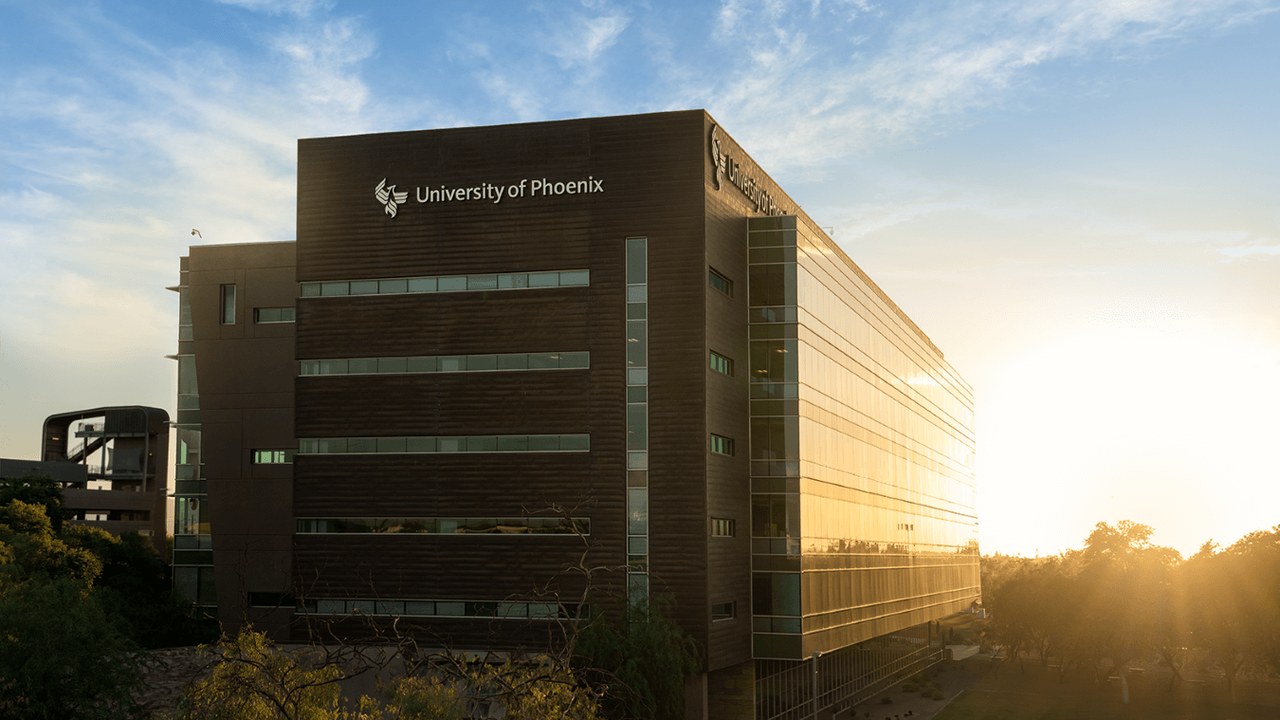
The U.S. Department of Education is now approving full federal student loan discharges for people who attended the University of Phoenix, were misled by the school’s claims about job placement, and filed a borrower defense application. The relief traces back to a 2019 federal case against the for-profit university, but the loan discharge itself moves through a separate government process from the cash settlement most former students already heard about years ago. For older borrowers who have carried this debt for a decade or more, including parents who took out loans on a child’s behalf, the distinction between those two programs decides whether a balance still sitting on a statement today can actually disappear.
A Deceptive-Ad Case That Kept Producing Relief Years Later
The story starts with a federal court order, not a policy announcement. In December 2019, the FTC obtained a record $191 million settlement from the University of Phoenix and its parent, Apollo Education Group, over ads that falsely implied partnerships with Microsoft, Adobe, Twitter, Yahoo and the American Red Cross built specifically to create jobs for the school’s graduates. The order split into two pieces: $50 million paid to the FTC for distribution to former students, and $141 million in institutional debt the school itself had to cancel. The cash piece moved first. Checks and PayPal payments went out starting in March 2021, and the commission has since sent Zelle payments to people who never cashed the original ones, putting total refunds at more than $49 million.
The loan piece moved separately, and later. In September 2023, the Education Department used the FTC’s case file as grounds to forgive nearly $37 million in federal loans for more than 1,200 borrowers who filed a borrower defense claim. That announcement wasn’t a one-time event. The FTC’s settlement page, last updated July 21, 2026, confirms the Department “is continuing to process new and existing applications and expects to approve additional claims,” and states plainly that “all borrowers with approved claims will receive full loan forgiveness.”
Free settlements tracker: Open settlements have claim deadlines, and fake settlement sites copy real ones. See the current list with the free tracker.
The Application Form Has Always Had a Line for Parents
The claim isn’t limited to former students. The Department’s own Borrower Defense to Repayment application asks, in its very first section, whether the applicant is a parent who took out a federal loan on behalf of the student. That question exists because Parent PLUS loans are federal loans in their own right, taken out by a parent or grandparent, not the student, and they qualify for the same discharge review when the underlying enrollment involved a misrepresentation. A parent who borrowed in the 2000s or 2010s so an adult child could enroll, and who is still paying that balance into a fixed retirement income, is not filing an exception to the process. The form is built for that exact person.
The Department evaluates financial harm the same way regardless of who signed the promissory note: by comparing the earnings of a program’s graduates against similar programs nationally, using IRS or Social Security Administration wage data rather than a borrower’s self-reported loss estimate. A parent’s claim rides on the child’s enrollment record and the same job-placement misrepresentations that anchor a student’s own application, filed as a separate case tied to the parent’s loan.
Two Different Pots of Money, Not One
Former students who already cashed an FTC settlement check sometimes assume they’ve already gotten “their” relief and stop there, or worry that applying for loan forgiveness now would be double-dipping. The FTC’s guidance addresses that directly: it states that receiving a settlement payment does not affect a pending loan-forgiveness application, and that a borrower who already took a settlement payment can still apply for loan forgiveness through the borrower defense program. The two funds are unrelated in size and mechanism. The settlement fund paid out an average of a few hundred dollars per person from a fixed $50 million pool. Loan forgiveness cancels a federal loan balance that, for someone who financed a full degree program, can run into the tens of thousands of dollars.
Separately, Department of Education discharge policy generally provides that when a loan the government holds directly is discharged, any payments the borrower already made toward that specific loan are refunded, unless the loan had already been paid off in full before the discharge. That refund runs through the loan servicer once a claim is approved, on top of the balance cancellation itself, and is distinct from anything the FTC settlement fund ever touched.
Filing Costs Nothing, and the Form Says So Under Penalty of Perjury
Anyone who attended the University of Phoenix, was steered toward enrollment by claims about job placement or corporate partnerships that turned out to be false, and hasn’t yet filed can still submit a claim through the Department’s borrower defense portal; the FTC’s current page treats new filings the same as pending ones, with no cutoff date attached. Borrowers who already applied can check status under “Manage My Applications” rather than waiting on a letter. The application itself requires a signature under penalty of perjury and a certification tying the claim to the specific loan and enrollment period at issue, the same safeguard that keeps the program targeted at documented misrepresentation rather than general dissatisfaction with a degree.
What hasn’t changed since the Department’s first wave of approvals is the standard it applies before erasing a balance: a documented misrepresentation, evidence it drove the decision to enroll, and proof of financial harm measured against real earnings data. The FTC’s own account of the program, current as of its July 2026 update, describes an agency still working through a backlog rather than one that opened and closed a window, which is the detail that separates this discharge from claims that quietly expired somewhere else in the settlement system.
When a Second Notice Arrives About the Same Case
A University of Phoenix borrower can end up with two separate pieces of mail years apart: an FTC settlement payment first, then a Department of Education discharge notice later, from two different agencies using two different case numbers. That gap is exactly where confusion, and copycat notices designed to look official, tend to show up.
The Settlement & Refund Recovery System is a 36-page guide paired with a 5-tab Excel tracker pre-filled with all 51 state unclaimed-property offices, built to keep a second claim like this one from getting lost or mistaken for a duplicate.
Check the four-date rule for reading a settlement notice against The Settlement & Refund Recovery System.
This article was researched and drafted with the assistance of AI and reviewed by an editor.