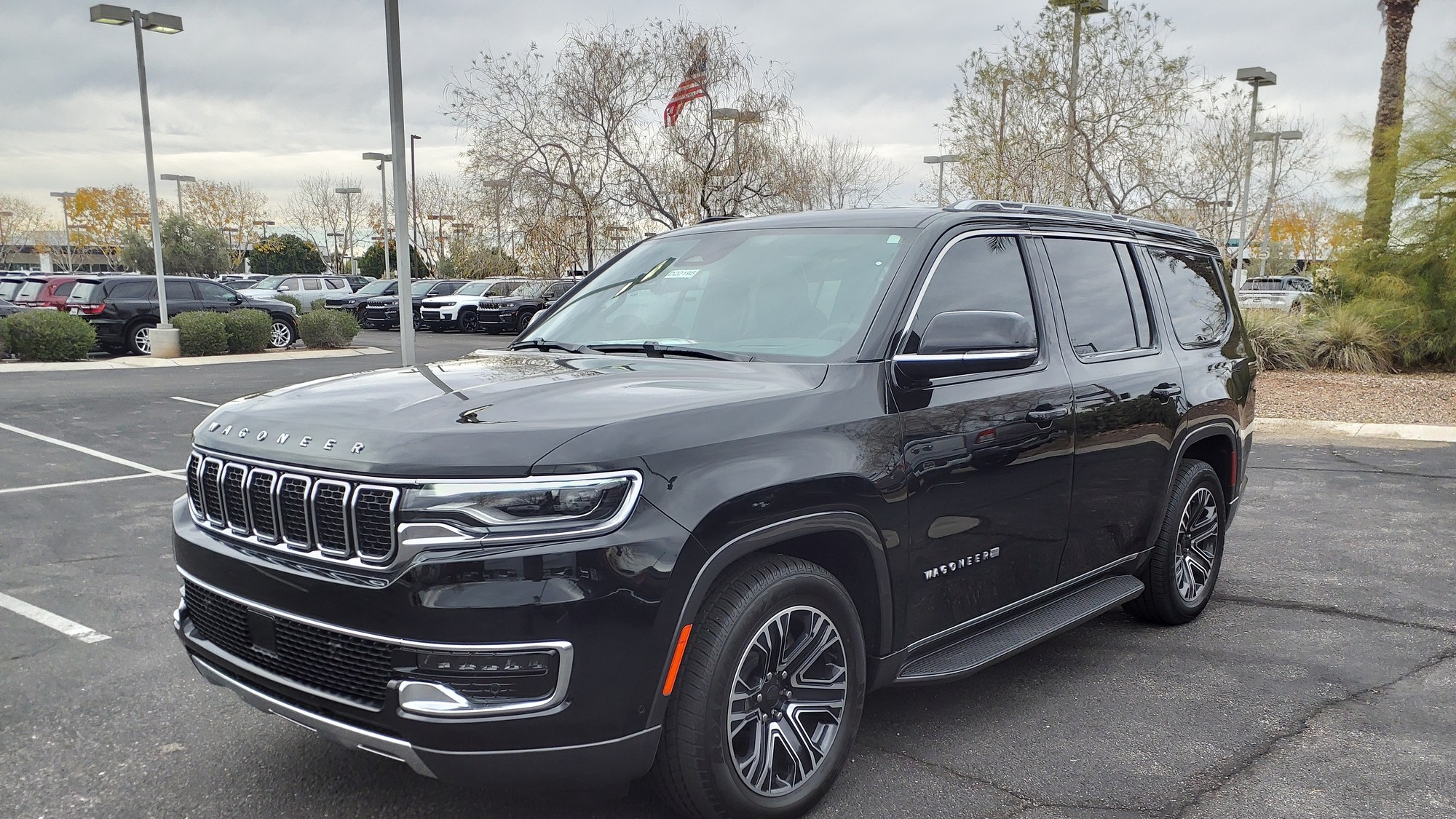
Loose hardware on a roof rack does not sound dramatic until the crossbar it holds detaches at highway speed. FCA has told NHTSA that pivot bolts on roof-rack crossbars were not tightened properly on 97,349 Jeep Wagoneer and Grand Wagoneer SUVs, a defect that can let the crossbar come loose while the vehicle is moving. Dealers will replace the bolts at no charge, with the first round of owner letters expected in early October, and NHTSA’s filing notes no over-the-air update or interim parking restriction applies while owners wait. NHTSA’s filing does not limit the recall to vehicles ordered with a specific roof-rack package, so the defect touches the full affected build range rather than only the subset of owners who actually load cargo onto the rack.
Loose Pivot Bolts, Explained
Recall campaign 26V584 states that “the pivot bolts for the roof rack crossbars may not have been tightened properly, allowing them to detach,” according to the recall record NHTSA has published. The agency’s consequence language ties a detached crossbar to a road hazard that raises crash risk, both for the Jeep it falls from and for vehicles following behind it. The defect is a manufacturing torque issue rather than a part failure, meaning a crossbar can be defective from the factory even on a vehicle that has never carried cargo on the roof rack. NHTSA’s language leaves no ambiguity about severity: it classifies a detached crossbar as a road hazard capable of striking another vehicle, not merely a nuisance rattle an owner might otherwise ignore until a scheduled service visit.
NHTSA’s component code for campaign 26V584 places the defect under structure and body rather than under accessories or exterior trim, the same broad category used for defects involving a vehicle’s frame or pillars. That classification signals FCA and NHTSA are treating an improperly torqued pivot bolt as a structural-assembly failure at the factory rather than a lower-severity accessory issue.
What the notice won’t track: Campaign 26V584 tells Wagoneer and Grand Wagoneer owners that a dealer will replace the roof-rack pivot bolts at no charge, but the notice itself gives no way to confirm afterward which bolts were actually swapped versus simply retorqued. Record the outcome with The Settlement & Refund Recovery System.
Which Wagoneers Are Covered
The 97,349 vehicles under campaign 26V584 include the 2022–2025 Jeep Wagoneer, the 2022–2026 Grand Wagoneer, the 2023–2025 Wagoneer L and the 2023–2026 Grand Wagoneer L. That four-year production span means both nearly new and several-year-old Wagoneers can be covered under the same bolt-torque defect, since NHTSA’s filing does not distinguish by how the vehicle has been used. Wagoneer and Grand Wagoneer sit at the top of Jeep’s lineup by price, and the recall’s reach across four separate trims shows the crossbar hardware carried through multiple production years without the torque issue being caught earlier.
Because the long-wheelbase L variants of both the Wagoneer and Grand Wagoneer are included alongside the standard-length versions, the pivot-bolt hardware appears to be shared across Jeep’s full-size SUV platform regardless of wheelbase, which is consistent with a single torque-assembly process at the factory affecting every version built on that platform during the covered years.
The Bolt Replacement And Its Two-Letter Rollout
FCA’s plan, per the NHTSA filing, sends an interim notification letter around October 8, 2026, warning owners about the defect, with a second letter to follow once the bolt replacement is available at dealers. NHTSA notes the fix requires no over-the-air update and no special parking instructions in the meantime, and owners can reach Chrysler customer service at 1-800-853-1403 using recall number 81D. The VIN range has been searchable on NHTSA.gov since September 17, 2026, ahead of either mailed letter. An owner who checks the VIN tool now and finds the vehicle listed does not have to wait for the interim letter to schedule a dealer visit, though the actual bolt replacement cannot happen until the second mailing confirms parts are ready.
Sending an interim warning letter before a repair is available is a less common approach than waiting until parts are ready to mail a single combined notice, and it means FCA judged the road-hazard risk serious enough to alert owners immediately rather than hold the notification until dealers can complete the fix in one visit. Owners can also reach Chrysler’s recall line, 1-800-853-1403, to ask whether a specific VIN under recall number 81D has already been assigned a repair date.
Why A Roof-Rack Failure Costs More Than It Looks
A crossbar that detaches at speed does not just risk a crash for the Wagoneer’s own occupants; it becomes debris in the lane behind, a liability exposure that extends beyond the owner’s own vehicle. Replacing the pivot bolts costs nothing under this recall, but an owner who carries cargo boxes or bikes on the roof rack has a practical reason not to wait for the second letter: confirming with the dealer now whether the bolts have already been checked, rather than assuming a factory-installed rack was torqued correctly. A Wagoneer purchased new for family road trips or towing a small trailer is exactly the kind of vehicle likely to carry a loaded roof rack regularly, which raises the practical stakes of the defect well above a vehicle that rarely uses the rack at all. Because Wagoneer and Grand Wagoneer models represent one of Jeep’s higher-priced offerings, an owner who financed the vehicle over several years has a direct interest in a free structural repair that protects both the vehicle’s safety and its resale condition, rather than facing an out-of-pocket bill for hardware that failed due to a factory assembly error.
Confirming A Crossbar Was Actually Retorqued
Campaign 26V584 replaces roof-rack pivot bolts on 97,349 Wagoneers for free, but the two-letter rollout, an initial warning followed by a separate repair notice, means an owner may hear about the defect months before a dealer has parts on hand to fix it. Keeping track of which letter has arrived and what a dealer visit in between actually resolved is left to the owner.
The Settlement & Refund Recovery System’s step-by-step filing walkthrough works alongside its claim log and payment tracker to hold that kind of two-stage recall record from the first letter through the final repair.
Look up the walkthrough before the first letter arrives: The Settlement & Refund Recovery System.
This article was produced with AI assistance and checked against the primary sources linked above.