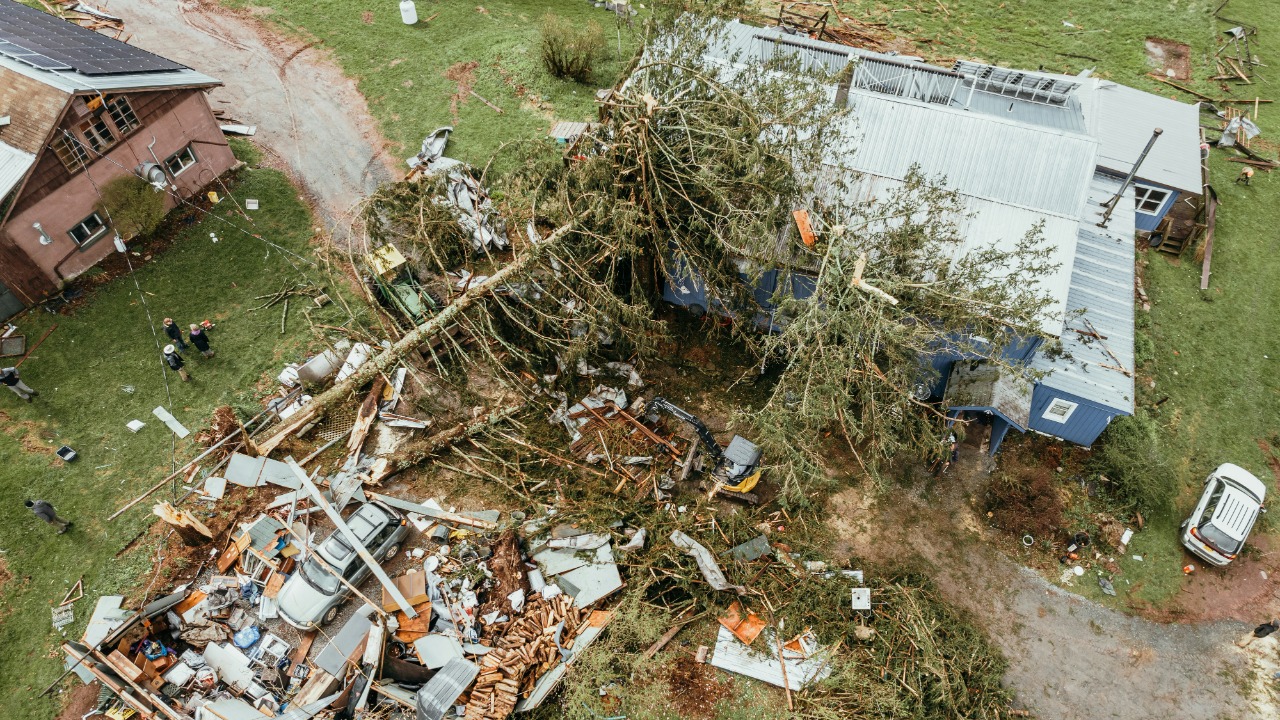
Storms, straight-line winds and flooding that hit the Oglala Sioux Tribe in early June triggered one of the longer federal tax postponements issued this year, and it stretches deep into 2027. Rather than the shorter windows granted to other tribal disaster declarations this month, the IRS gave affected taxpayers on the Pine Ridge Reservation an extra eight months beyond the disaster date itself. The relief also opens a specific, penalty-free way to tap retirement savings that most taxpayers cannot use.
An Eight-Month Runway From A June Disaster
The IRS’s disaster designation SD-2026-02 covers severe storms, straight-line winds and flooding that began June 2, 2026, and postpones various federal tax filing and payment deadlines for the Oglala Sioux Tribe until February 1, 2027, according to the IRS announcement. That is a postponement period of nearly eight months, running from the June disaster date to the February deadline, longer than the roughly nine-month window given to Montana’s Crow Tribe from a December storm but starting from a later disaster date, which is why the two relief periods end at different points on the calendar.
The Pine Ridge Reservation, home to the Oglala Sioux Tribe, spans parts of southwestern South Dakota. The IRS determines the length of a given postponement period case by case, based on its own assessment of the disaster and the geographic area it designates, rather than applying one fixed extension length to every disaster designation nationwide, which is why SD-2026-02’s roughly eight-month window differs from the shorter windows granted elsewhere this month.
Inside the kit: A disaster-relief window this long covers multiple filing types with different original due dates, which makes it easy to lose track of which return still needs to go in before February 1. The IRS Refund Recovery Kit includes an IRS notice log and a deadlines and call log built for tracking exactly that kind of multi-deadline situation.
What Gets Pushed To February 1
The postponement covers individual, corporate, and estate and trust income tax returns, partnership and S corporation returns, gift and generation-skipping transfer tax returns, annual information returns for tax-exempt organizations, and employment and excise tax returns, per the same IRS announcement. Quarterly payroll tax returns originally due July 31 and November 2, 2026 are covered as well, along with estimated income tax payments originally due on or after June 2, 2026. Anyone in the affected area who owes one of these filings has, in effect, absorbed the entire back half of 2026 into a single extended deadline.
That breadth means the single February 1 date stands in for what would otherwise be several separate deadlines: two quarterly payroll filings, an ongoing estimated-payment cycle, and the annual filing season that would otherwise open in early 2027. A taxpayer or small business inside the designated area effectively tracks one calendar entry in place of that normal spread of due dates across the second half of 2026 and the start of 2027.
The One Payment This Relief Does Not Cover
The postponement has a specific carve-out: estimated tax payments tied to 2025 individual returns that were originally due April 15, 2026 are not eligible for the relief, according to the IRS announcement. That exception matters because it means the February 1, 2027 date does not apply uniformly to every tax obligation someone in the affected area might have outstanding; a payment tied to that earlier April deadline still needed to be made on time, disaster or not, while nearly everything due afterward now falls under the extended window.
Penalty-Free Access To Retirement Money
The announcement also permits qualified individuals to take a “special disaster distribution” from a retirement plan or IRA that is not subject to the additional 10% early-distribution tax that would otherwise apply, and allows the resulting income to be spread over three years rather than taxed in a single year, per the same IRS announcement. Hardship withdrawals may also be available depending on a given plan’s own rules. For an older taxpayer whose home or savings took a direct hit from the June flooding, that combination, no early-withdrawal penalty paired with a three-year income spread, can materially change the tax cost of pulling money out of a 401(k) or IRA to cover storm damage.
How This Compares To Other Tribal Relief This Month
The Oglala Sioux relief period is markedly longer than the roughly nine-month windows the IRS set for the Crow Tribe and the Fort Peck Assiniboine and Sioux Tribes over Montana winter storms, or the San Carlos Apache Tribe’s relief over Arizona flooding, all of which close September 28, 2026, according to the IRS’s disaster relief index. Each tribal designation is calculated separately based on its own disaster date and the IRS’s own assessment of recovery time needed, which is why two flooding-triggered relief periods issued in the same general timeframe can still end up with deadlines four months apart.
A Deadline Set By Regulation, Not By Estimate
Nothing in the IRS announcement suggests the February 1, 2027 date is provisional or subject to further extension, and no dollar cap or aggregate relief total is stated for the disaster designation as a whole. What is confirmed is the postponement period itself, the return types it covers, the April 15, 2026 carve-out, and the retirement-distribution relief — each drawn directly from the agency’s own published announcement for SD-2026-02 rather than from a secondhand summary.
Tracking Multiple Deadlines Inside One Postponement Window
The IRS’s Oglala Sioux Tribe relief pushes individual, business, payroll and estimated-payment deadlines to February 1, 2027, except for one 2025 estimated payment that was still due in April 2026, a distinction easy to miss inside an eight-month window covering several filing types at once. Sorting which deadline actually moved from which one did not is a documentation task the announcement itself leaves to the taxpayer.
The IRS Refund Recovery Kit includes a notice decoder for reading IRS correspondence and a deadlines and call log for tracking which returns and payments are confirmed against which due date.
Compare the deadline exceptions in The IRS Refund Recovery Kit.
This article was produced with AI assistance and checked against the primary sources linked above.